Construction, comfort and traction
BioLite · XPRESSCOOL · Bioprene · RDR rubber · Triple-dipped construction · Chevron outsole · GlacierTrek Pro · DriftTech
The XTRATUF feature guide
XTRATUF’s feature names tell you how a boot is built and what it is designed to do. BioLite provides lightweight cushioning, XPRESSCOOL helps manage moisture inside, and GlacierTrek Pro targets wet-ice traction. The key is matching the feature to your conditions and checking which part of the footwear uses it.
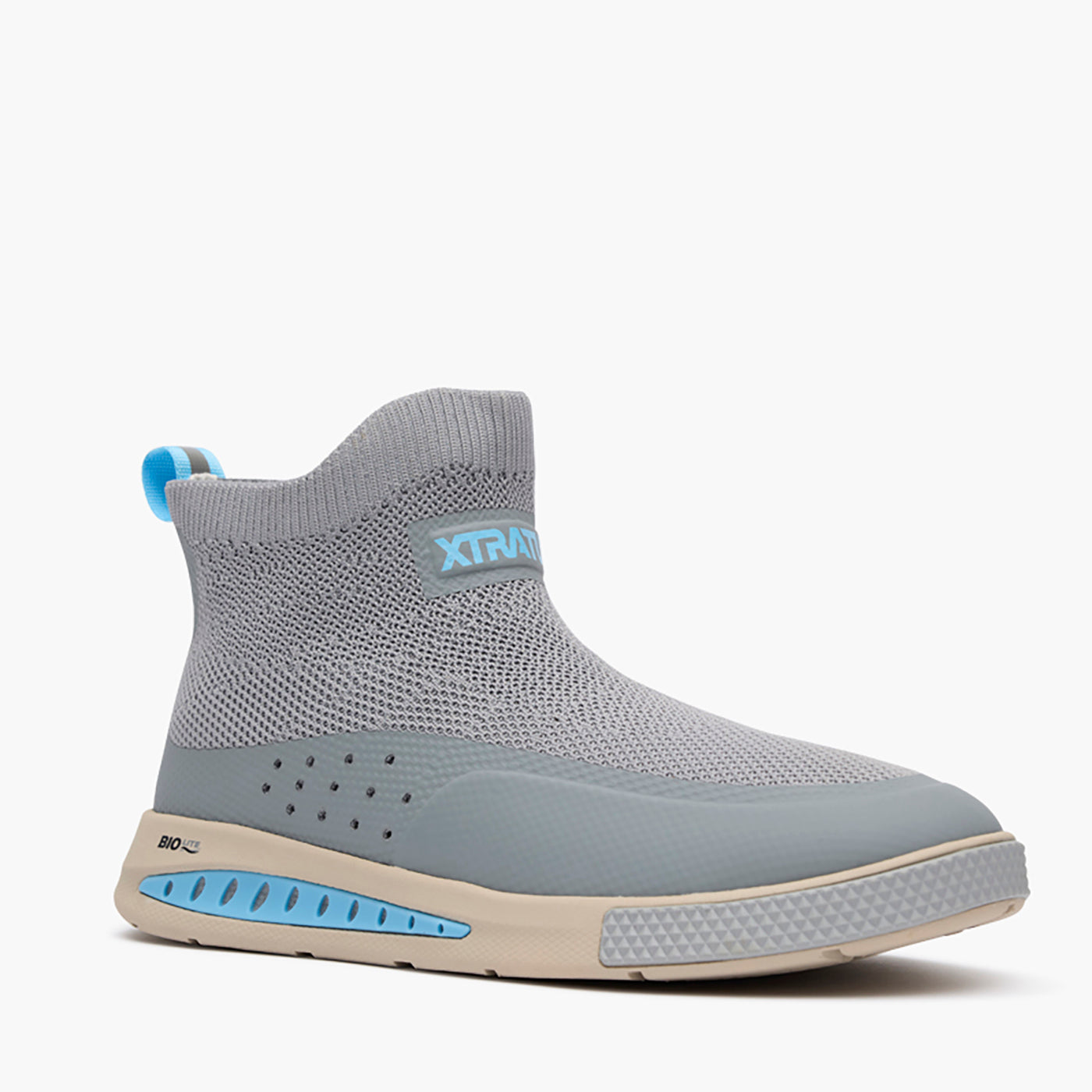
Jump to any of the 14 features below. Each explanation covers what it is, why it matters and a model that uses it.
BioLite · XPRESSCOOL · Bioprene · RDR rubber · Triple-dipped construction · Chevron outsole · GlacierTrek Pro · DriftTech
Yulex · Seawool · Spandura · TUFgrp · REPREVE Our Ocean · ECONYL
Cushioning / Foam
BioLite is XTRATUF’s lightweight EVA foam, used for cushioning and a sneaker-like feel. Its role changes with the model:
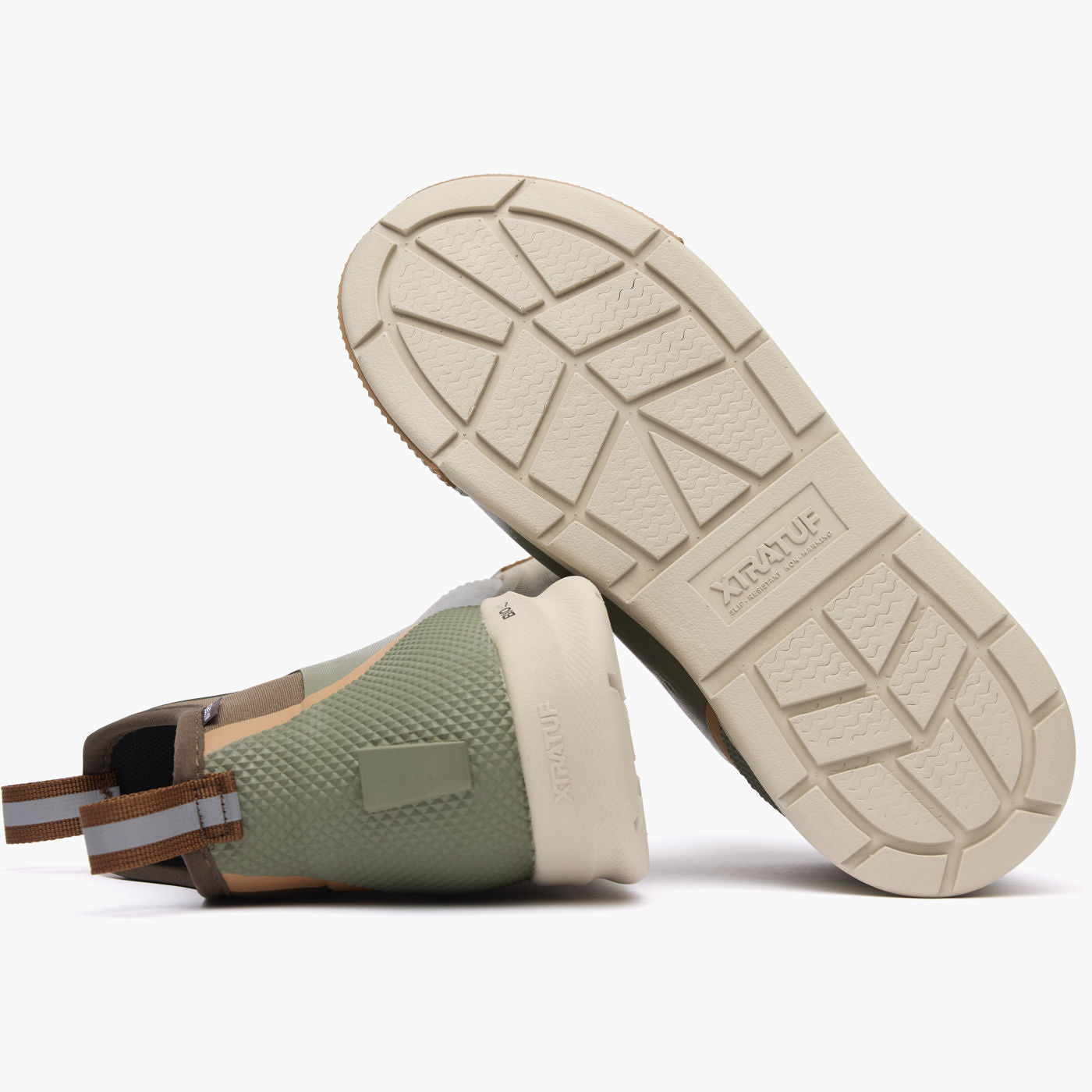
Outsole
The Sport uses BioLite in its ground-contact outsole for lightweight cushioning. See the Sport.
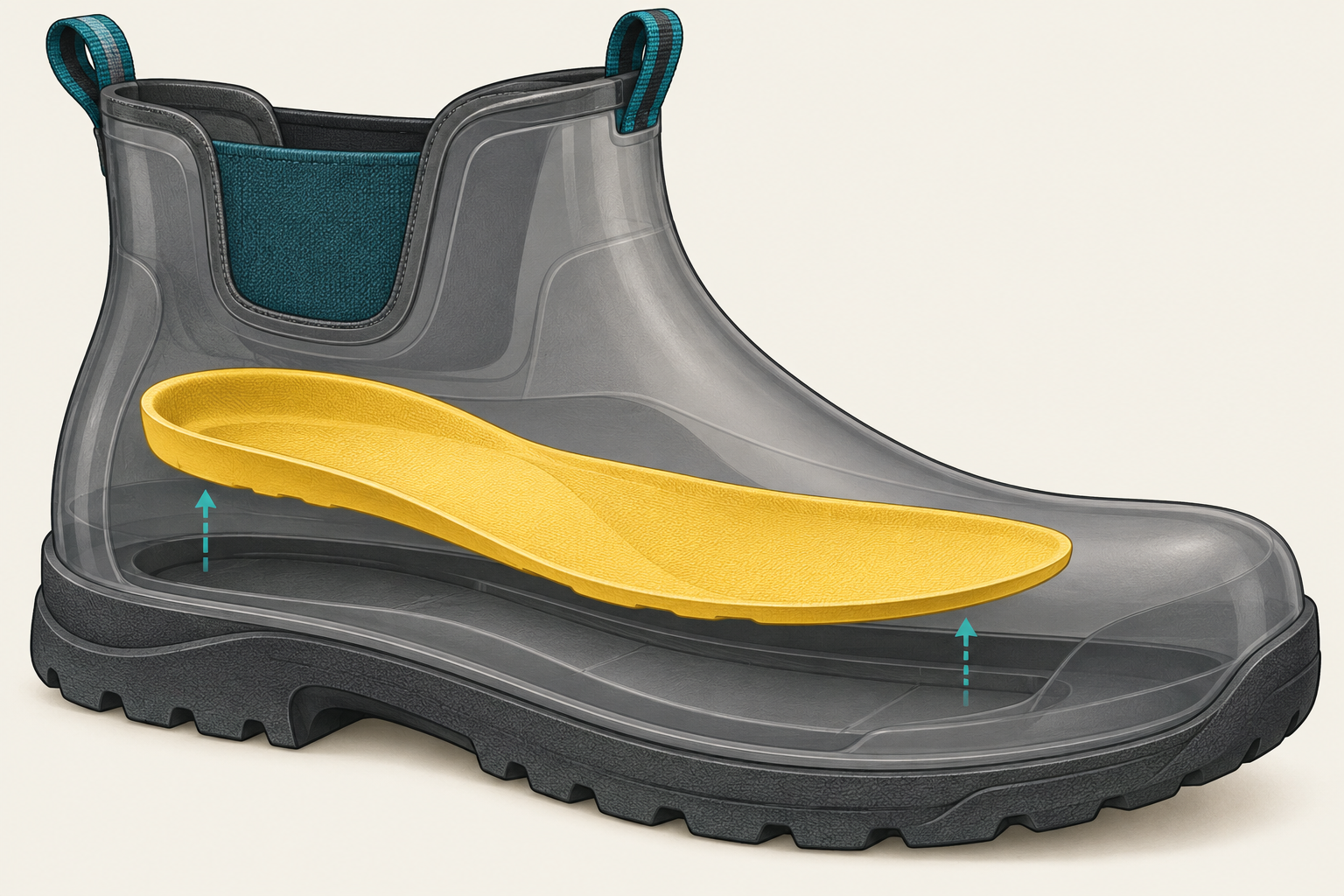
Footbed
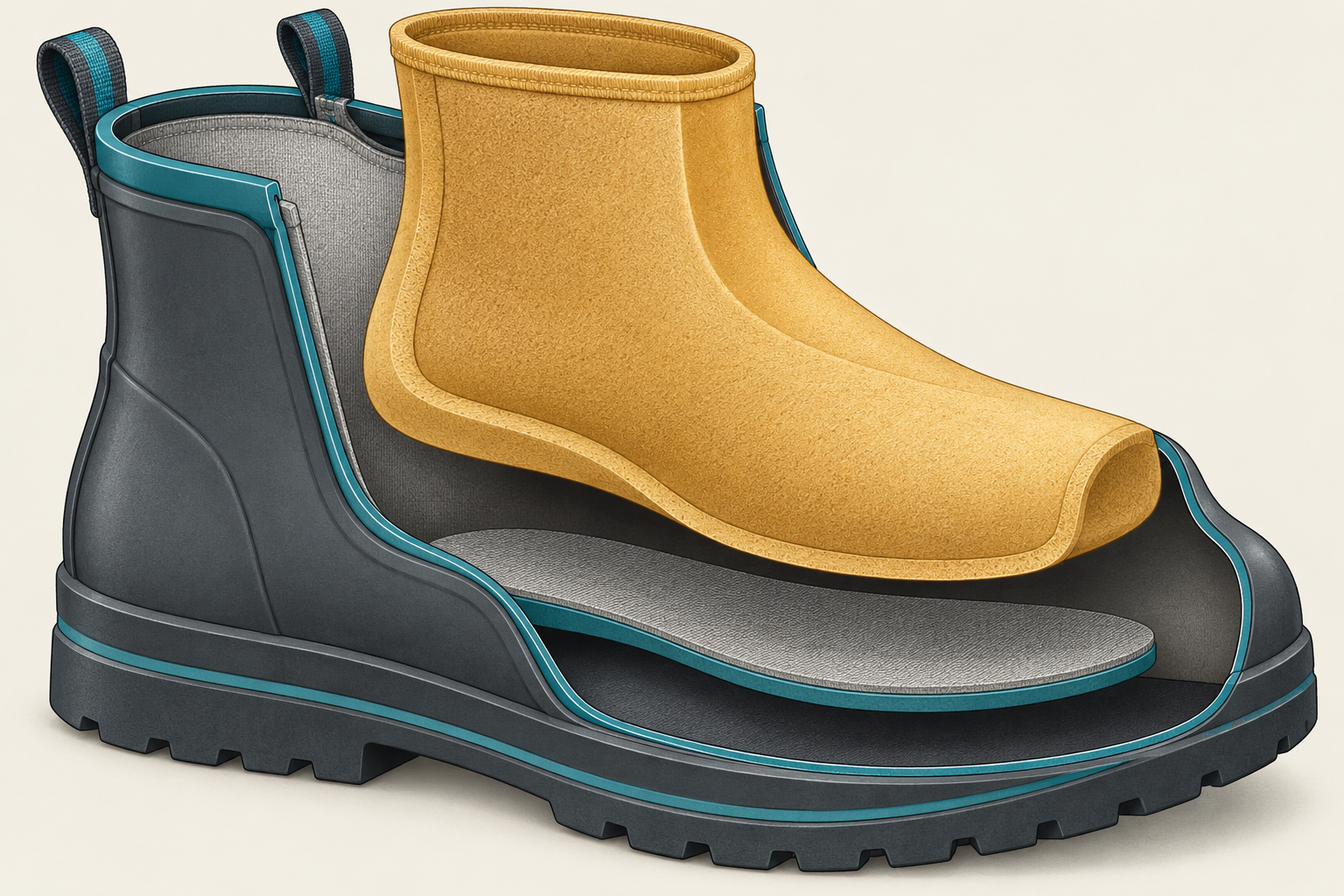
Selected Ankle Deck Boots use a molded BioLite footbed beneath your foot. The yellow insert shows its location in a conceptual illustration, not the exact model’s construction. See the Ankle Deck Boot.
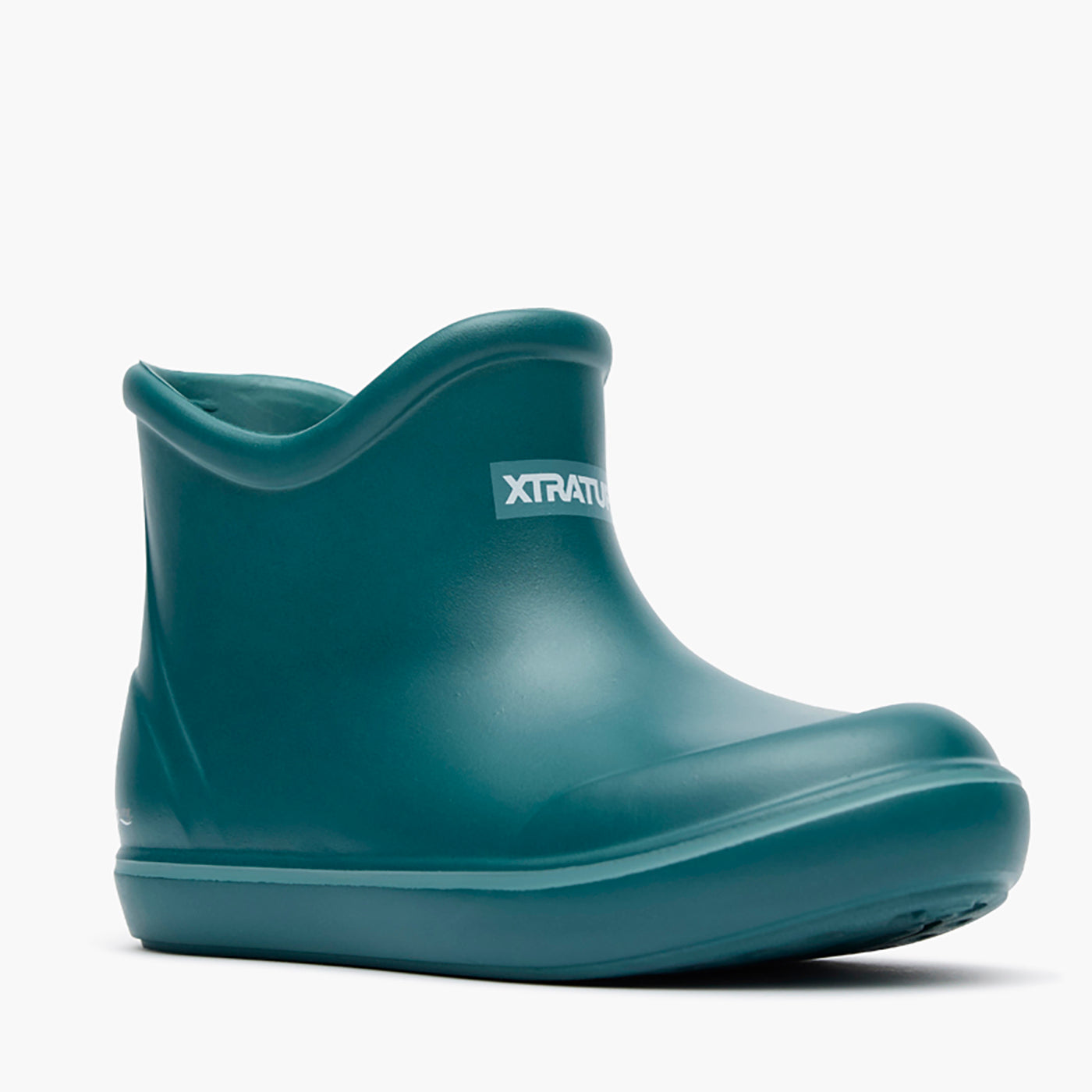
Whole molded boot
Kids’ TUFS uses BioLite for the whole one-piece molded boot, rather than only an outsole or footbed. See molded TUFS.
Check the part name: a BioLite footbed describes cushioning inside the boot; a BioLite outsole describes material against the ground. Neither means the whole boot is made from BioLite.
XTRATUF’s biodegradation claim applies to bioreactor landfill conditions. It does not mean the boot is home-compostable.
Inside / Moisture management
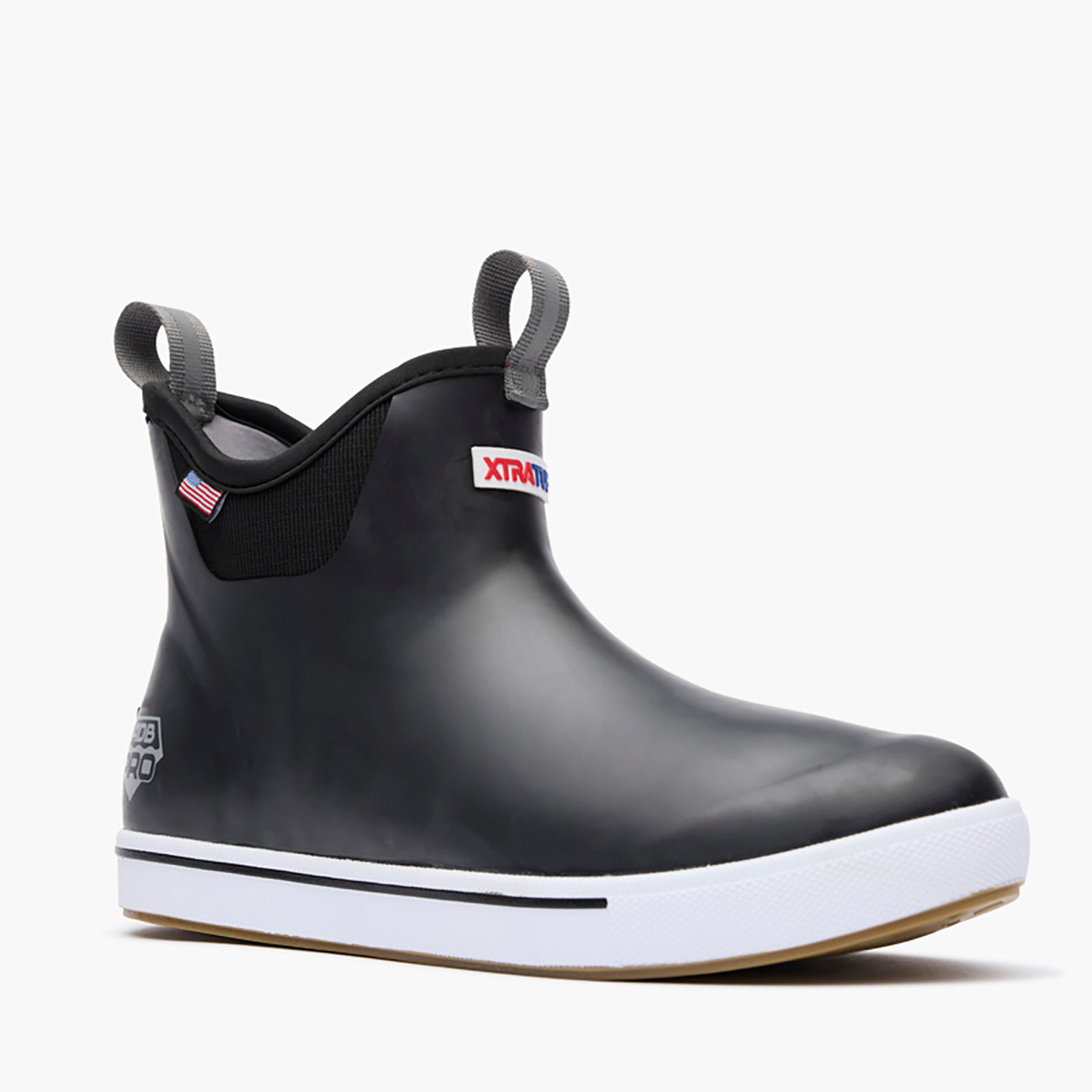
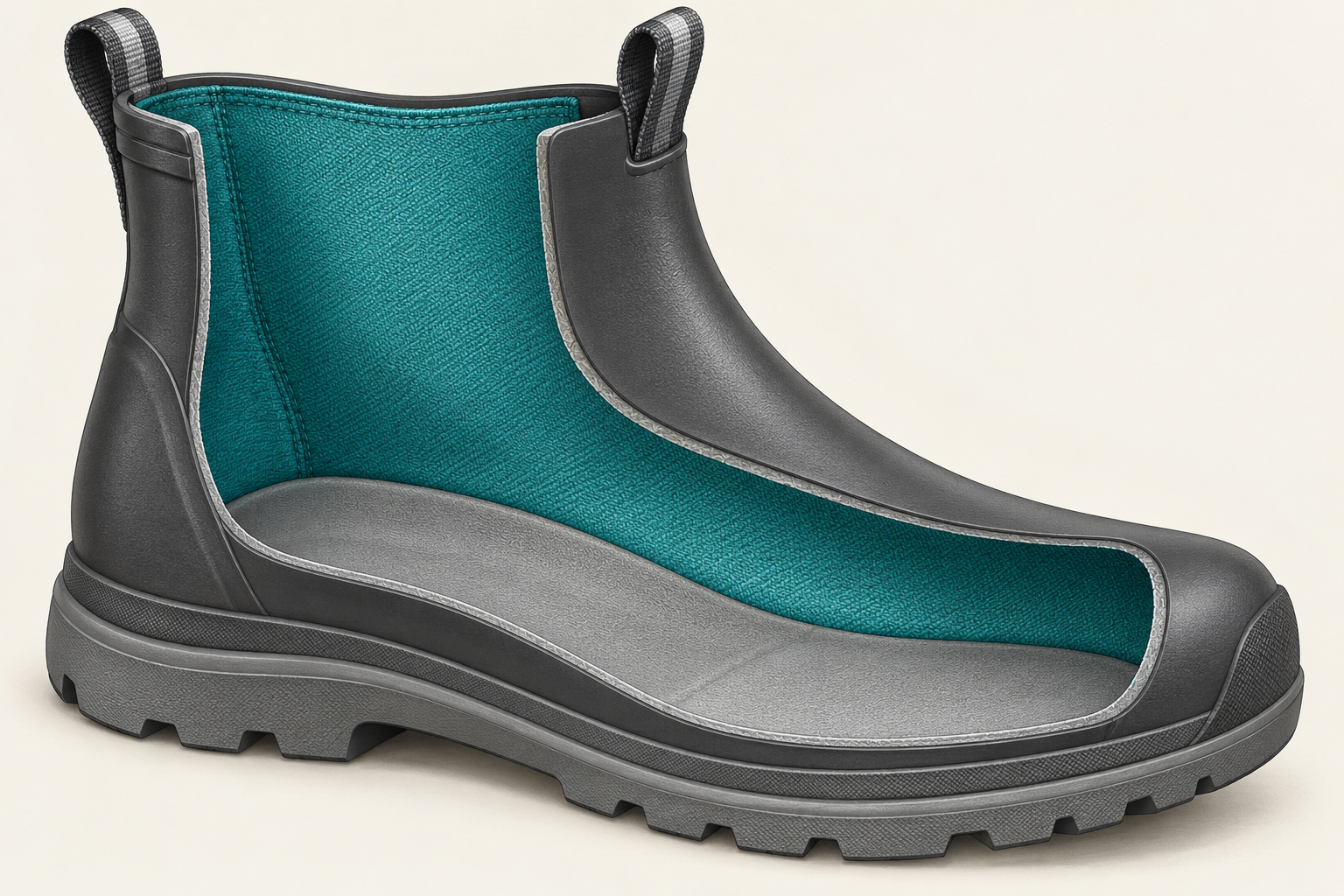
XPRESSCOOL is a moisture-wicking lining used in selected XTRATUF boots, including the Ankle Deck Boot Pro. It sits against your sock inside the waterproof shell.
XTRATUF describes it as an antimicrobial evaporative cooling liner. Look for it when comparing boots for warm, active days. It is not insulation, and socks, activity and weather still affect comfort.
Construction / Rubber foam
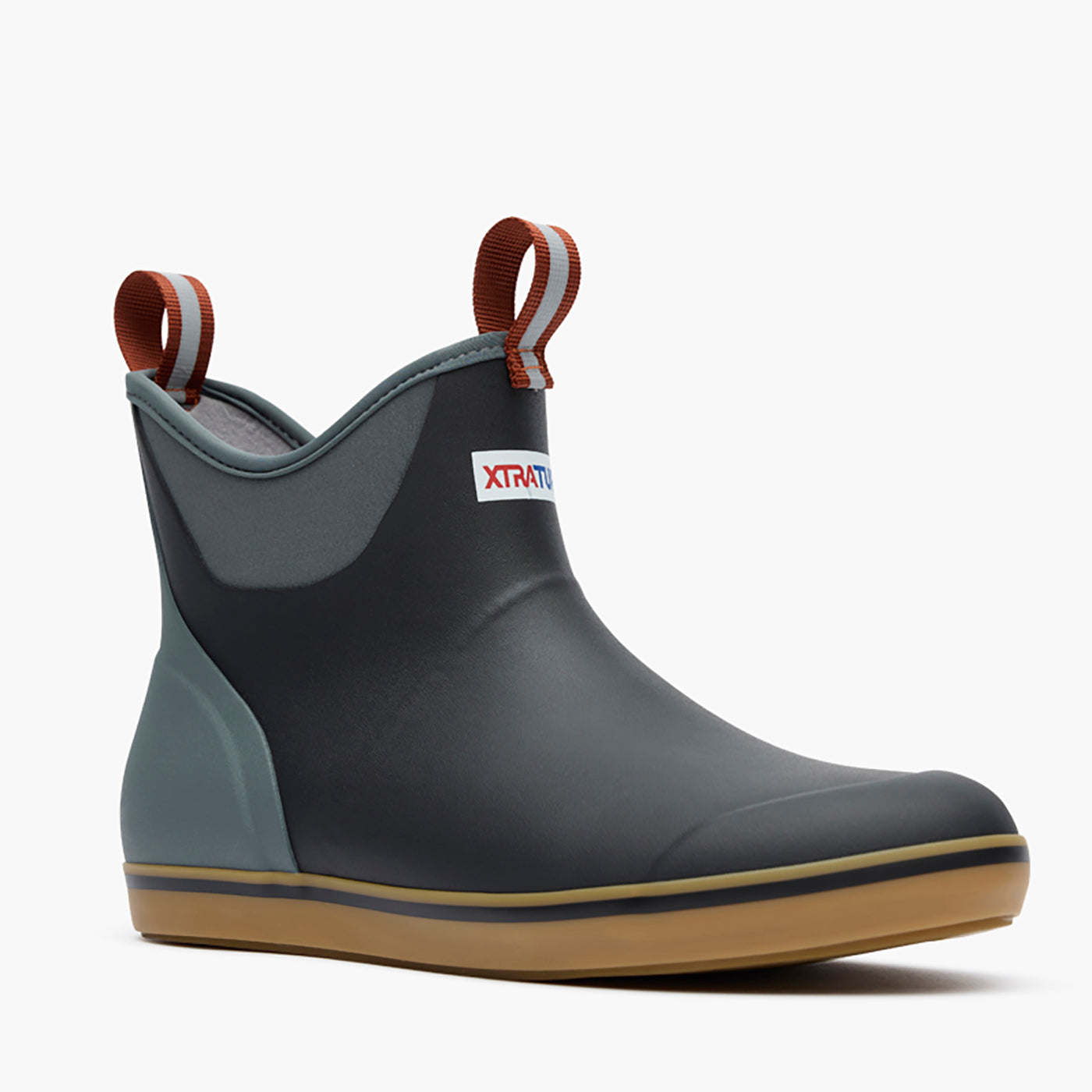
Bioprene is a bio-based rubber foam used in selected Ankle Deck Boots.
The pictured model combines Bioprene rubber foam, an XPRESSCOOL lining and a BioLite footbed. They have separate jobs: construction, moisture management and cushioning.
If material origin matters to you, check the model’s Bioprene specification. The name alone does not state the renewable-material percentage or mean the finished boot is biodegradable.
Construction / Waterproof shell
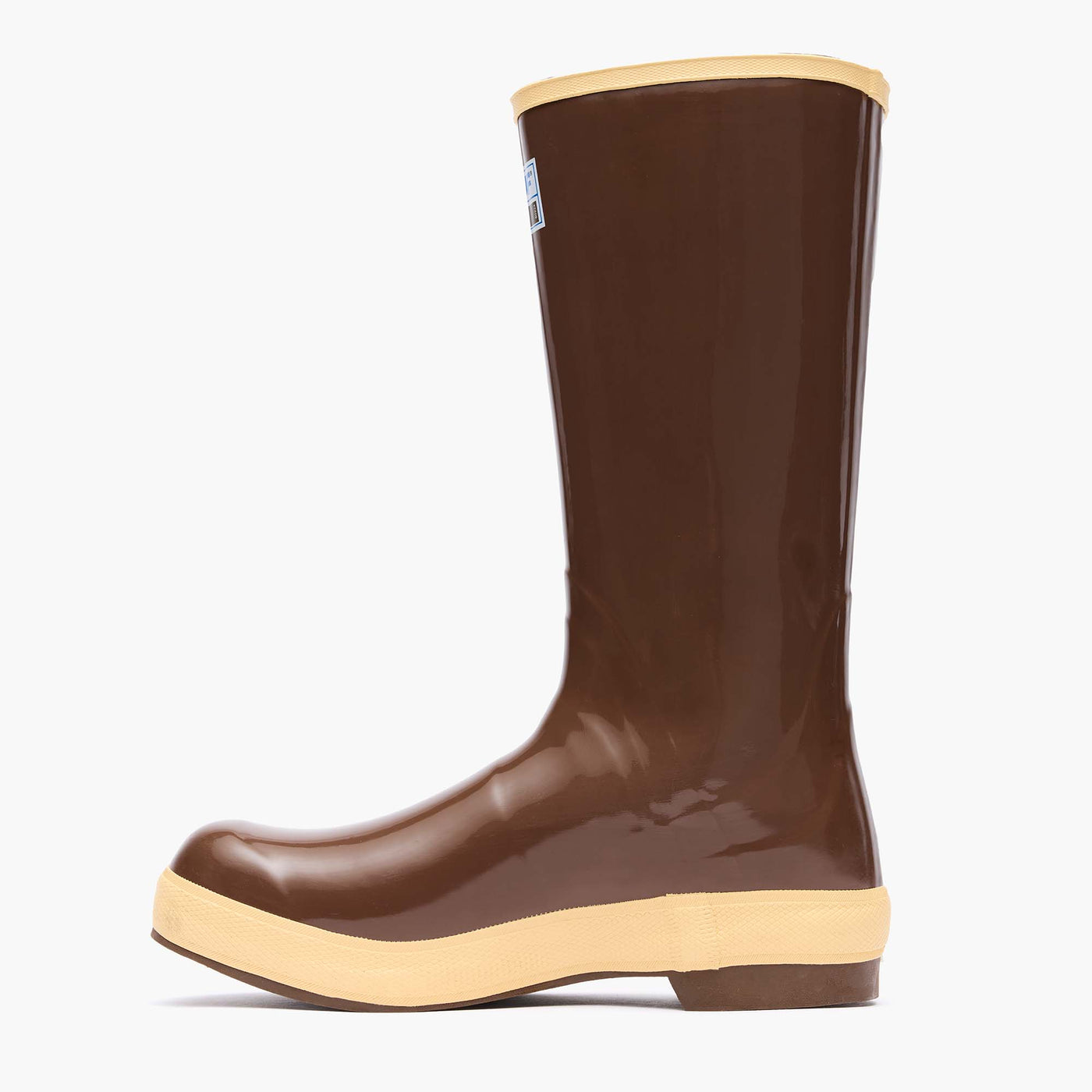
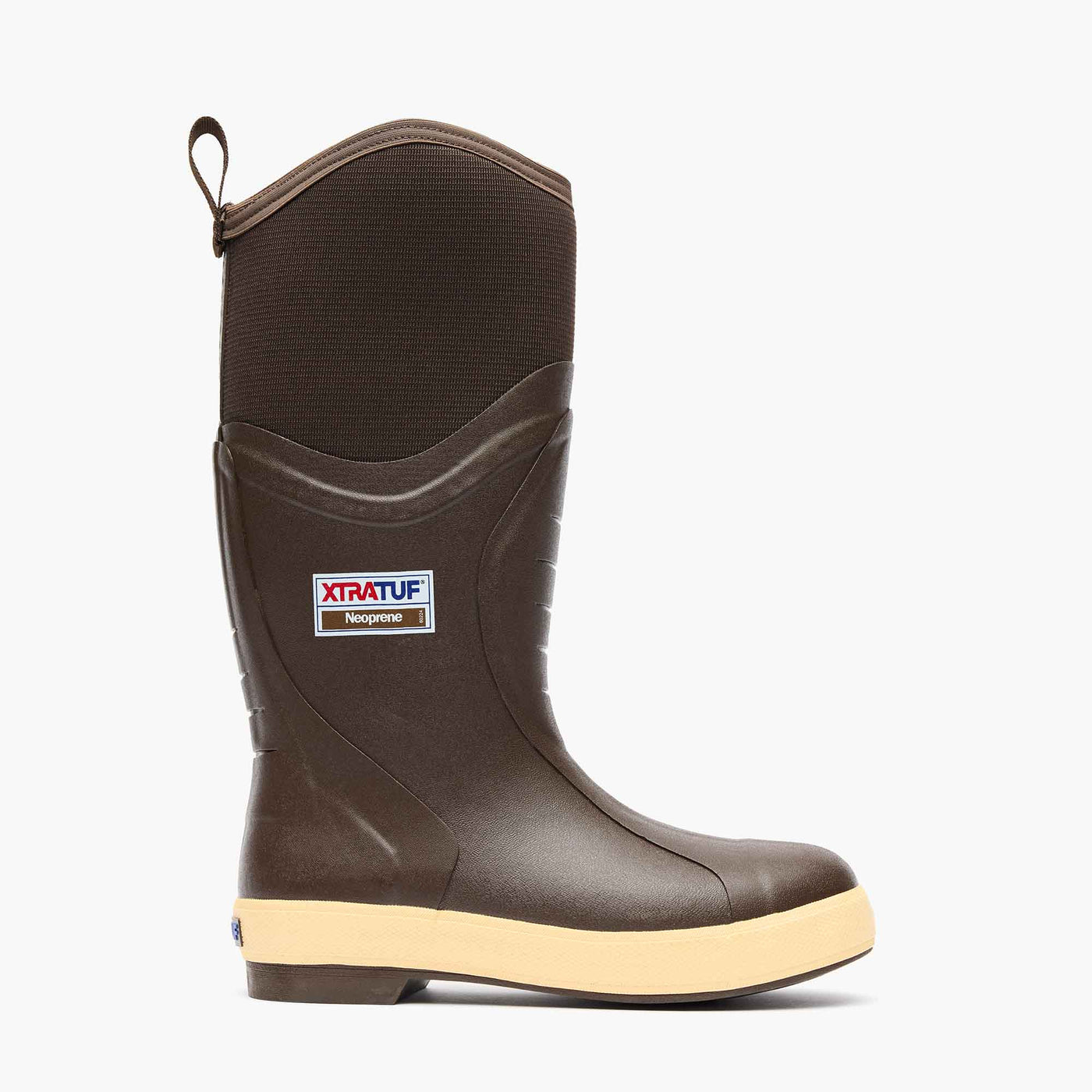
Triple dipping builds the Legacy’s seamless latex-neoprene shell through successive dips.
The shell forms the waterproof barrier, with reinforcement added where needed. The Ankle Deck Boot Pro also uses triple-dipped construction.
Three dips do not mean three layers of insulation. The standard Legacy shown here is non-insulated. Choose an explicitly insulated model for warmth, and check separate chemical-resistance specifications for workplace exposure.
Construction / Rubber compound
RDR is the rubber compound used in XTRATUF’s Insulated Elite Legacy.
XTRATUF describes resistance to many oils, acids, chemicals and contaminants. This makes RDR a specification to examine for work involving those exposures.
RDR describes the rubber formulation; triple dipping describes shell construction. Neither guarantees protection against every substance. Match the exact model to your employer’s requirements and the chemicals involved.
Underfoot / Tread pattern
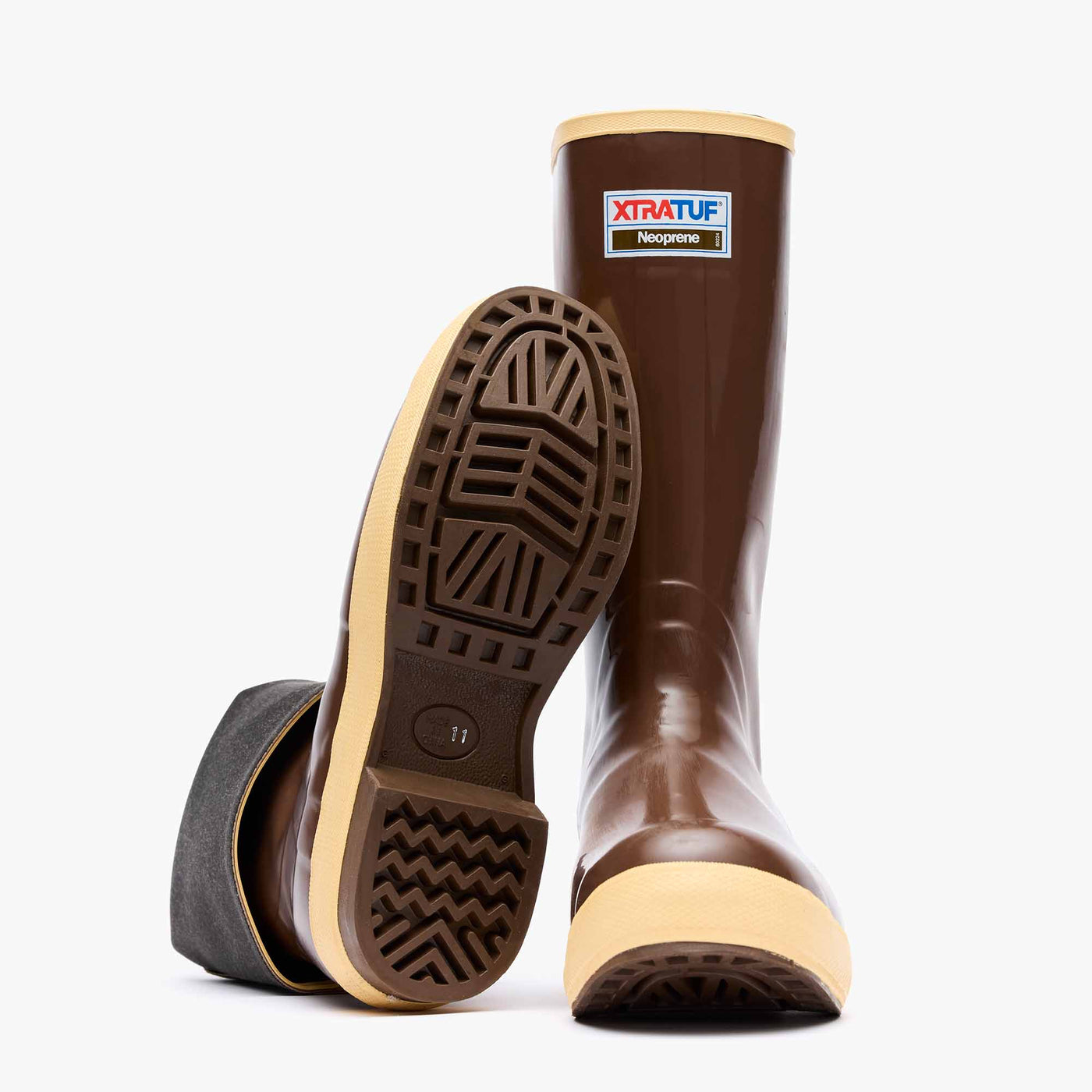
Chevron is the repeating angled tread associated with XTRATUF’s signature outsole.
The pattern is visible on the Legacy sole pictured here. Traction also depends on the outsole compound, so check both on the model you are considering.
Non-marking means the sole is designed to avoid leaving marks; slip-resistant describes grip. Neither promises secure footing on every wet, oily or icy surface.
Underfoot / Wet ice
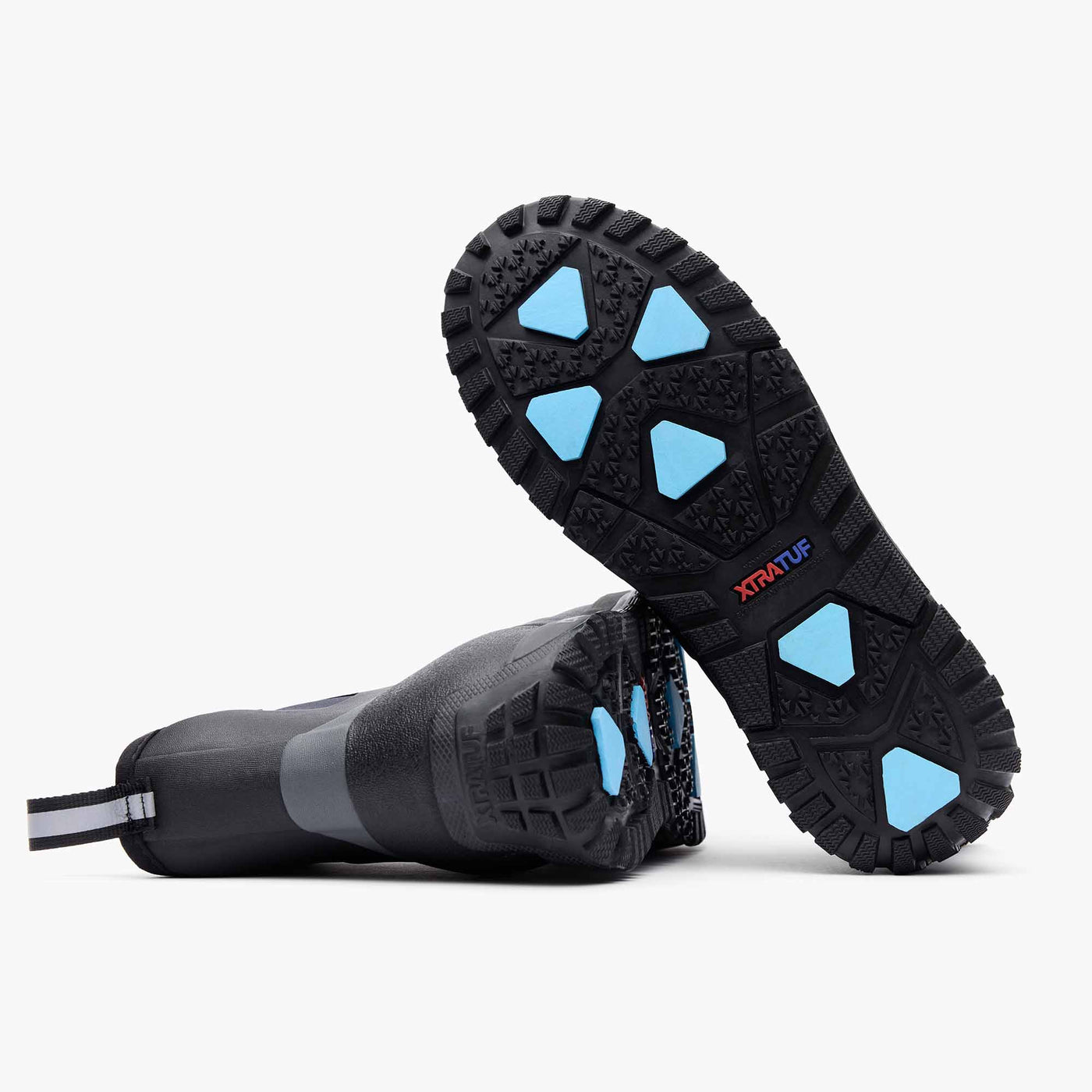
GlacierTrek Pro combines an ice-gripping compound with slip-resistant rubber on the Ankle Deck Boot Ice.
Look for it when you need footwear designed to move between wet ice and other wet surfaces. It is different from the ordinary Ankle Deck Boot outsole.
The Ice model’s faux-shearling lining addresses warmth; GlacierTrek Pro addresses traction. Check both for cold-weather use, and continue to take care on slippery surfaces.
Upper / Drainage
The Sport DriftTech uses an engineered mesh upper and a drainable BioLite outsole to let water flow through.
Choose this type of construction when water will enter your footwear and you want it to escape. The mesh and openings near the sole provide that drainage path.
For dry socks in rain or shallow water, choose a waterproof model instead. The Sport DriftTech name should not be mistaken for the waterproof Sport’s construction.
Collaboration materials
The Finisterre + XTRATUF collaboration brings together a natural-rubber bootie, a textile lining and a BioLite footbed. Each material has its own job.
Inside / Natural rubber
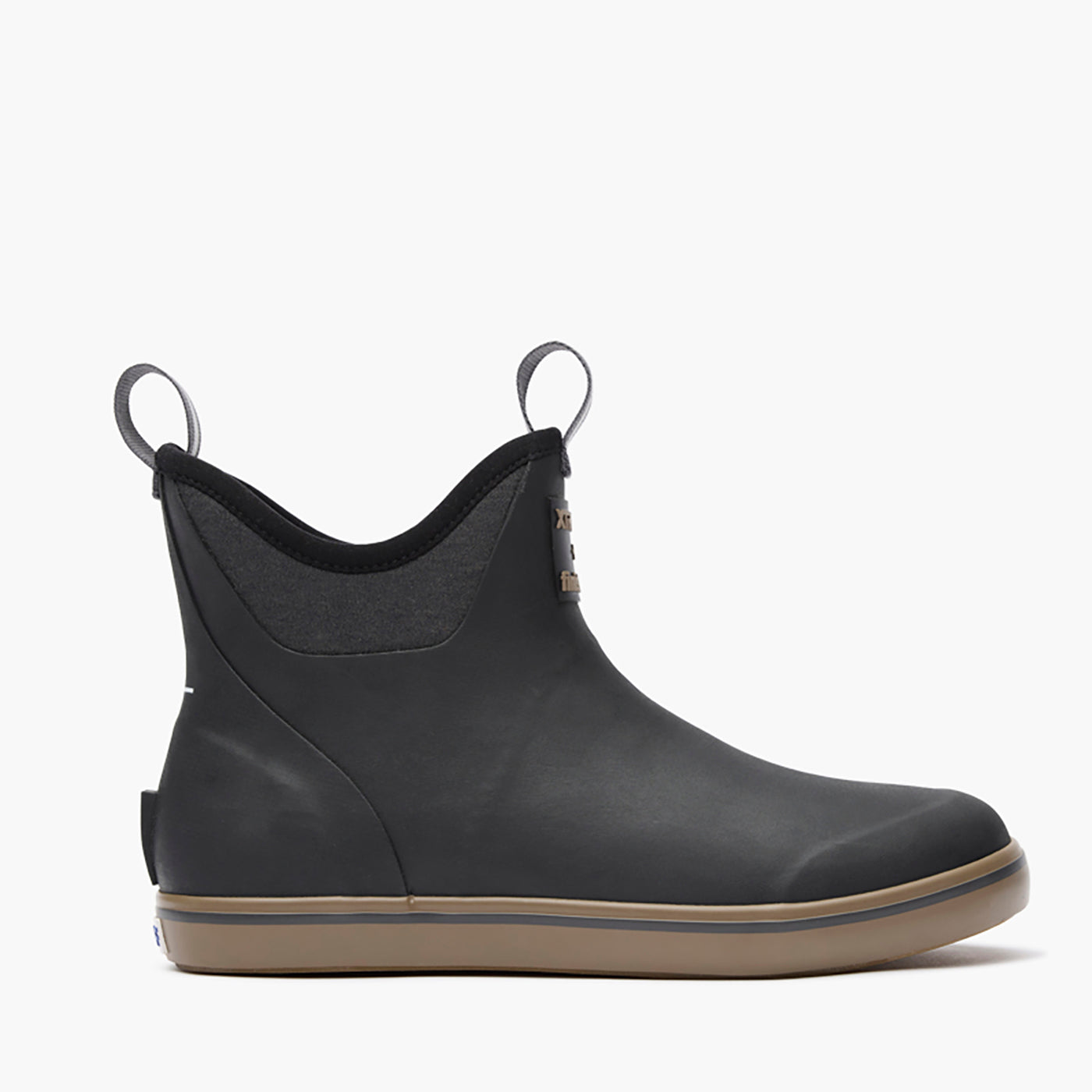
The Finisterre + XTRATUF Ankle Deck Boot uses a Yulex natural-rubber bootie. Yulex is a material supplier’s name, not an XTRATUF invention.
The collaboration lists FSC/PEFC-certified natural rubber sourced from Hevea trees. It is an option to examine if you want an alternative to conventional neoprene.
Yulex describes the bootie, not every component. This model also has a BioLite footbed and recycled-yarn pull loops.
Lining / Recycled ingredients
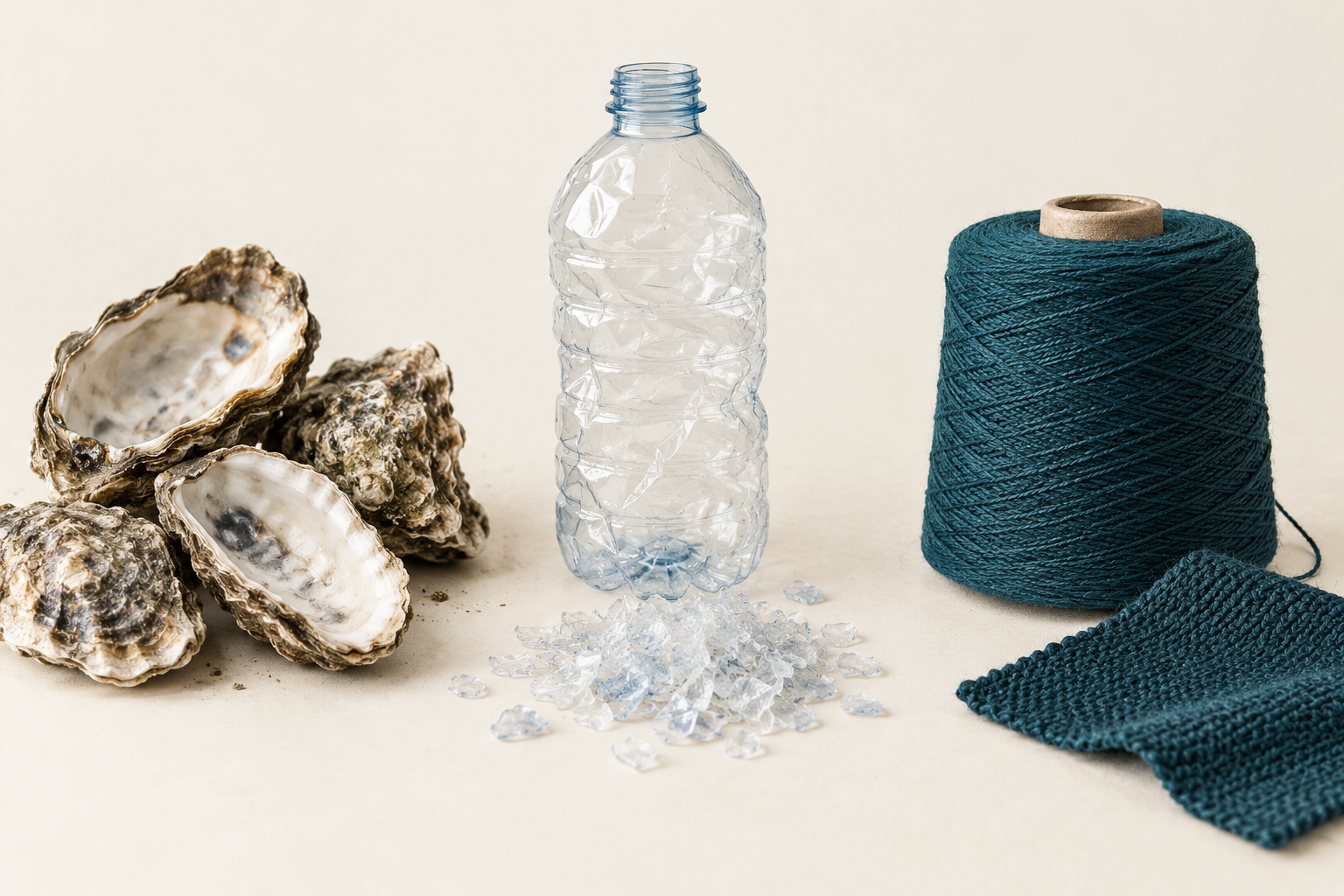
Seawool combines processed oyster shells and recycled plastic in a textile material.
XTRATUF’s UK listing names it in the Finisterre collaboration’s top cover and lining, rather than the waterproof exterior. Despite the name, it is not simply sheep’s wool.
The illustration shows the shells-to-yarn idea. The supplier describes comfort and moisture-management properties, but these do not give the finished boot a temperature rating. Check insulation separately when warmth is the priority.
Older listings / Protective fabric
Spandura is the abrasion-resistant fabric named in older descriptions of the Elite’s neoprene bootie.
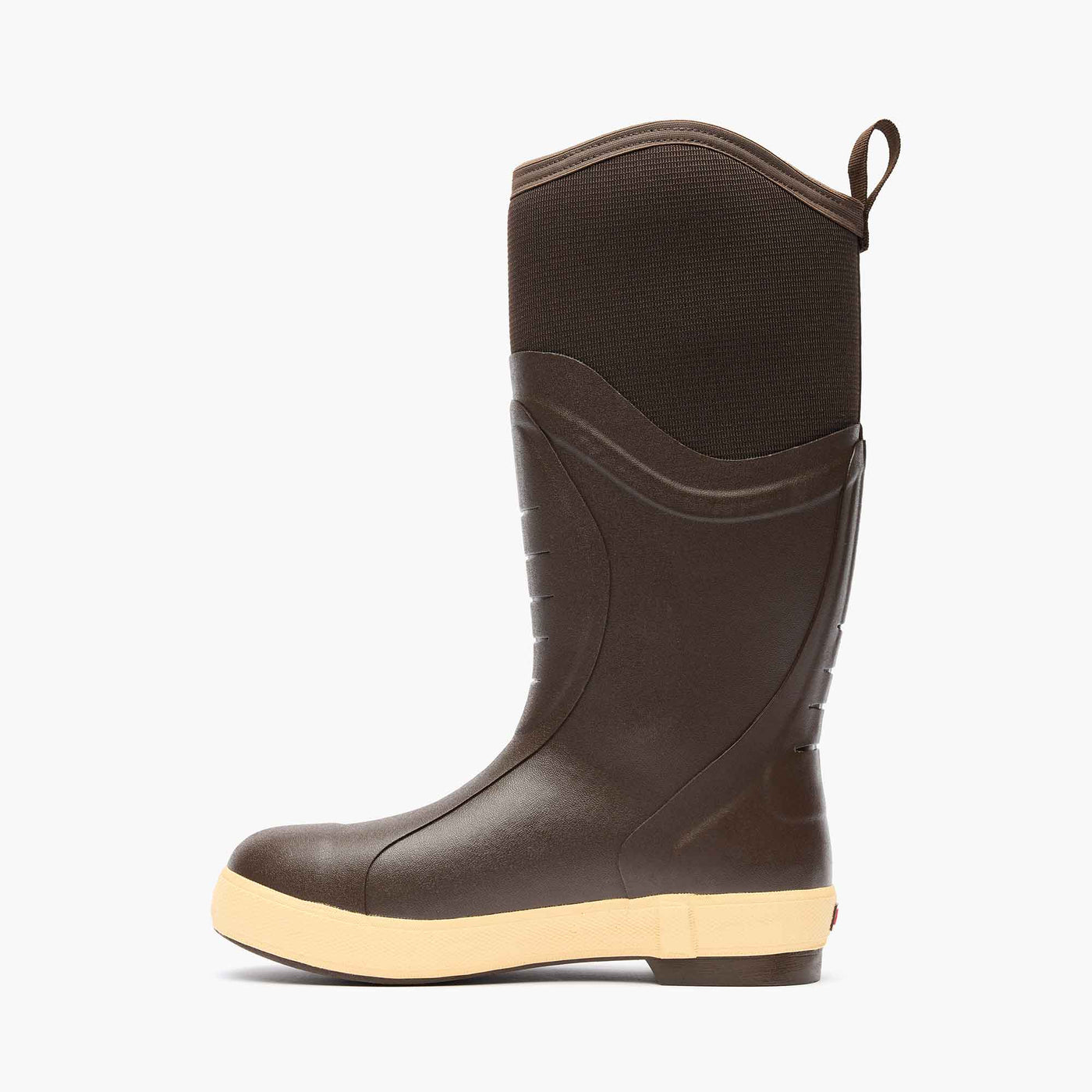
XTRATUF’s 2018 catalog specifies high-abrasion nylon over a 5 mm neoprene bootie. Today’s Elite listing describes four-way stretch mesh over its 5 mm bootie; the photo shows that current model.
Use this distinction when comparing old and current listings. The outer fabric protects the bootie, while the neoprene beneath it provides insulation. Do not assume every Elite still uses the Spandura name.
Beyond boots
These three features appear in XTRATUF shoes and sandals. They describe traction or textile materials, rather than waterproof rubber-boot construction.
Shoes and sandals / Traction
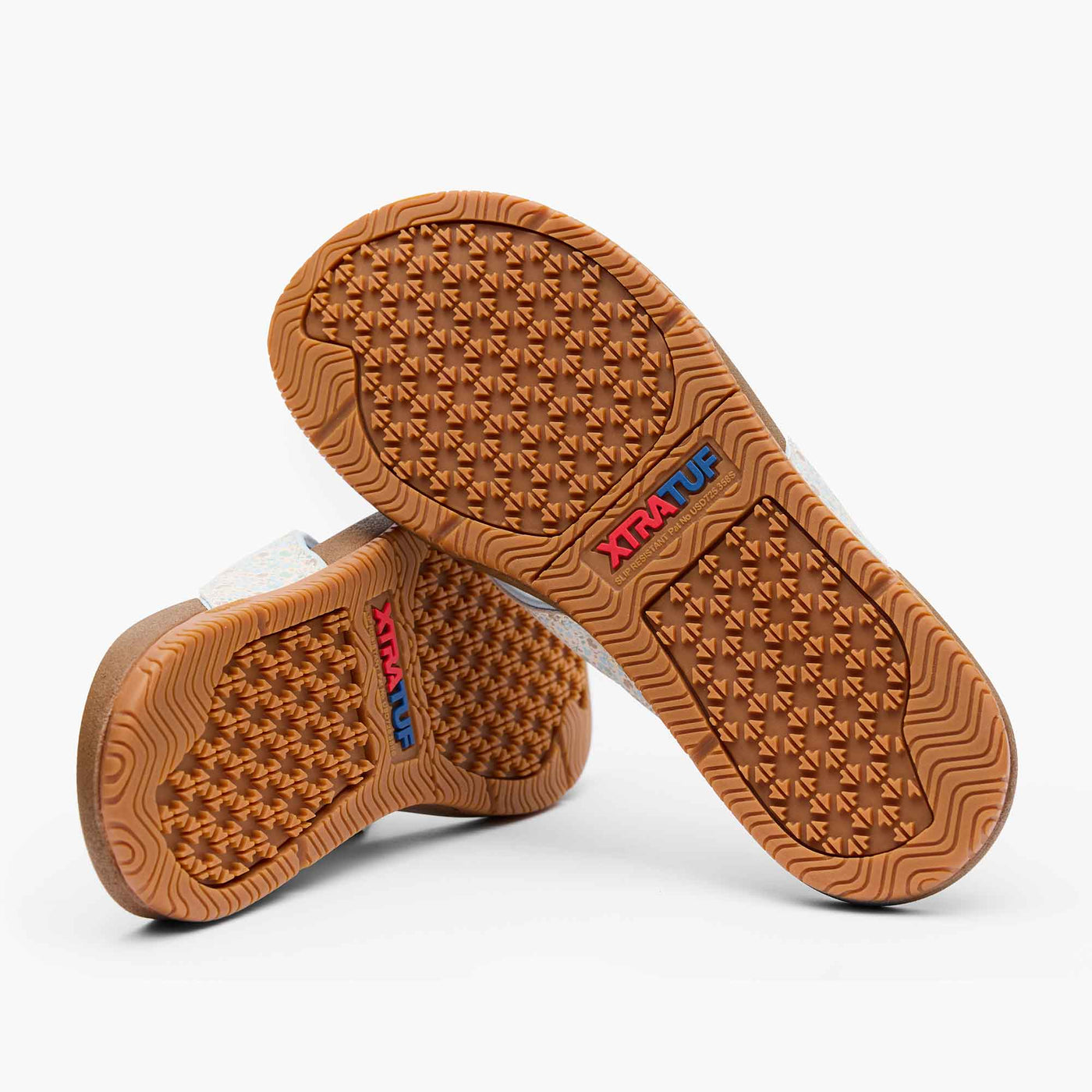
TUFgrp is XTRATUF’s named outsole design and rubber compound, shown here on the Auna sandal.
XTRATUF describes it as designed for flat, hard surfaces and wet, uneven terrain. Its tread differs from the Legacy’s familiar Chevron pattern.
Treat it as an outsole feature, separate from cushioning or the upper. On the Auna, first decide whether an open sandal suits the activity; the outsole does not make it protective work footwear.
Deck shoes / Recycled polyester
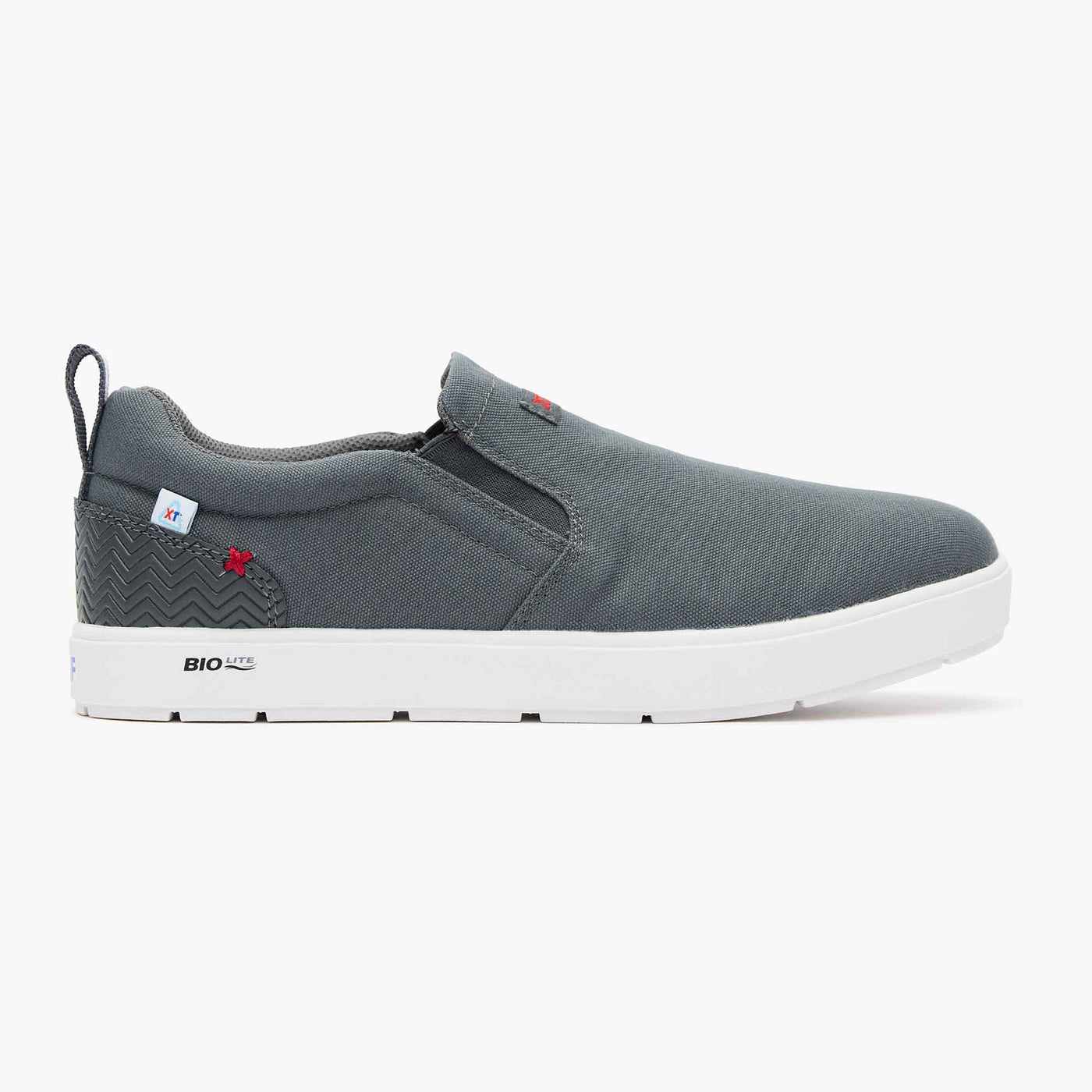
The Sharkbyte 2.0 ECO uses a REPREVE Our Ocean textile upper made from ocean-bound plastic bottles.
Ocean-bound means plastic at risk of reaching the ocean, not necessarily plastic recovered from seawater. The bottles are processed into recycled polyester fiber.
The Sharkbyte upper has a water-repellent treatment, not the waterproof construction of a rubber boot. Its BioLite outsole is a separate component: the recycled textile claim applies to the upper, not the whole shoe.
Deck shoes / Regenerated nylon
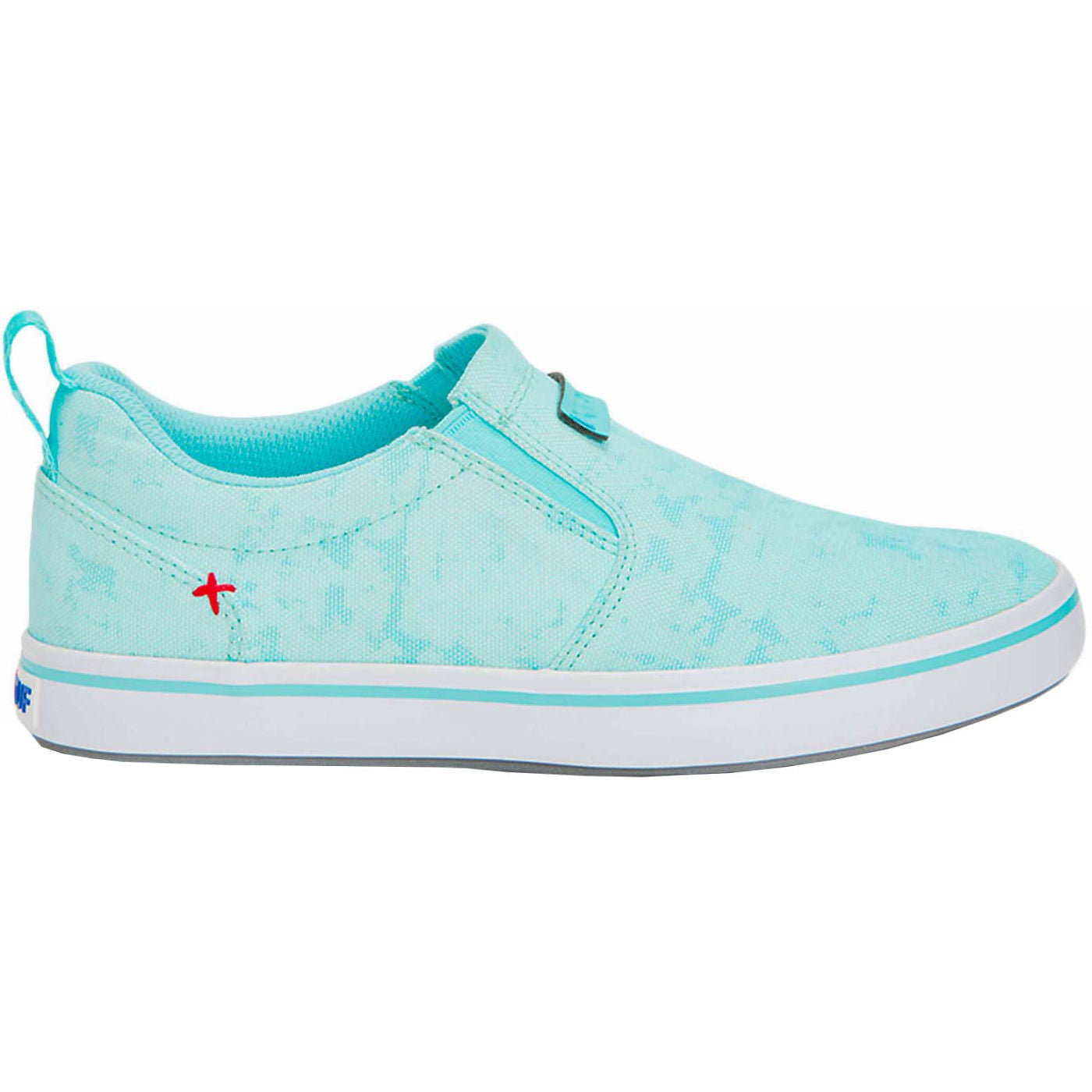
ECONYL is regenerated nylon used in the upper of XTRATUF’s women’s ECO Sharkbyte deck shoe.
It comes from nylon waste, including fishing nets and other recovered sources. Unlike REPREVE Our Ocean’s recycled polyester, ECONYL is nylon; the two materials are not interchangeable.
The claim concerns the upper. Separate soles and other components mean a regenerated upper does not make the whole shoe recyclable through household collections.
Before you order
A useful feature has to match the way you will wear the footwear. Before choosing a pair, check these four things: