Rubber boot
Legacy boots
Rinse salt and grime after use, clean more carefully during hard-use weeks, dry naturally, and keep oils or conditioners off outsole tread.
XTRATUF Boot Care
Rinse salt and grime with fresh water after hard use, clean deeper weekly, dry without heat, refresh worn insoles, and send cracks, leaks, punctures, warping, or warranty questions to XTRATUF support.
Start here
Choose the closest problem. Routine care stays here; cracks, leaks, punctures, separation, warping, or claim questions go to XTRATUF warranty/support before the footwear is modified.
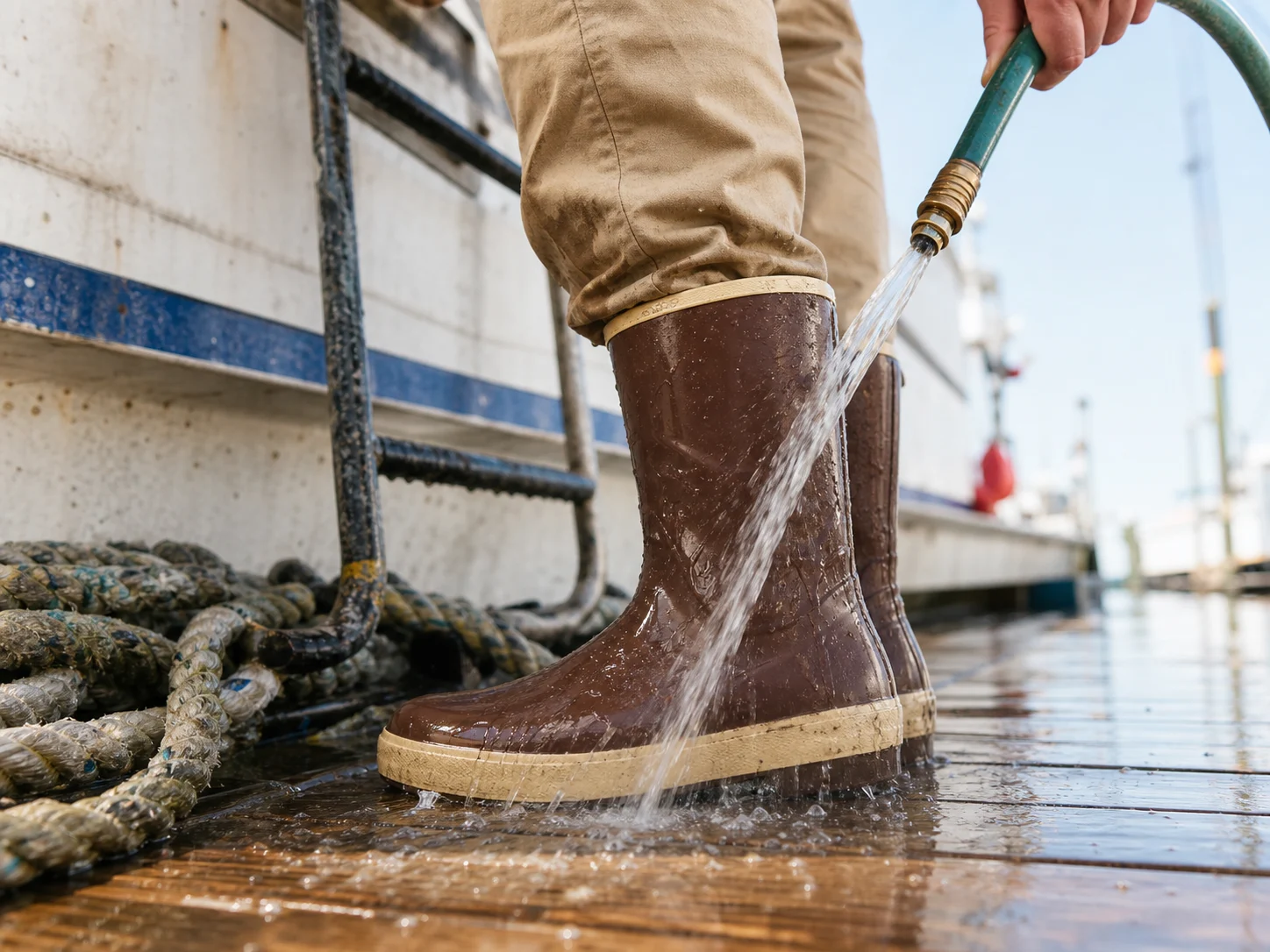
Fresh-water rinse after saltwater, fish slime, mud, or dock grit; save deeper brushing for the weekly clean.
First move Fresh water now Weekly Soft brush clean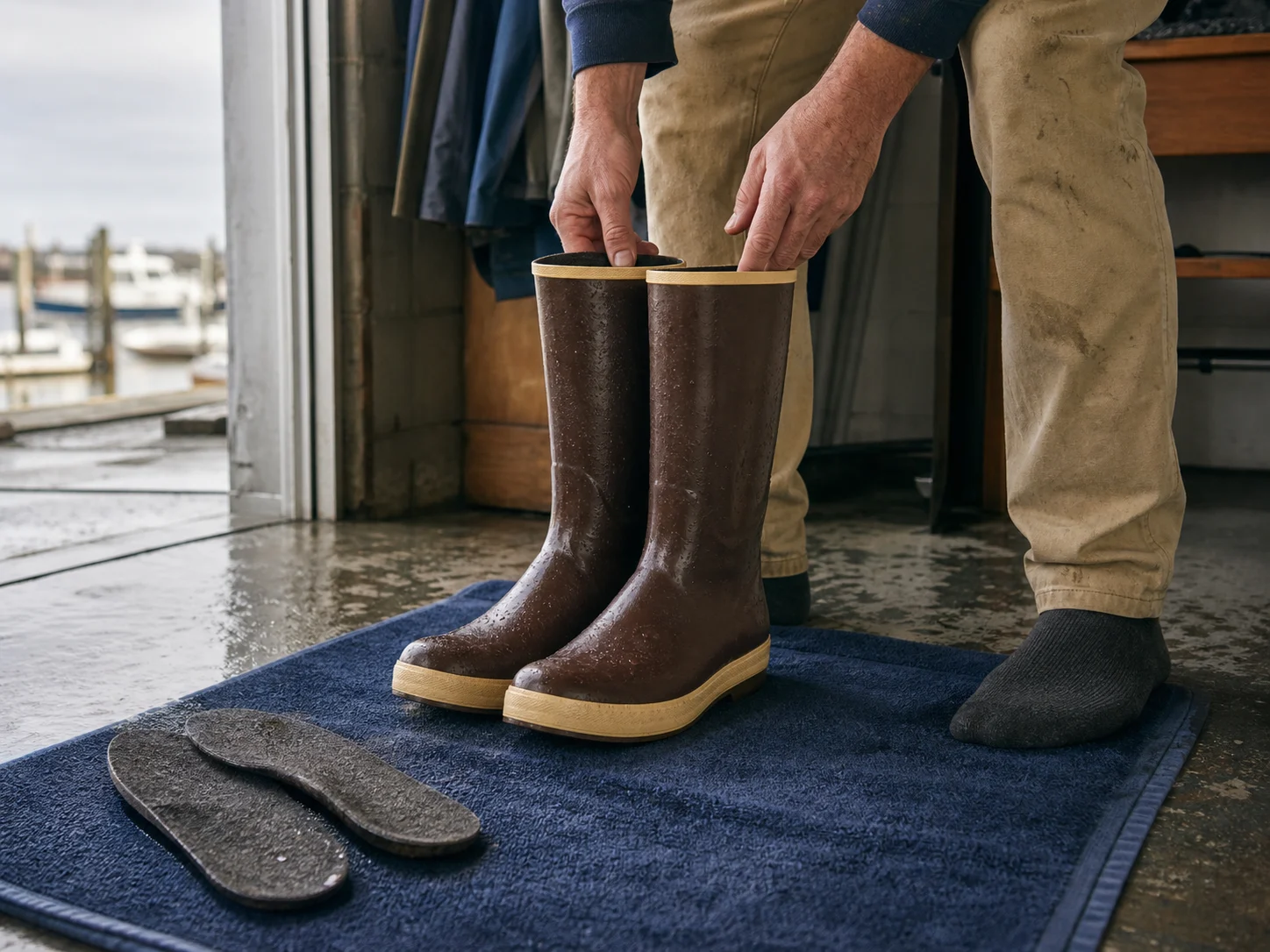
Pull removable insoles, open the footwear to air, and avoid dryers, radiators, heat vents, and direct hot sun.
First move Drain and open Avoid Heat shortcuts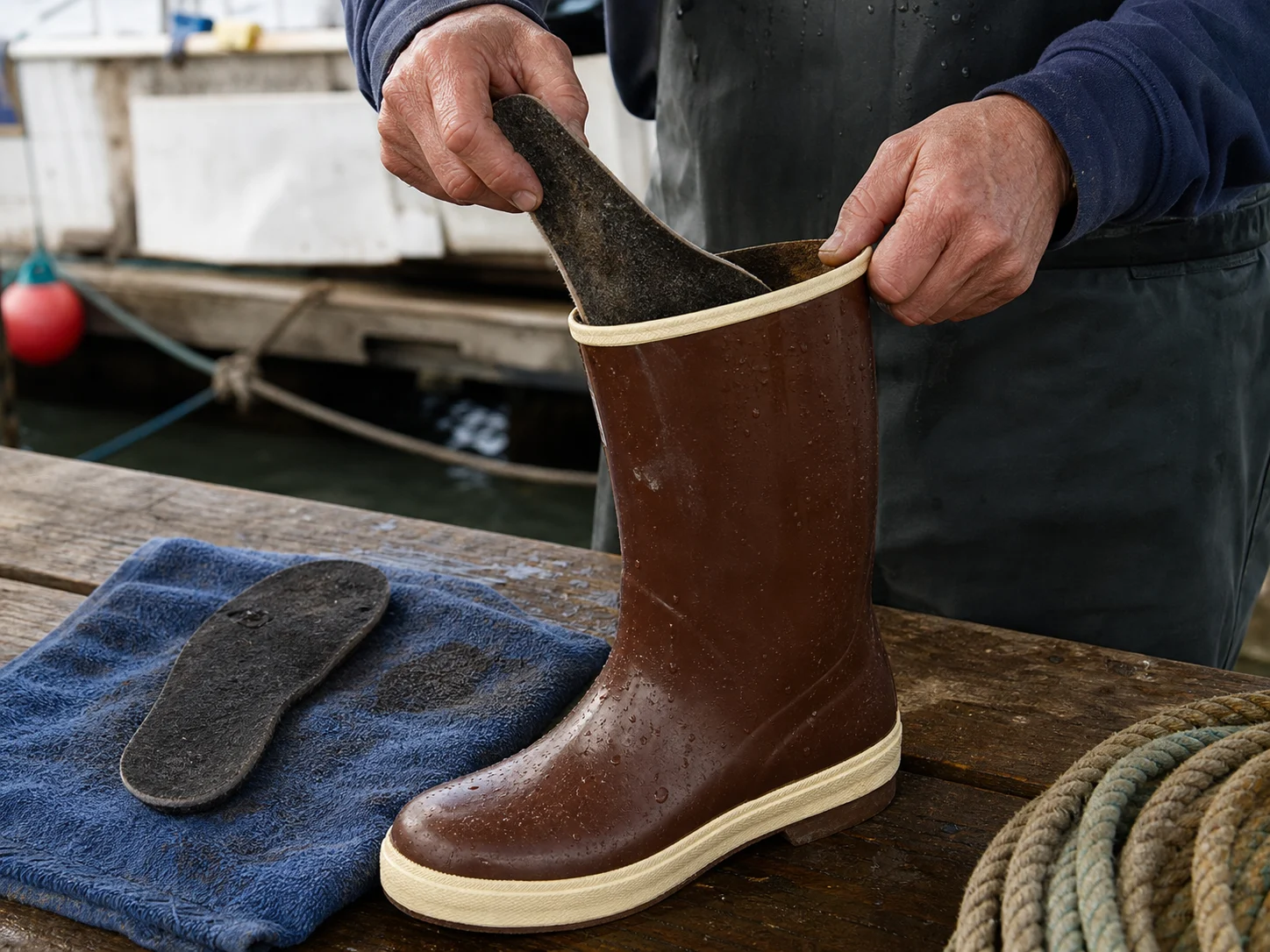
If the insole is packed down, staying wet, or wearing through, remove it, dry it, wash only when suitable, or replace it.
Check Damp or packed flat Next Dry or replace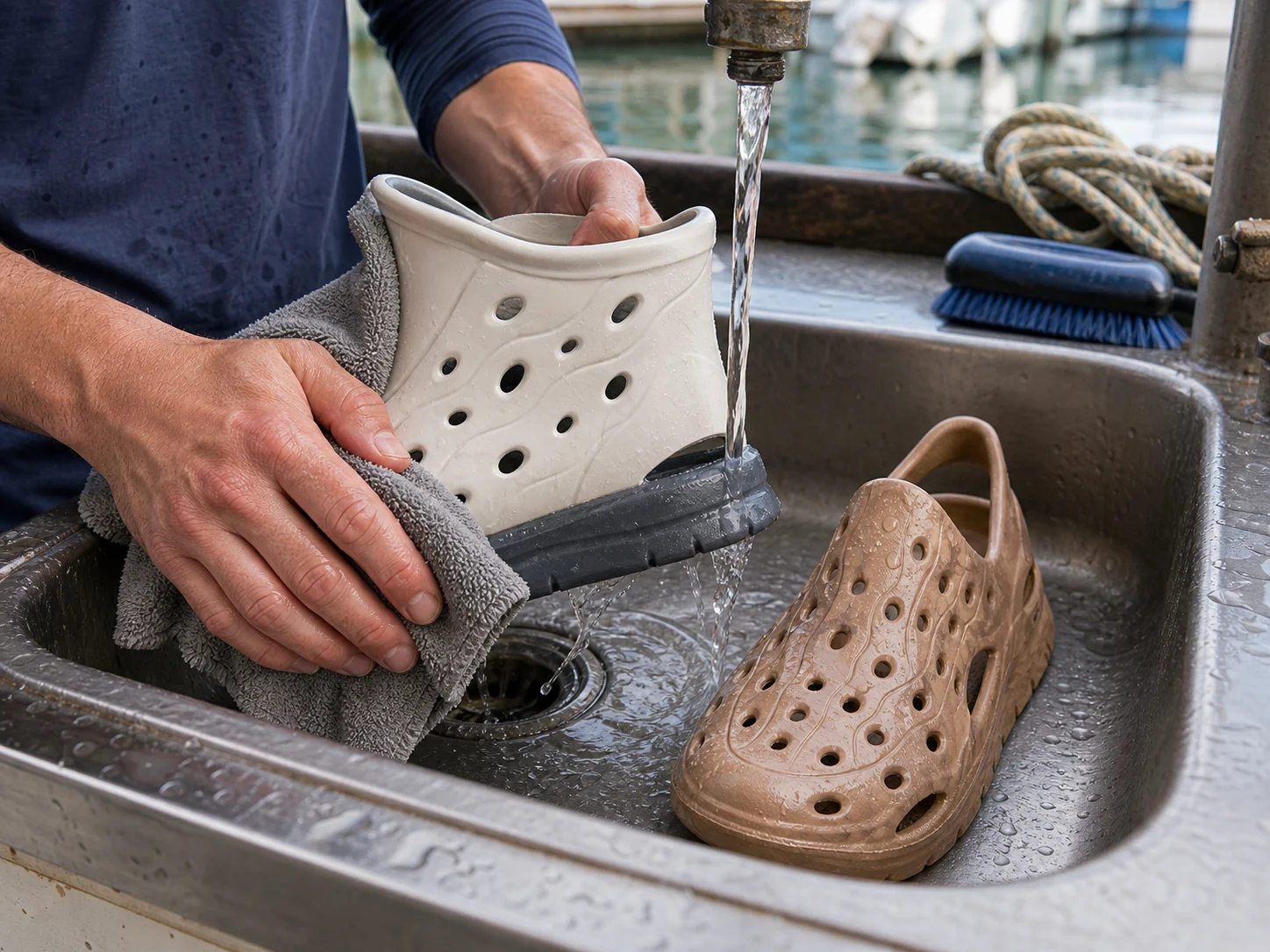
XTRATUF Riptide and Hightide pages point to hand cleaning, moderate-temperature air drying, and no machine or dishwasher.
Clean Hand wash only Avoid Washer or dishwasher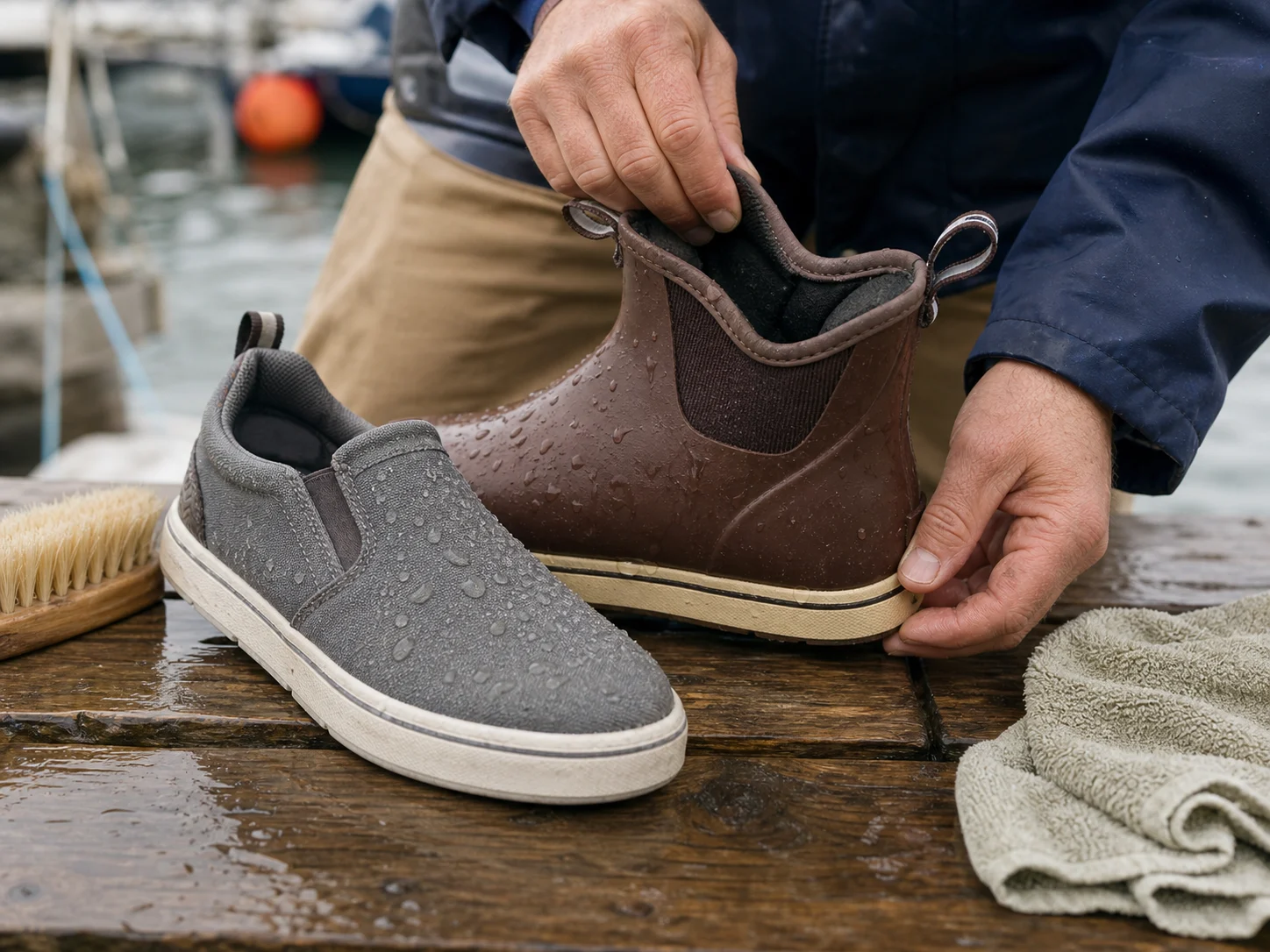
Deck boots, Riptide, Hightide, and deck shoes still need rinse, air, insole, collar, and outsole checks after wet use.
Check Collar and footbed Also Outsole grooves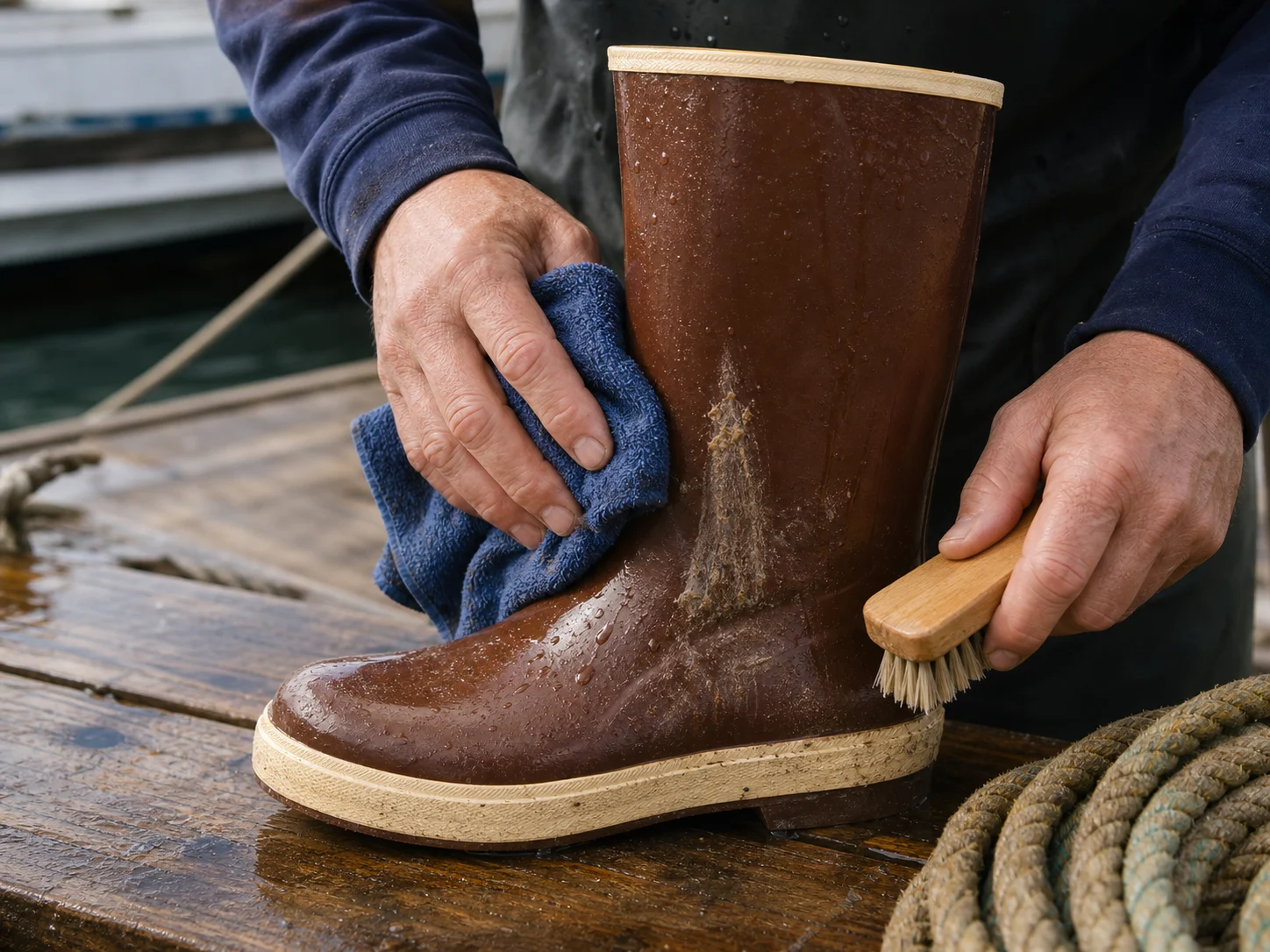
A cosmetic scuff or stuck grime usually needs water, mild soap, a soft brush, and inspection, not glue or solvents.
First move Gentle clean Stop if Split or leak
Cracks, leaks, separation, punctures, warping, or unknown failures are beyond a normal care guide.
Official route xtratuf.com/pages/warranty Before Glue, heat, tape, or patches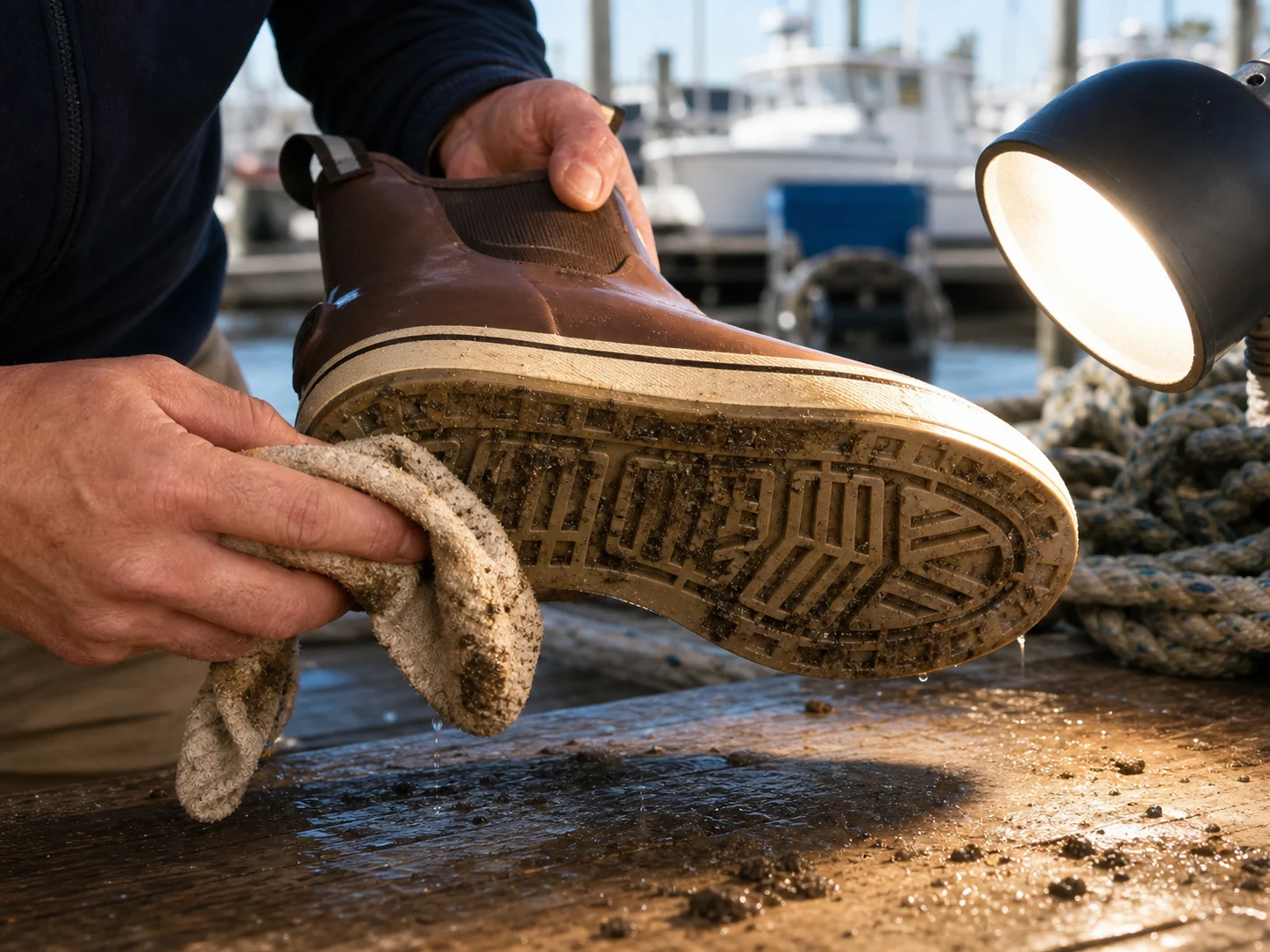
If the outsole is slick, chunked, or no longer dependable for the next job, cleaning is not a traction fix.
Clean Then inspect Do not Treat oil as grip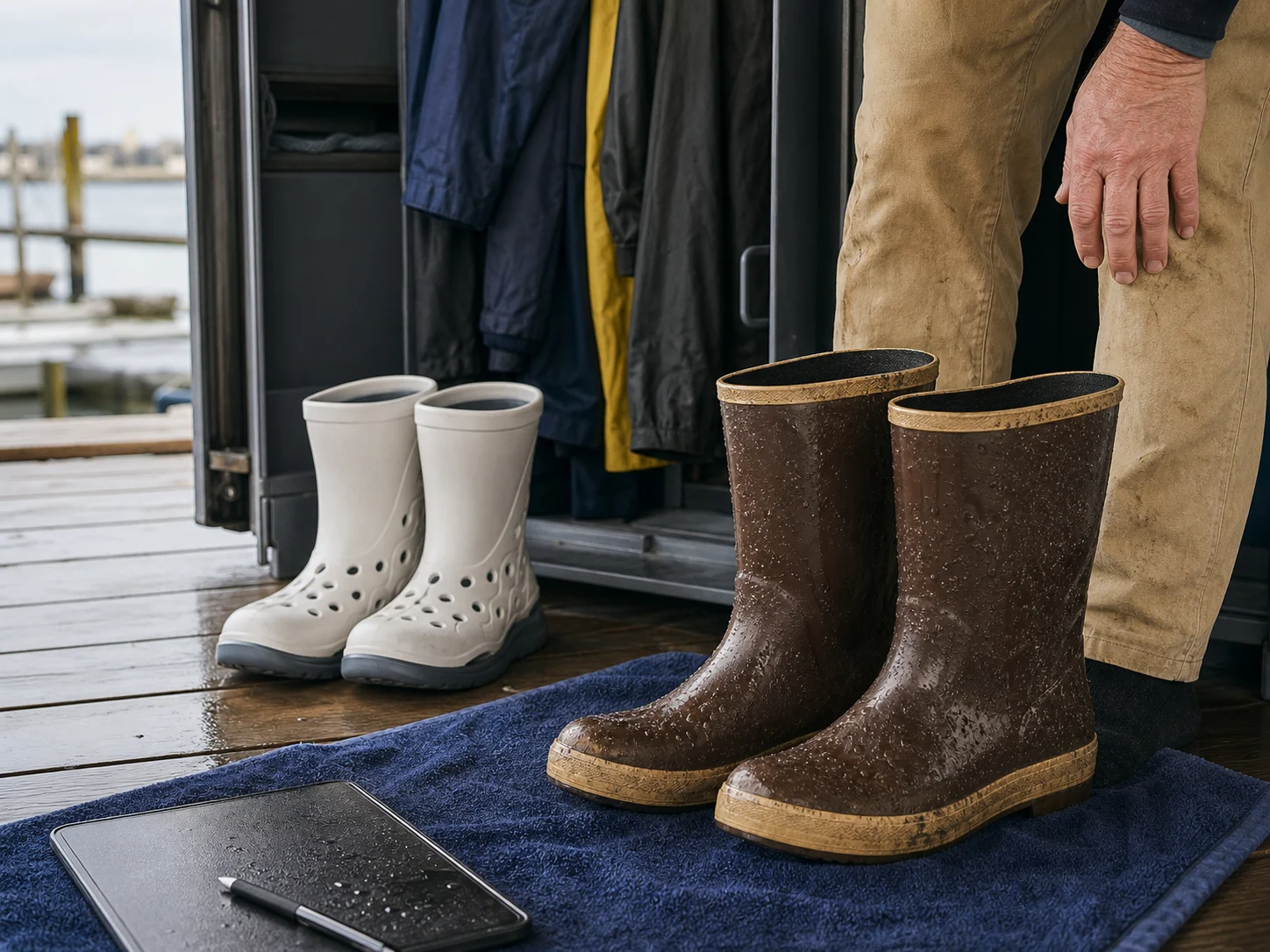
When fit, waterproofing, tread, or structure cannot be trusted, use the Boot Finder or retailer guide for the next pair.
Use when Care is not enough Next step Finder or retailers If you work a salt-water boat all day, do not wait for grime to become a project. Give the boots or deck shoes a fresh-water rinse after the trip, especially around outsole grooves, heel edges, shaft folds, pull tabs, and any rolled cuff.
During hard-use weeks, add a deeper clean once a week. Knock off loose grit first, rinse, use mild soap only when water is not enough, and scrub with a soft brush or cloth. Rinse clean so soap does not sit against rubber, liners, seams, or footbeds.
The XTRATUF UK care guide gives useful rubber-boot context: soapy water, cold water, gentle scrubbing, and avoiding solvents or detergents. Because this page serves U.S. XTRATUF shoppers, use that as care context and still let current XTRATUF U.S. warranty language control warranty-sensitive decisions.
After cleaning or a wet shift, drain standing water, pull removable insoles when practical, towel what you can reach, and let air do the rest. Boots dry better open to moving air than sealed in a tote, truck, locker, or warm gear bag.
Avoid clothes dryers, heaters, radiators, heat vents, stoves, and direct hot sun as drying shortcuts. Heat can turn an ordinary wet-boot problem into a material, fit, odor, or warranty problem.
For Riptide and other BioLite footwear, XTRATUF is more specific: clean by hand with lukewarm water, wear, store, and air dry in moderate temperatures, and do not use a washing machine or dishwasher.
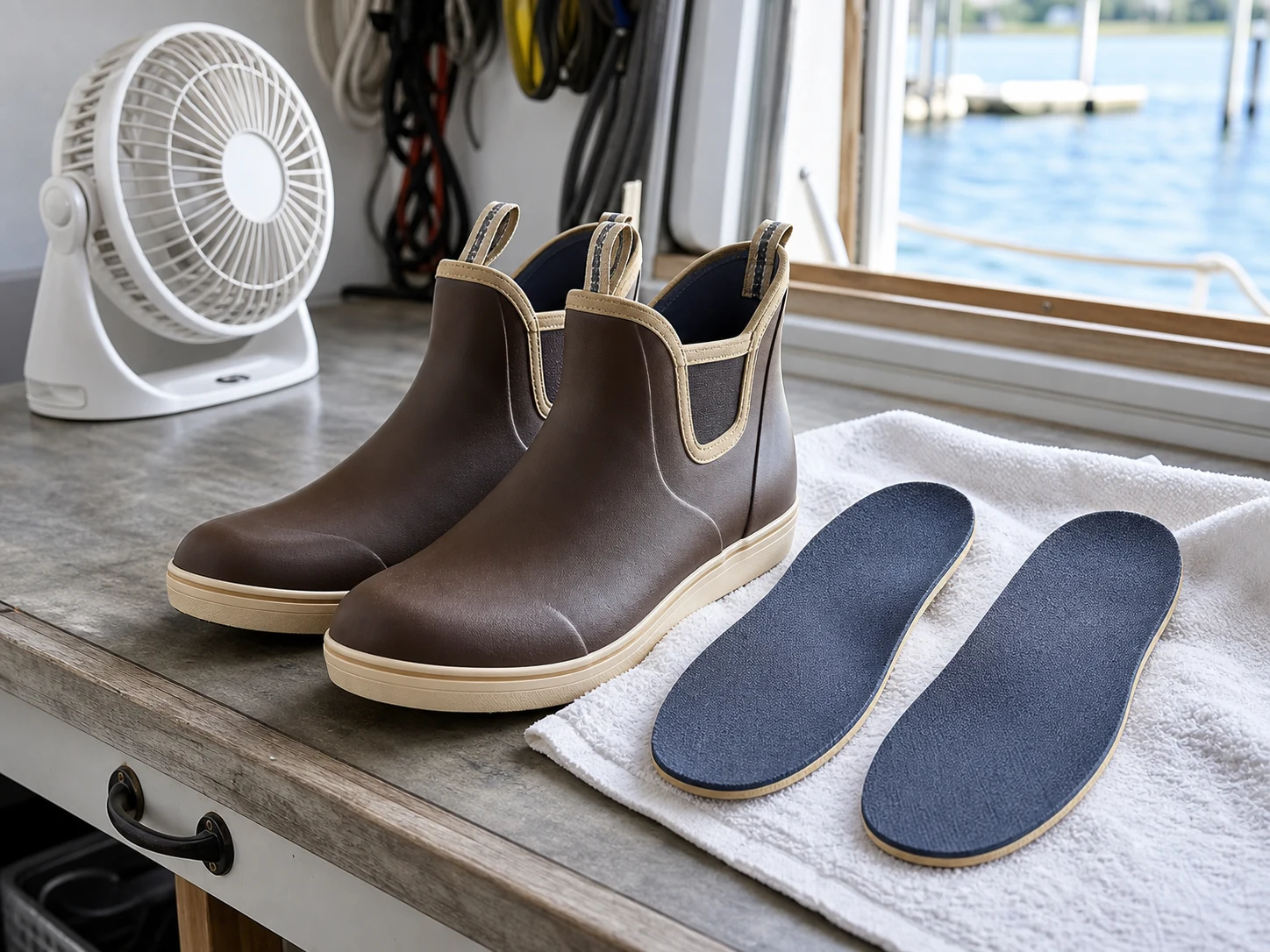
Odor is usually a moisture problem before it is a scent problem. Remove the insole, dry the footwear and the insole separately, rotate socks, and store the pair where air can move.
Let the pair get fully dry before reaching for sprays, bleach, alcohol, disinfectants, vinegar, essential oils, or other odor shortcuts. Those treatments do not have current XTRATUF support in this guide, and some chemicals can create a bigger material or warranty question.
If odor returns quickly, look at the footbed and the way the pair is stored. A removable insole that stays damp, curls, packs flat, or wears through may be the part that needs attention first.
If the insole is packed flat, staying damp, curling, or wearing through, replacement can be the simple fix that makes the pair useful again. XTRATUF Felt Insoles are removable, washable as needed, and can be trimmed to fit if needed according to the current product page.
Do not assume one insole fits every boot or solves every odor, fit, or comfort problem. Treat insoles as fit-changing parts: try them indoors with the socks you actually wear before taking the boots outside.
If a new or refreshed insole makes the heel lift, toe box tighten, or instep rub, use the sizing guide before forcing the setup.
For salt buildup, mud, fish slime, wet interiors, removable insoles, surface scuffs, storage odor, and packed-flat insoles, stay boring: rinse, mild soap when water is not enough, soft brush or cloth, full rinse, and room-temperature air.
A small cosmetic scuff can wait until the footwear is clean and dry, then be inspected under good light. A cut, puncture, split, separating area, warped shape, or repeated leak is a different problem and should move to warranty/support or replacement thinking.
Do not treat glue, tape, patch kits, solvents, oils, conditioners, deodorizers, disinfectants, heat, or shop repairs as proof that waterproofing, traction, safety, fit, or warranty standing has been restored.
Do not treat every XTRATUF style like the same rubber boot. The useful question is what material family and construction are in front of you, then what the exact product page says before you use heat, a machine, chemicals, or a repair product.
Each card gives the care check for that footwear family. Use the product-page links only to confirm the current wording before applying the guidance to your pair.
Rubber boot
Rinse salt and grime after use, clean more carefully during hard-use weeks, dry naturally, and keep oils or conditioners off outsole tread.
Deck boot
Lower boots still trap grit around collars, pull tabs, footbeds, and outsole grooves. Rinse, air dry, and inspect instead of treating them like casual sneakers.
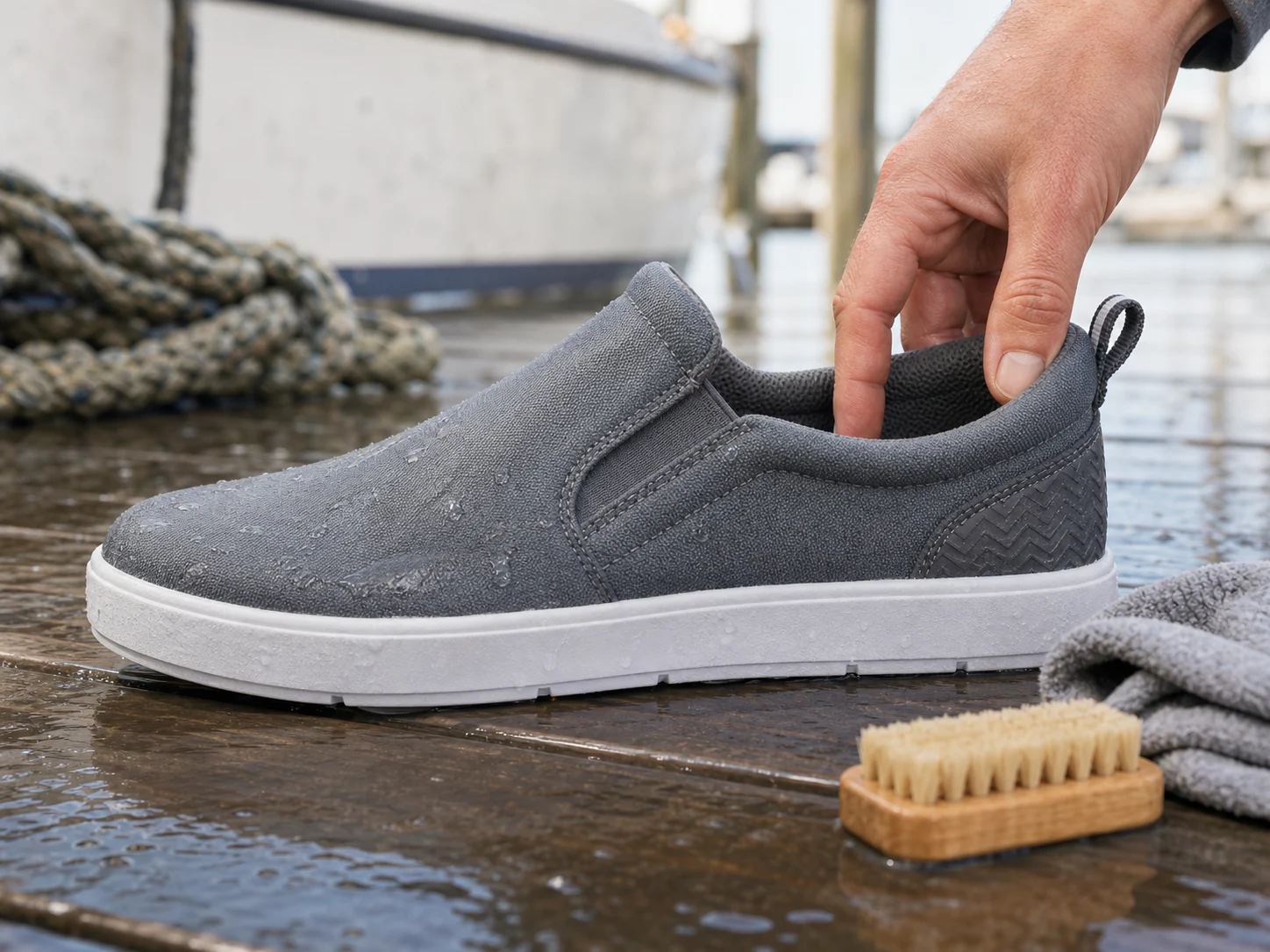
Deck shoe
Check collars, footbeds, textile uppers, outsole grooves, and exact product guidance before applying rubber-boot cleaning assumptions to a deck shoe.
BioLite
Current Riptide and Hightide pages say hand-clean with lukewarm water, air dry at moderate temperatures, and keep them out of washing machines and dishwashers.
Accessory
Remove and dry what is removable. The XTRATUF Felt Insole source supports washable-as-needed and trim-to-fit wording for that exact accessory.
Use XTRATUF's official warranty page before modifying footwear when the issue is a crack, leak, puncture, cut, abrasion, separation, warping, possible defect, seller question, proof-of-purchase question, or anything that feels beyond normal care.
X-Tough can point you to the path, but Rocky/XTRATUF and the authorized seller decide warranty questions. This page does not approve claims or promise coverage.
Take clear photos before the boot changes: outsole, toe, heel, shaft, inside, damaged area, and proof-of-purchase context when you have it. Then use the official path before glue, tape, heat, oils, or chemicals hide the evidence.
Cleaning is not a fix for a pair you cannot trust. If tread, waterproofing, structure, fit, or job suitability is uncertain, use the warranty/support route or start choosing the next pair instead of adding another product or shortcut.
This is especially important for wet decks, long shifts, workplace requirements, and any use where slipping, leaking, rubbing, or a failed boot would change the day.
Buyer questions
Yes. A fresh-water rinse after saltwater, fish slime, mud, or dock grit is a good routine-care move. During hard-use weeks, add a more detailed weekly clean with mild soap when needed and a soft brush or cloth.
Start with water. If water is not enough, use mild soap, a soft brush or cloth, and a full rinse. Avoid solvents, fuel, bleach, heavy degreasers, abrasive pads, or mystery cleaners unless current XTRATUF guidance approves them.
Use room-temperature airflow instead. Pull removable insoles when practical and dry them separately. Heat shortcuts can create material, fit, odor, or warranty problems.
The current Riptide product page says to clean by hand with lukewarm water, wear, store, and air dry in moderate temperatures, and not to place the footwear in a washing machine or dishwasher.
Remove the insole, dry it separately, and replace it when it is packed flat, staying wet, curling, or wearing through. XTRATUF Felt Insoles are the exact XTRATUF replacement path used on this page; test fit indoors before outdoor wear.
Do not treat a patch as restored waterproofing, restored traction, work safety, or warranty-safe repair unless current XTRATUF support says so. For cracks, leaks, punctures, cuts, separation, or warping, use the XTRATUF warranty page before modifying the footwear.
Replace or retire the pair from serious wet work when tread, waterproofing, fit, structure, or job suitability is uncertain. That is especially important for wet decks, long shifts, workplace requirements, or any safety-critical use.
The XTRATUF FAQ says oil on Legacy boots can come from an intentional manufacturing process. Wipe excess oil with a towel or leave the boots out of the box for a few days, then contact the seller or XTRATUF if the condition still seems wrong.