More coverage
Compare boot heights
Mud, spray and a full day outside
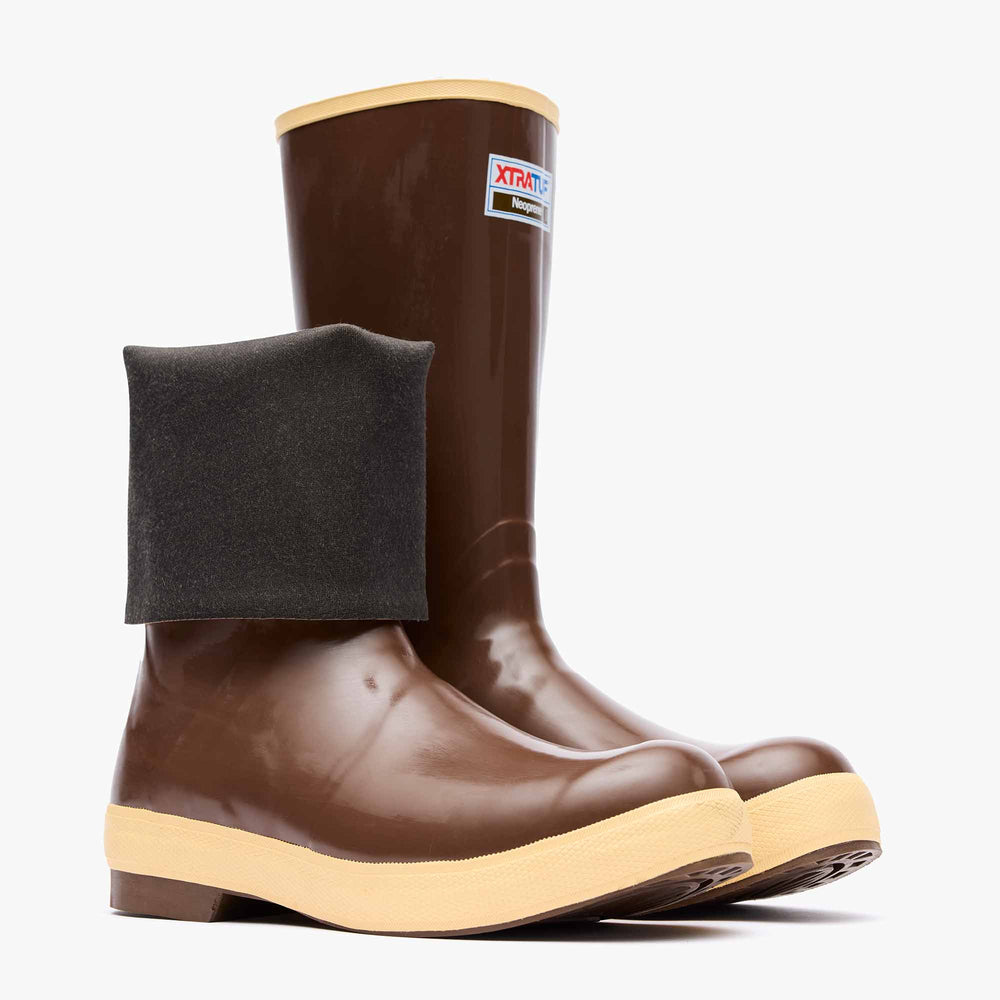
Compare 12- and 15-inch boots for more lower-leg coverage. Choose calf fit before color.
Height first. Warmth second.
For muddy paths, boat spray and long wet days, start with tall XTRATUF boots. For errands on wet pavement, ankle boots may be enough. Choose insulation based on the temperatures you expect during your Alaska trip.
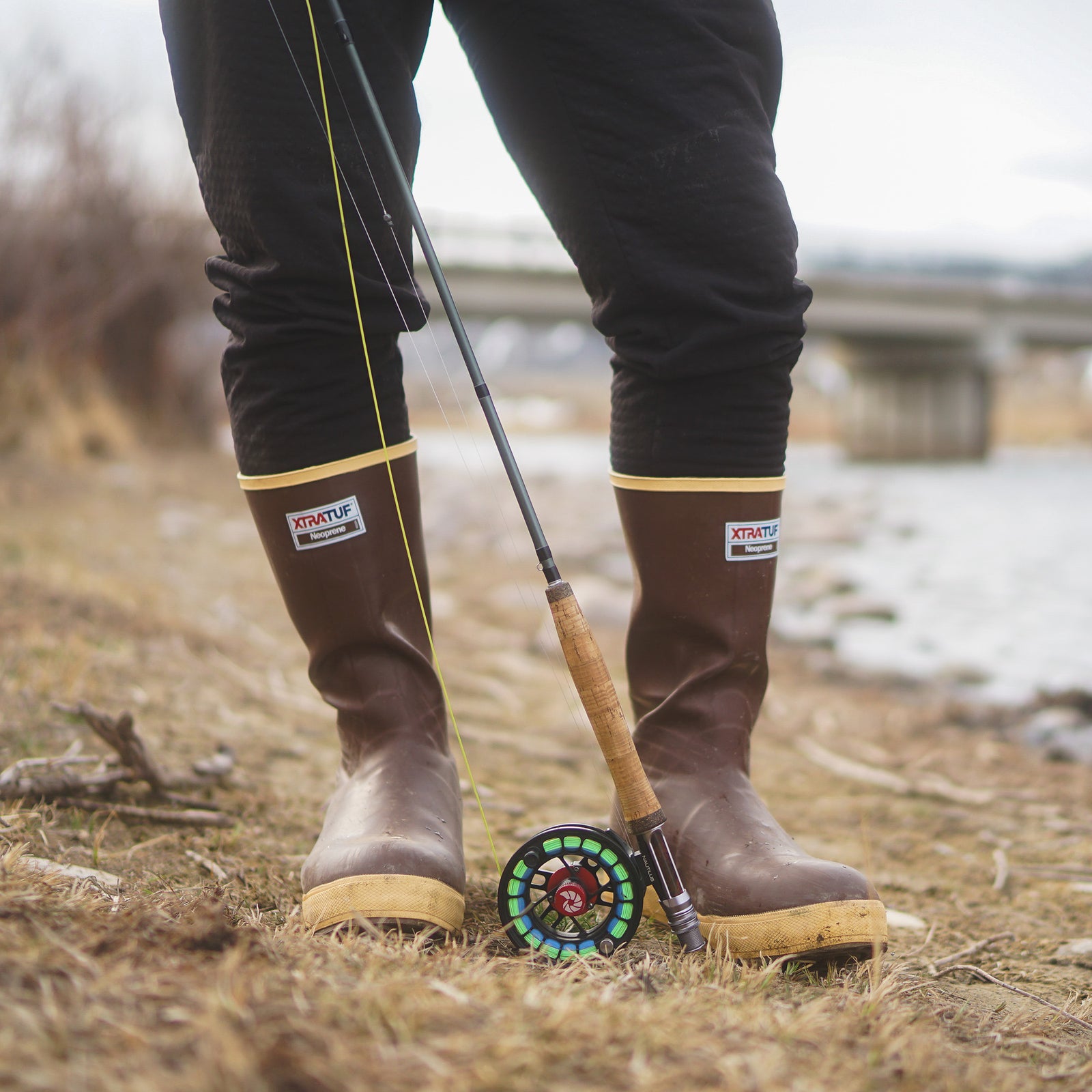
Rainfall alone does not decide boot height. Think about how high water, mud or spray may reach, how much you will move and how long you will stand in the cold.
Compare 12- and 15-inch boots for more lower-leg coverage. Choose calf fit before color.
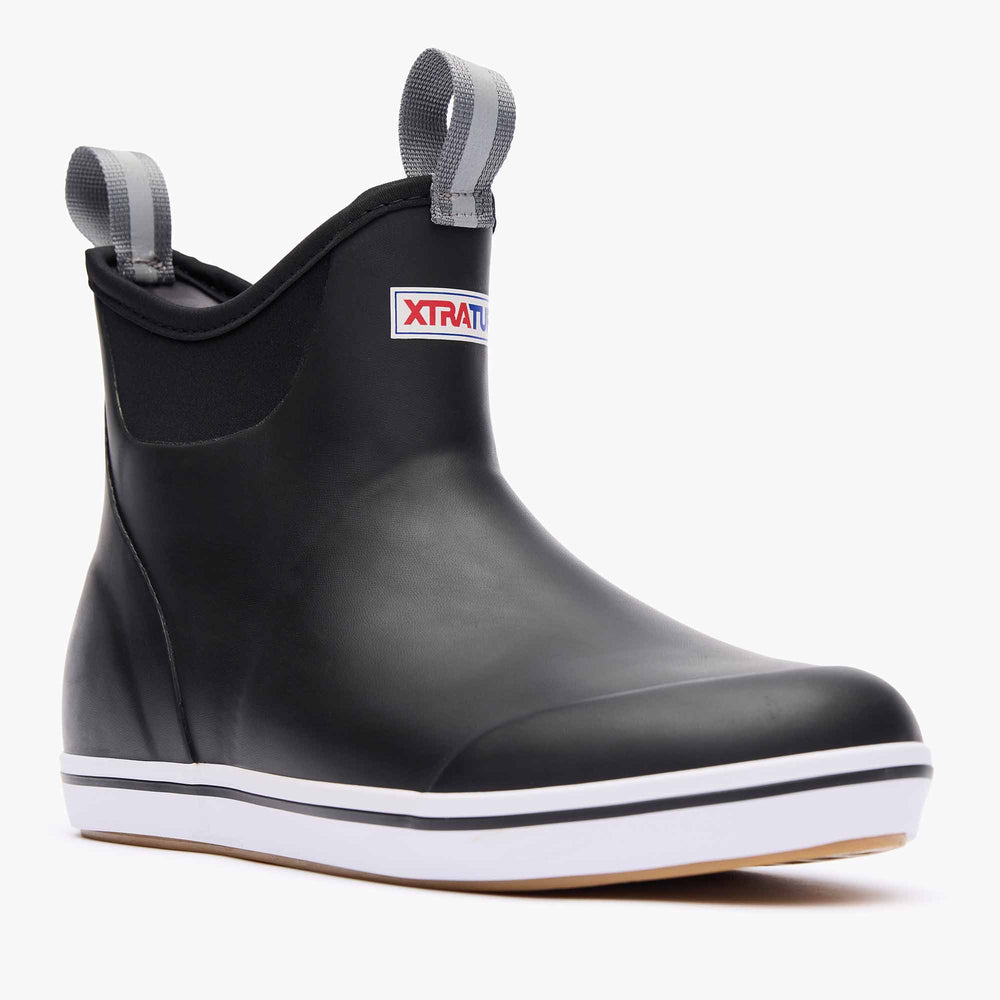
A 6-inch ankle boot suits shallow puddles and quick changes. It leaves much more of your leg exposed to splash.
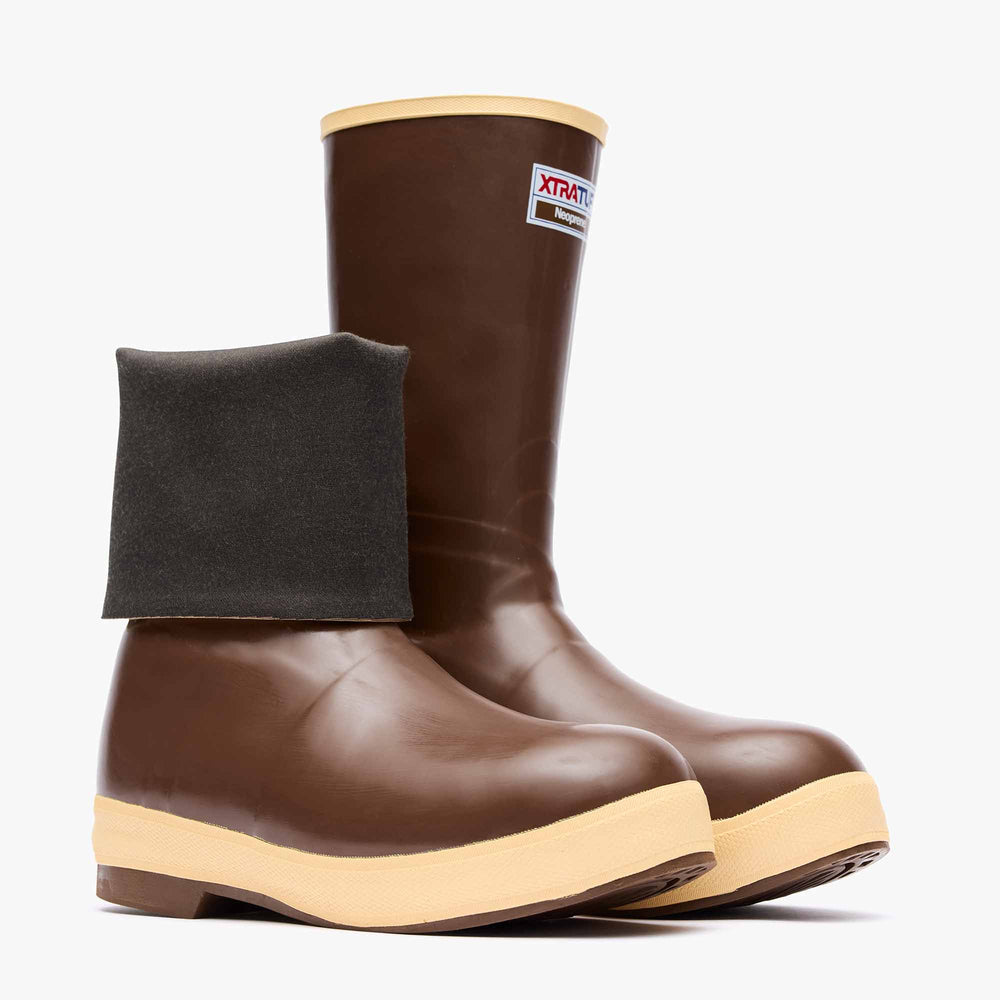
Compare insulated boot construction when warmth matters as well as coverage. A waterproof shell by itself does not tell you how warm a boot will feel.
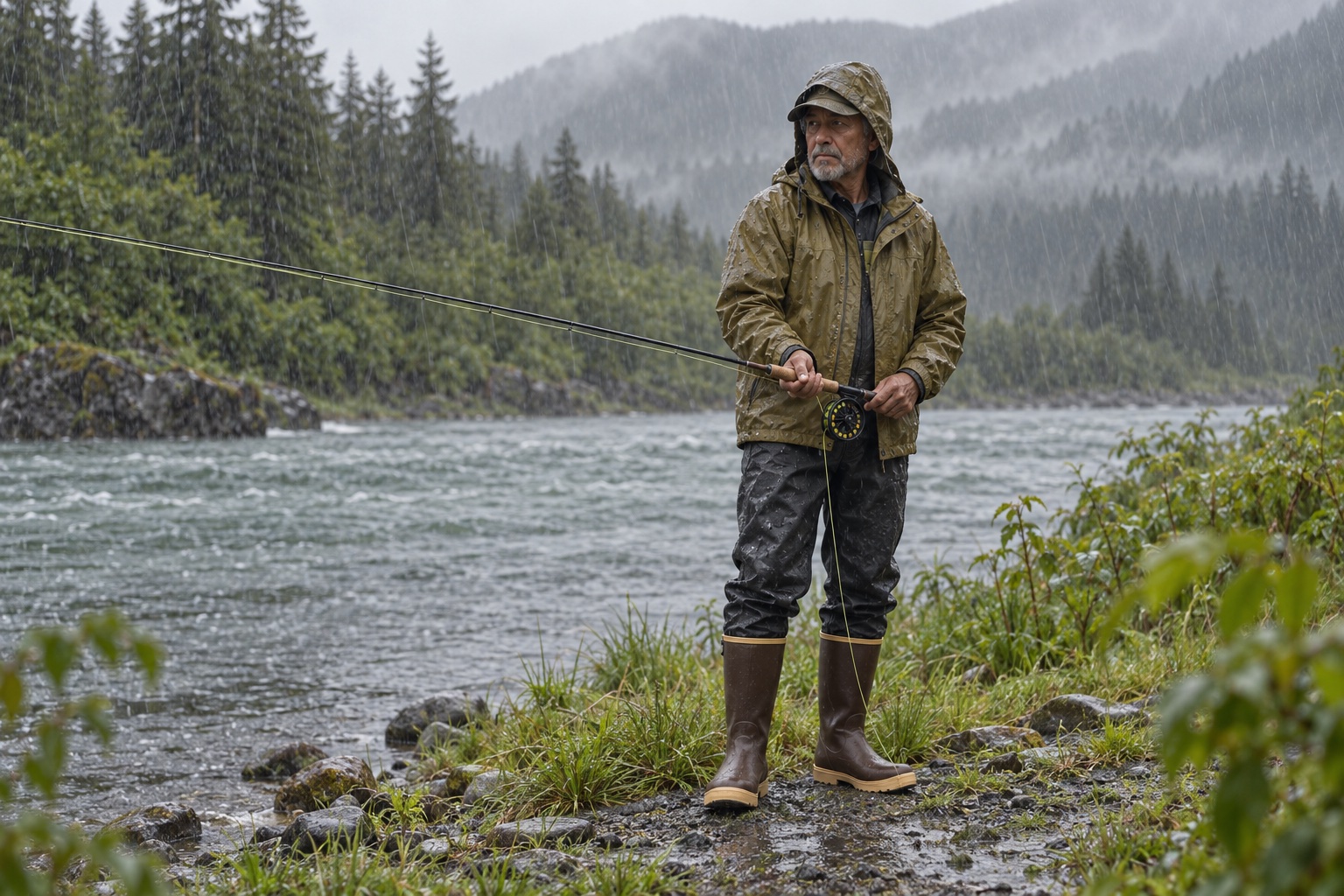
Plan for the place and the day
Southeast Alaska’s wet coastal weather is not the same as an Interior winter.
Glacier Bay’s National Park Service guidance puts average summer temperatures at 50–60°F and recommends waterproof boots and rain gear. Katmai also has cool, wet weather through spring, summer and fall, with a wetter coast than its interior. Those are regional examples, not a forecast for every Alaska trip.
For a day walking around town in rain, start with waterproof coverage and the socks you expect to wear. A cold boat ride or hours spent standing outdoors give insulation a different job. Check your destination’s forecast and activity plans before choosing.
All three boots have waterproof latex-neoprene shells. Because they are uninsulated, choose by height and fit: a taller shaft adds coverage, not warmer feet.
Start here for muddy ground, repeated splash and rain-pants days. The 15-inch shaft offers the most coverage of these two standard heights. Water can still enter over the opening.
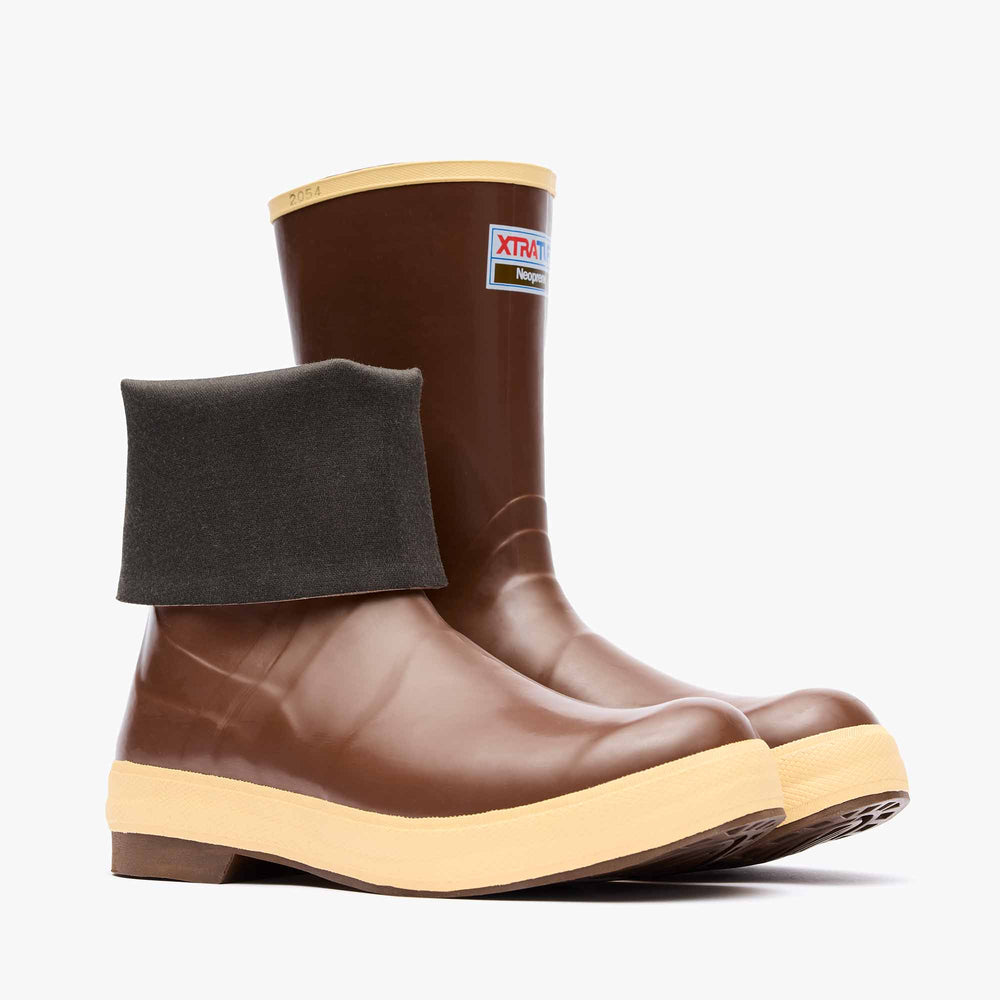
Choose this when you want tall waterproof coverage with less shaft around your leg. It is three inches shorter than the 15-inch model, so you lose three inches of coverage at the top.
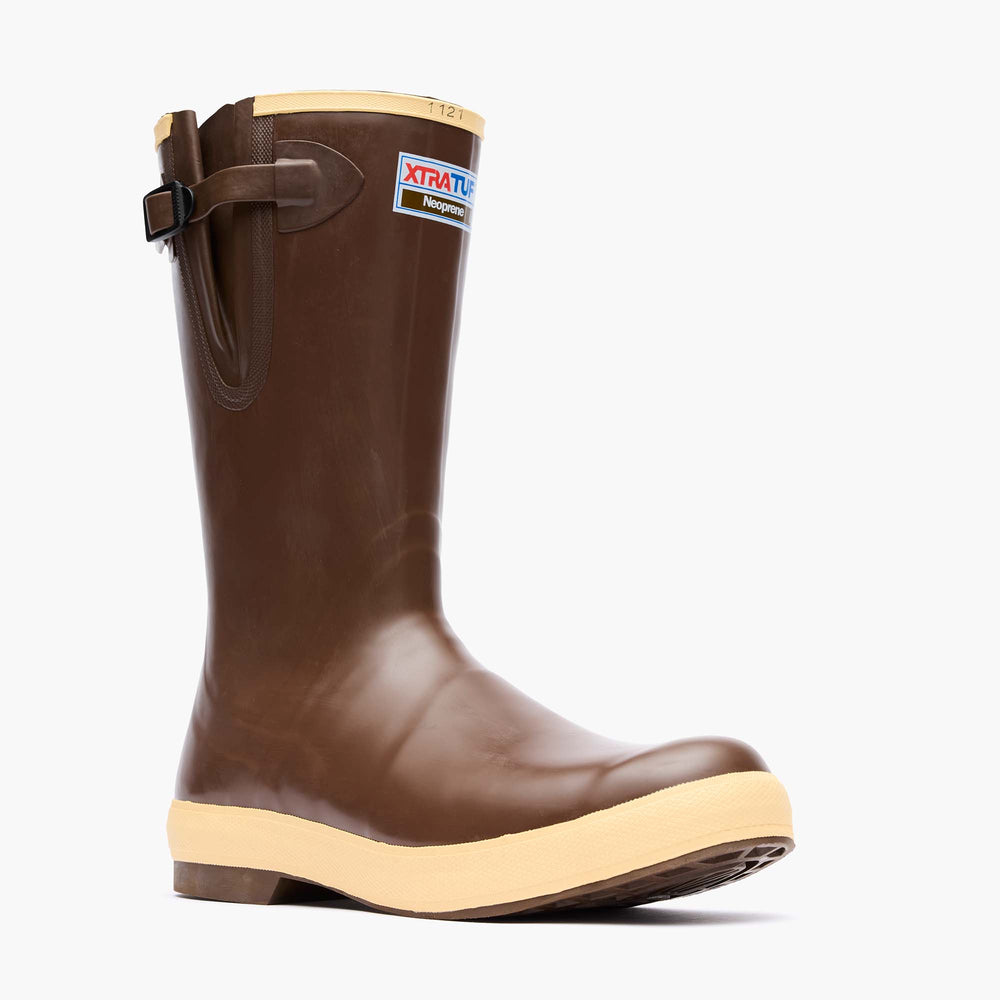
The side gusset adds room around the calf while retaining a tall shaft. XTRATUF lists an extra 2.5–3 inches of adjustment on its size-9 reference. Wide calf describes the shaft; it does not promise a wider footbed.
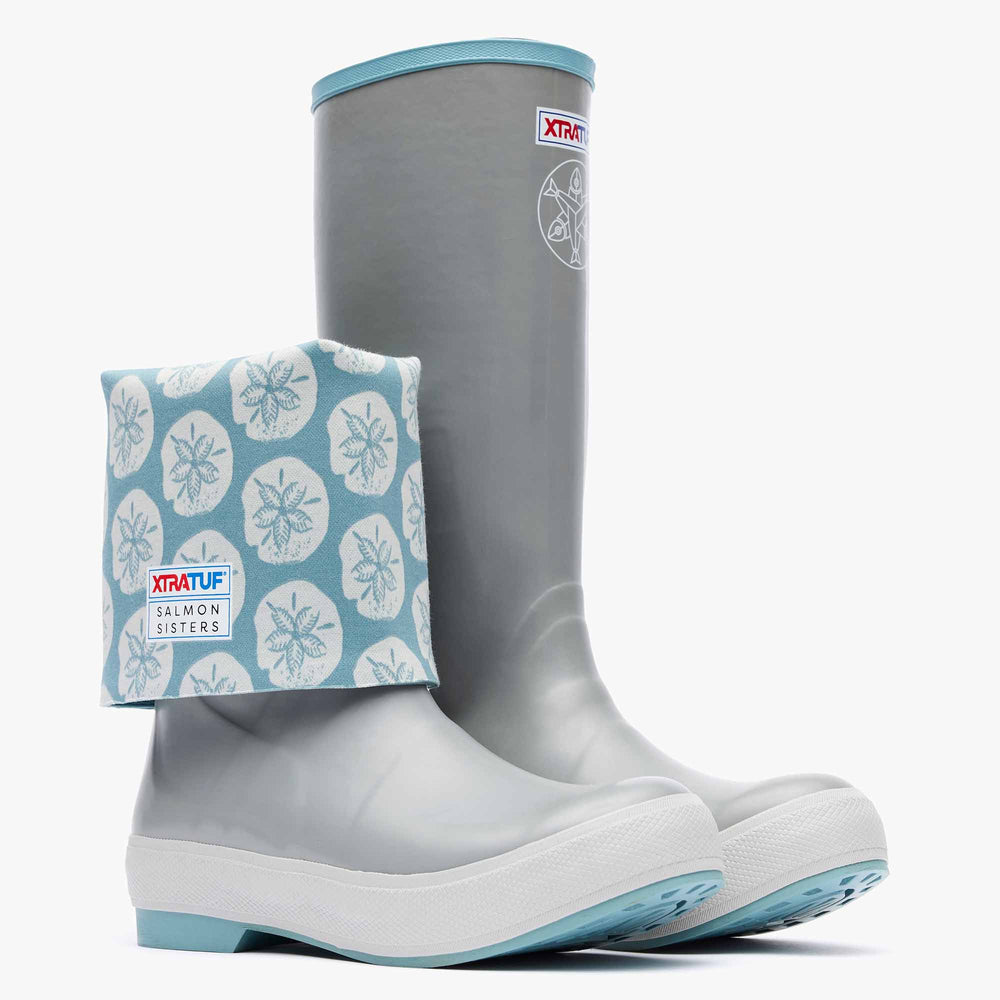
Women’s tall option
The Women’s Salmon Sisters 15-inch Legacy is a waterproof tall boot designed for a women’s fit, with an Alaska-designed lining print.
The Sand Dollar version shown here adds a printed lining to the tall boot. Choose it for the fit and coverage you need, then the design you like. The collaboration name is not an insulation rating.
Folding the shaft down shows the print but lowers the opening. Wear it upright when you need its full splash coverage.
For wet pavement, a trip to the store or a short harbor walk, tall shafts can be more coverage than you need. These 6-inch boots trade lower-leg protection for quick pull-on wear. Keep puddles and splash below the opening.
The standard waterproof ankle boot has pull tabs, a Chevron outsole and an XPRESSCOOL liner. It is a straightforward starting point for everyday rain; it does not have the Pro’s triple-dipped shell.
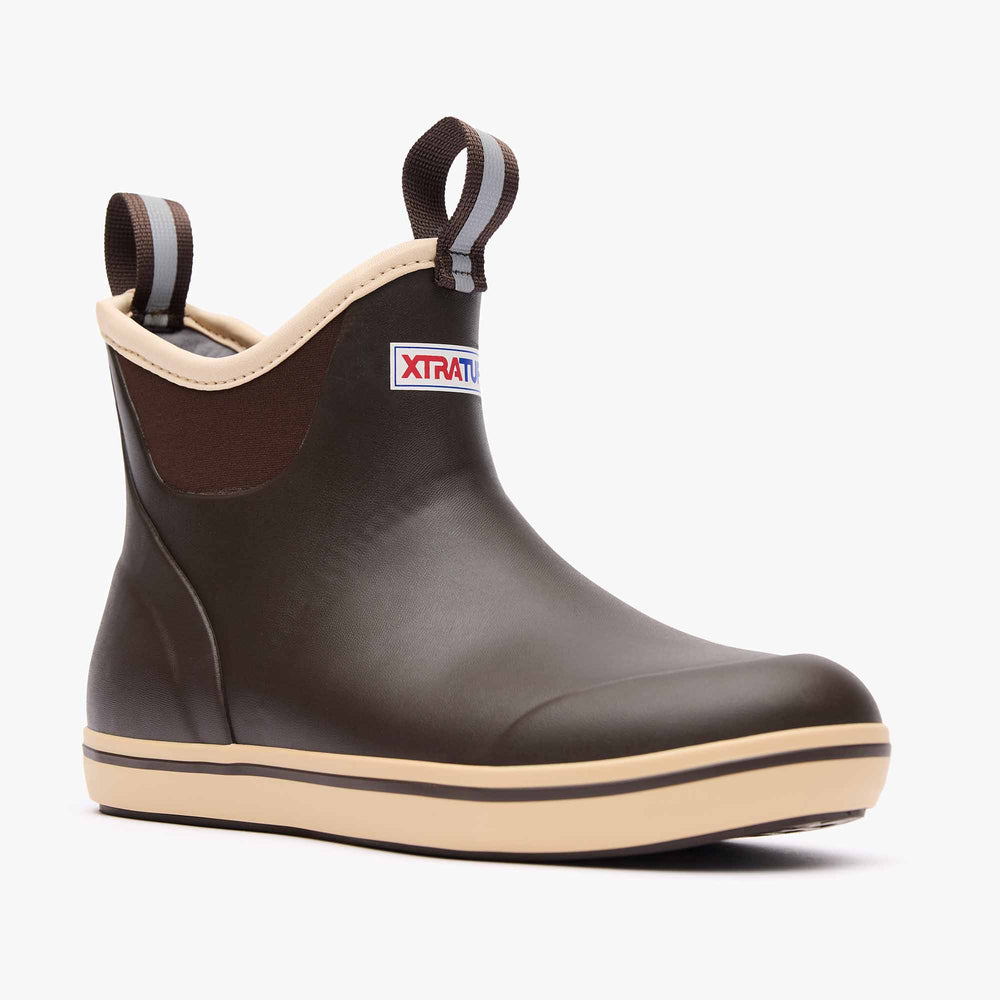
The women’s version offers the same everyday 6-inch format in a women’s fit. XTRATUF describes this hand-laid rubber model as non-commercial grade. Use its own size guidance rather than assuming the men’s fit.
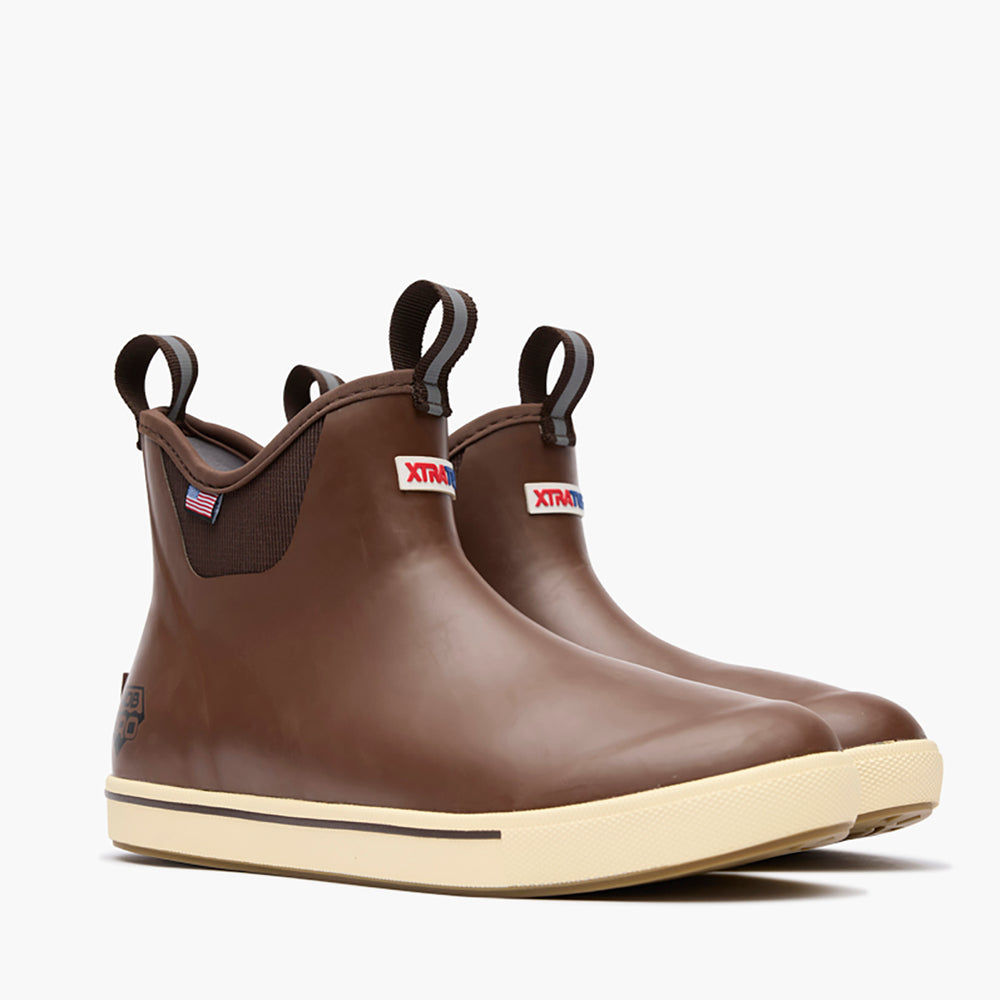
Choose the Pro for its triple-dipped latex-neoprene construction and extra toe overlay. It still has a 6-inch shaft: the different shell does not add splash height or turn its XPRESSCOOL liner into insulation.
A long wait on a windy dock is different from a brisk walk to lunch. These waterproof, 15-inch options add insulation in different ways. Neither guarantees warmth at a particular temperature or for a particular length of time outdoors.
This version adds built-in polymeric foam insulation to the tall-boot format. It is the direct comparison with the standard 15-inch Legacy when you need added warmth as well as wet-weather coverage.
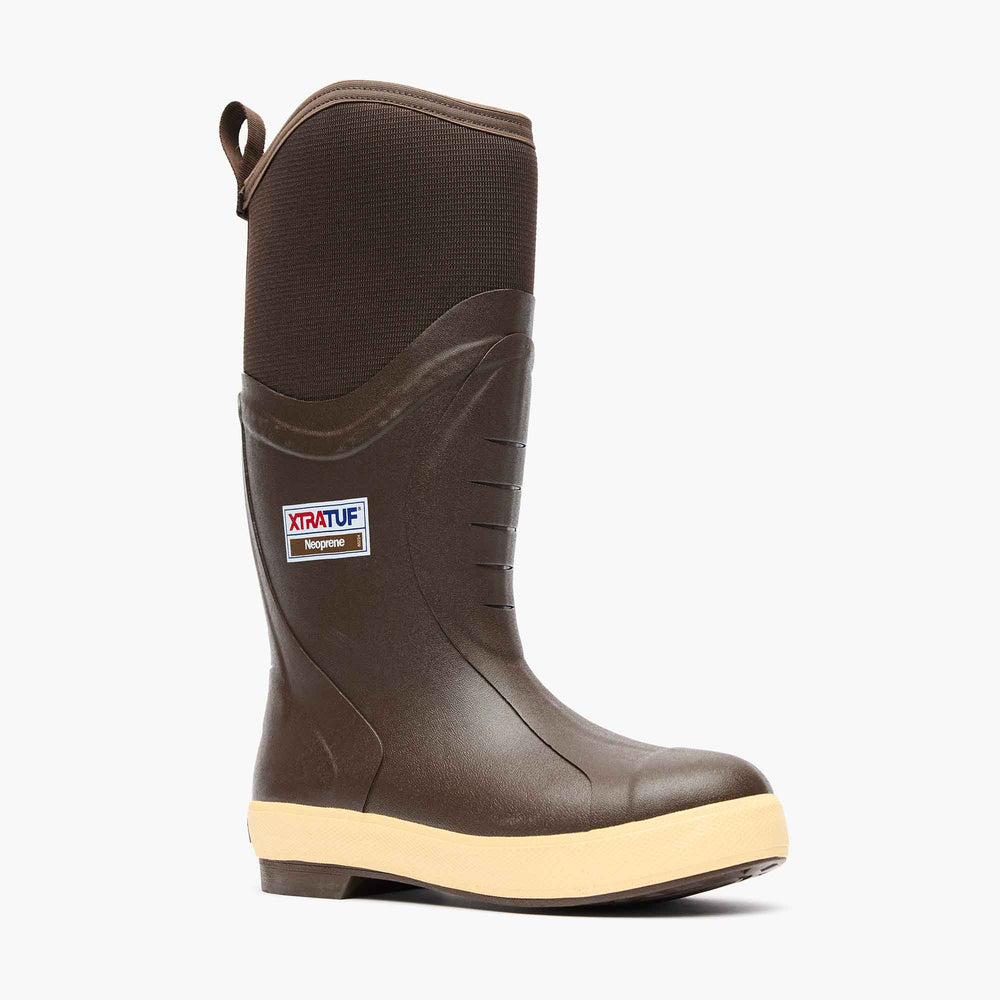
The Elite uses a 5mm neoprene bootie, a four-way-stretch covering and an airmesh lining. Its upper construction is the useful distinction from the foam-insulated model. Compare the fit with your intended socks.
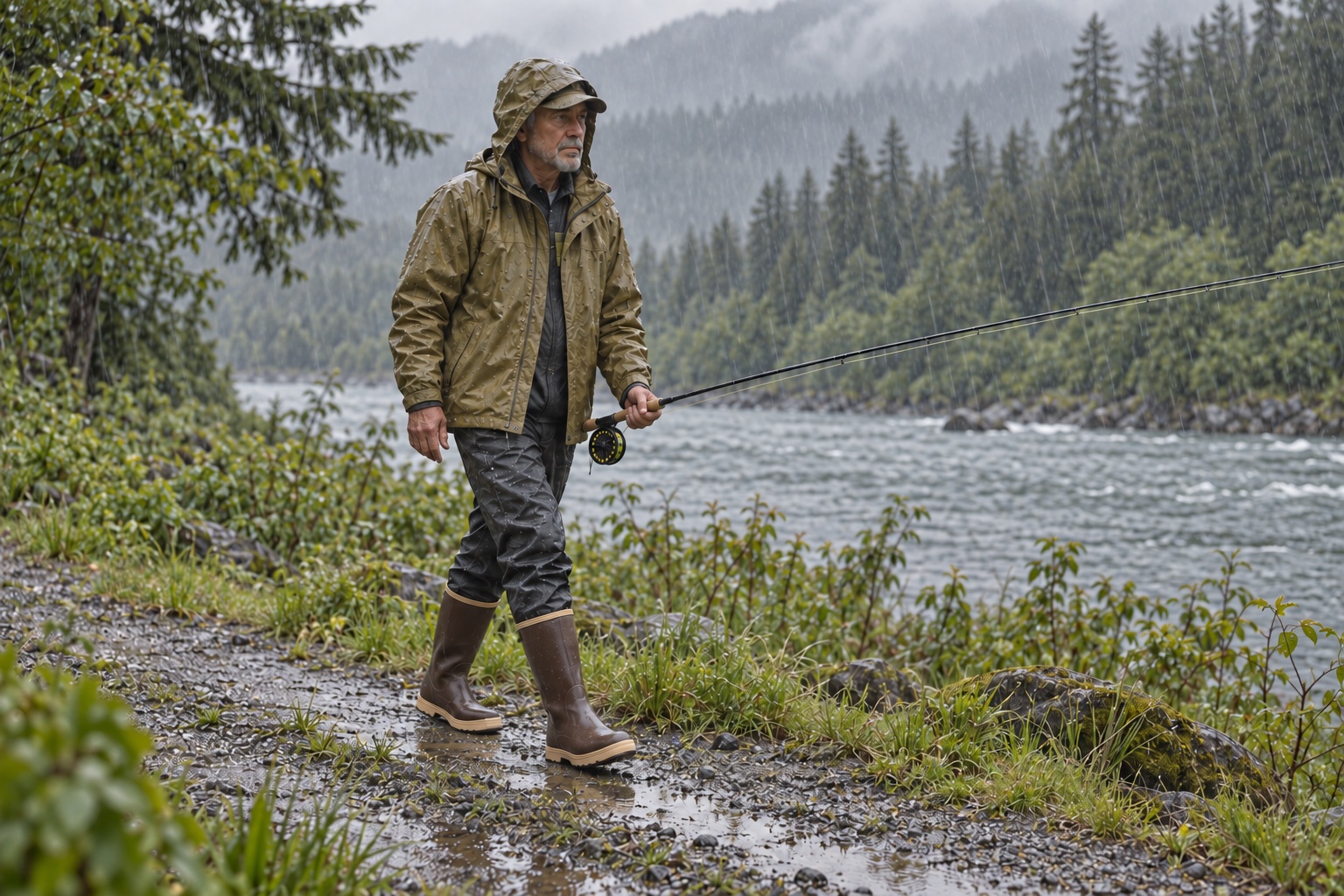
These recommendations cover everyday rain, muddy ground and wet coastal outings. They are not a complete winter, hiking or work-safety kit.
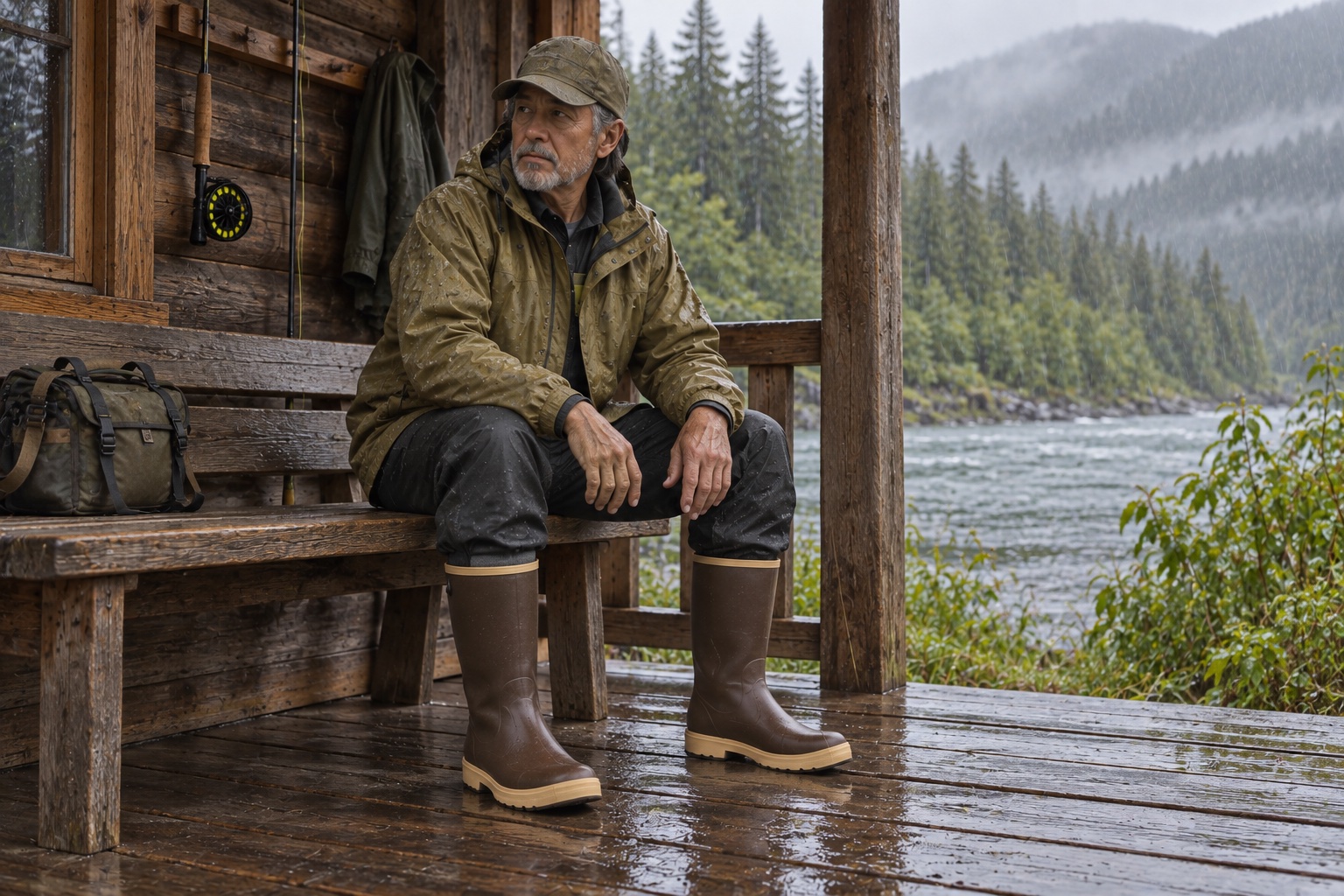
Try boots indoors with the socks you plan to wear. Check heel hold, toe room and the calf opening before taking them outside. The standard men’s 12- and 15-inch Legacy listings advise half sizes to order up; follow the guidance on your exact model rather than applying one rule to every XTRATUF.
Ordering to Alaska needs an extra look at shipping and returns. XTRATUF’s shipping policy excludes Alaska from its standard free-shipping offer, and Alaska return requests go through customer care. Check the charge for your address and any final-sale terms before paying.