01 · Under the shoe
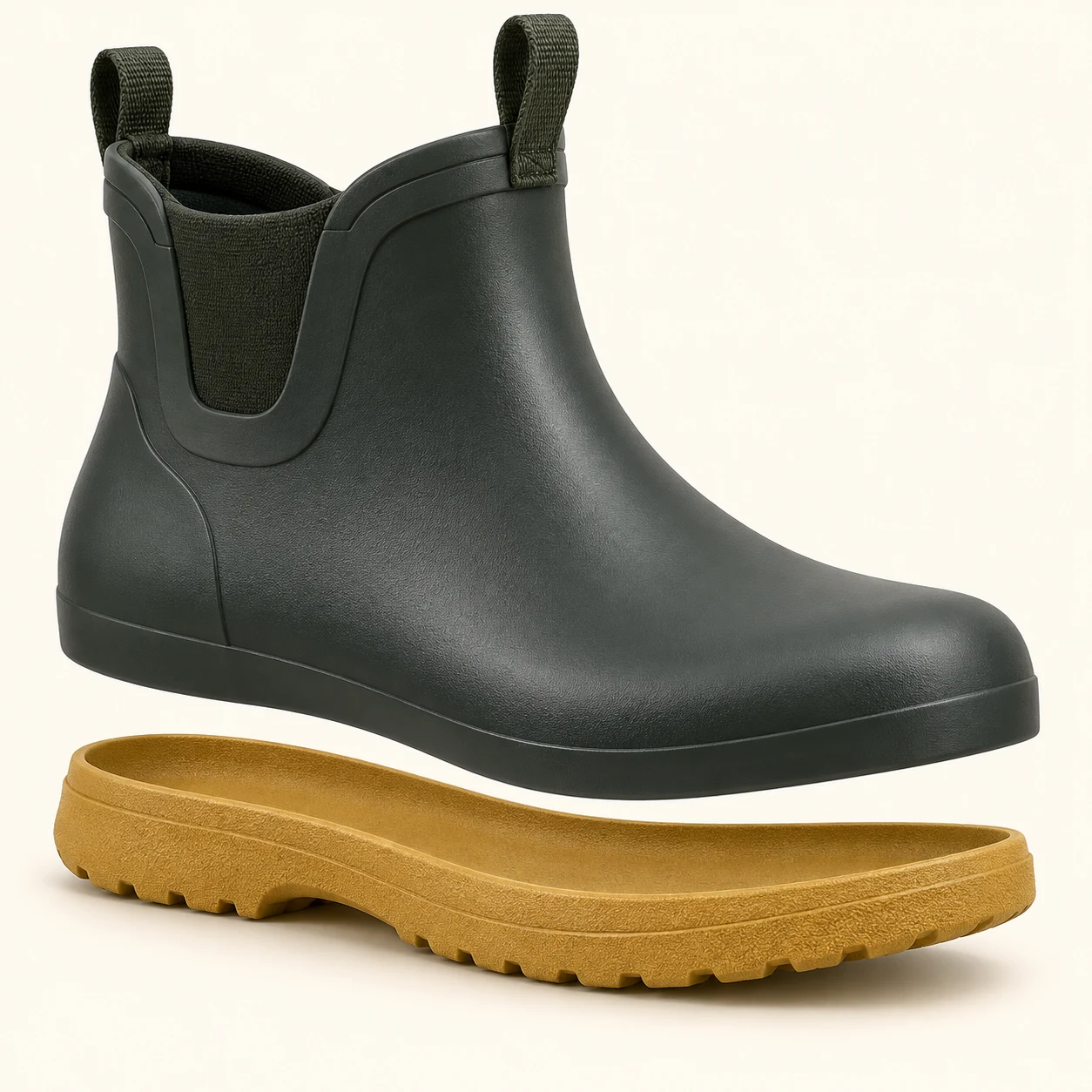
Outsole
The part that touches the ground. Sport, DriftTech and Sharkbyte 2.0 Eco use BioLite here. Their uppers and drainage designs handle water differently.
Materials, models & care
BioLite is XTRATUF’s EVA (ethylene-vinyl acetate) foam, used for cushioning in outsoles, footbeds and molded footwear. In Sport boots, it forms the outsole beneath a rubber upper. In selected Ankle Deck styles, it is the footbed beneath your foot; in Riptide, it forms the shoe itself. BioLite describes the material, while the footwear’s construction determines how it handles water: Sport keeps rain out, while Riptide and DriftTech let water drain.
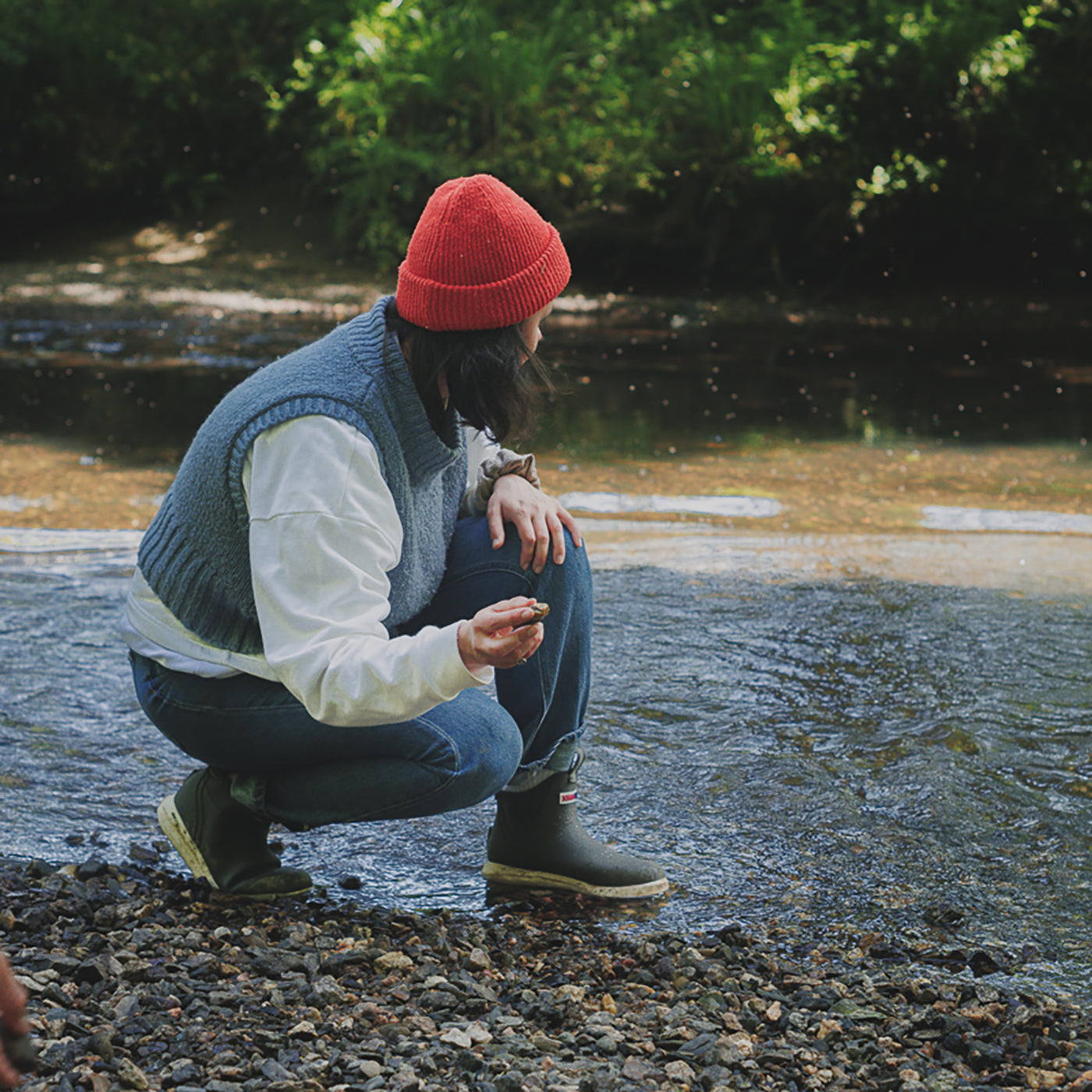
Where the foam goes
BioLite is injection-molded EVA foam. Gold highlights its location in these conceptual cutaways. The illustrations do not show the exact construction or color of a particular model.
The part that touches the ground. Sport, DriftTech and Sharkbyte 2.0 Eco use BioLite here. Their uppers and drainage designs handle water differently.
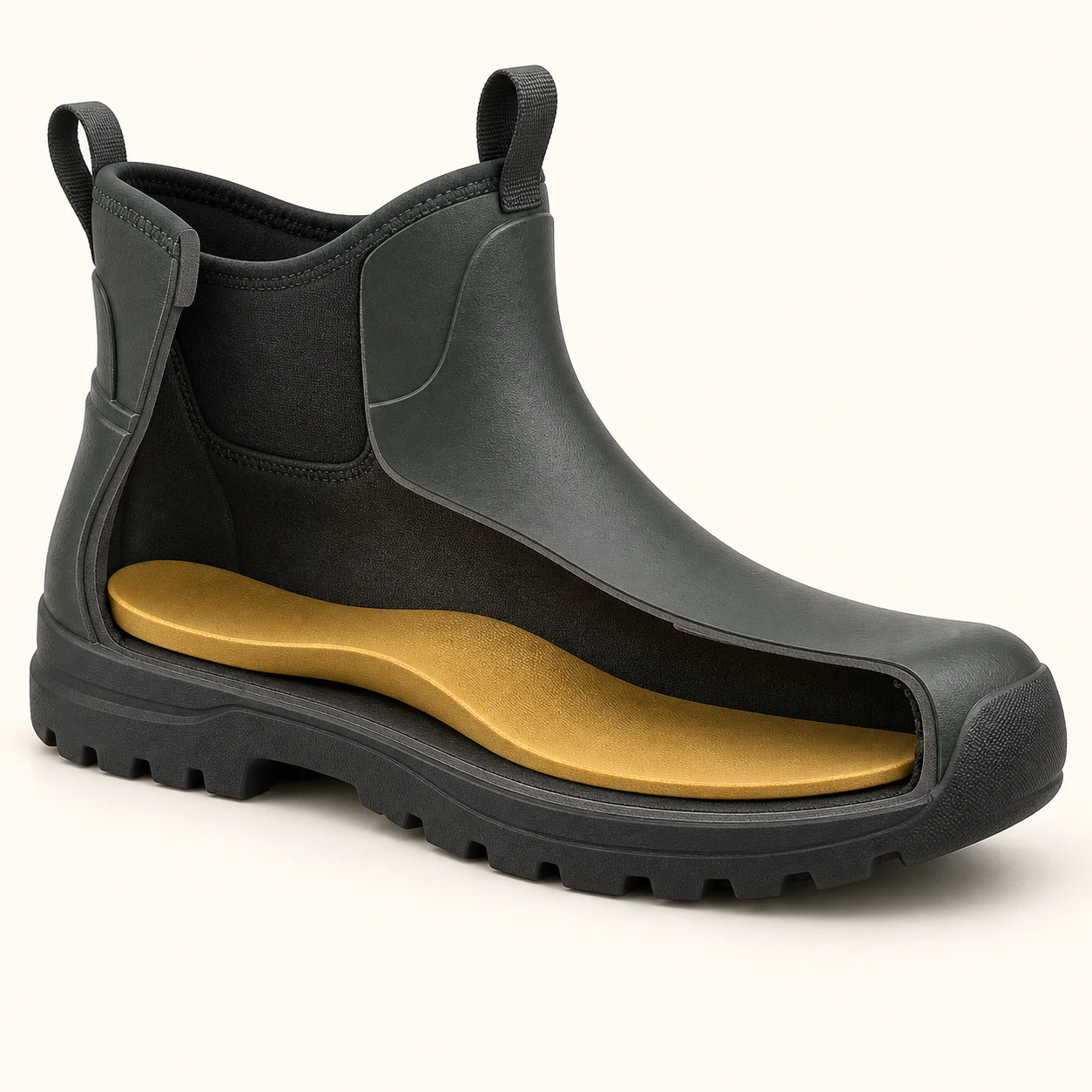
The insert beneath your foot, above a separate outsole. Selected Ankle Deck styles use BioLite here.
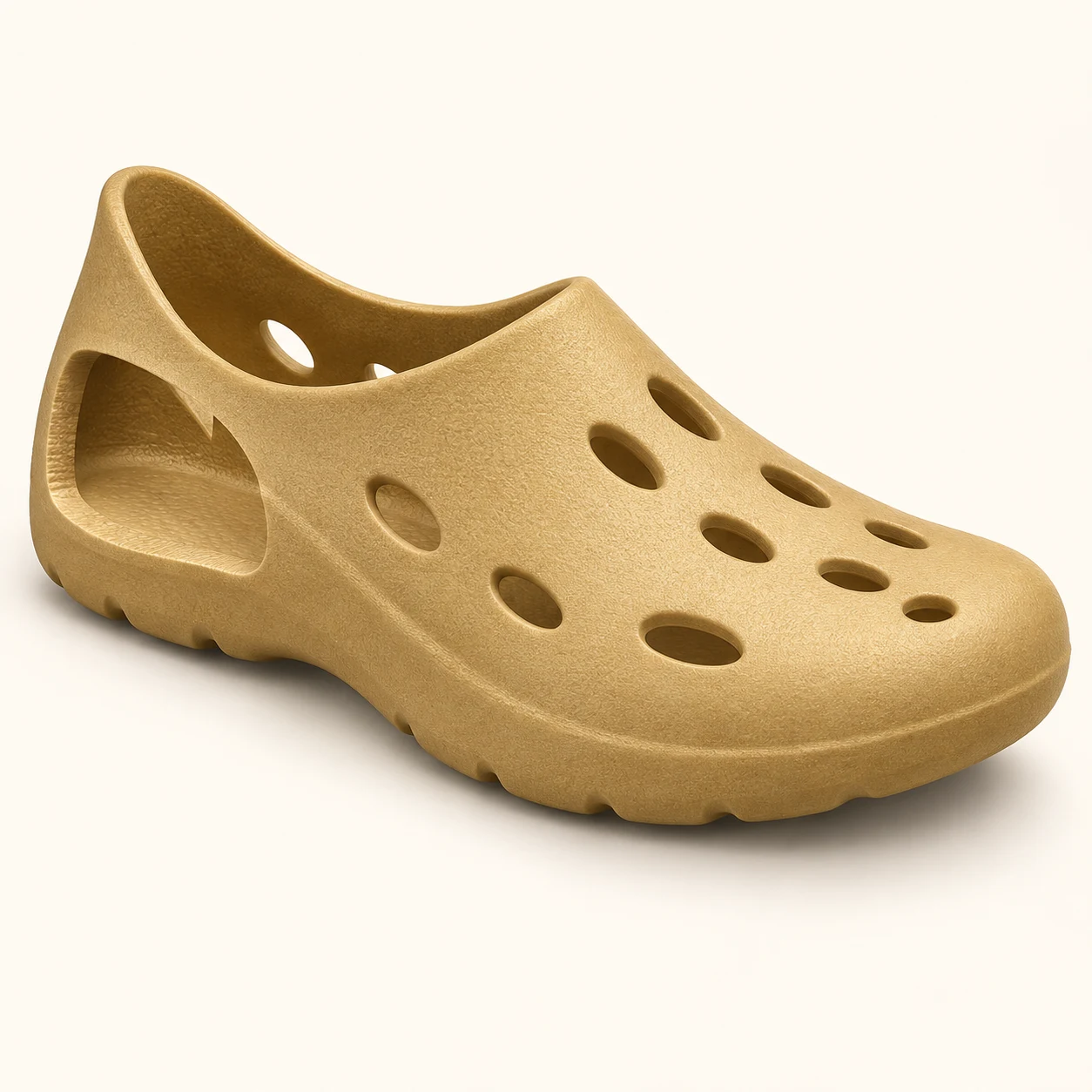
The foam forms the footwear itself. Riptide’s holes let water through; the closed TUFS boot keeps it out.
Find your pair
Keeping rain out? Start with Sport. Need water to drain? Compare DriftTech with Riptide. For faux-shearling warmth, choose Fleece-lined. Browse 15 U.S. model families below, with colors and prints grouped together.
No models match. Choose All 15 families to see the full collection.
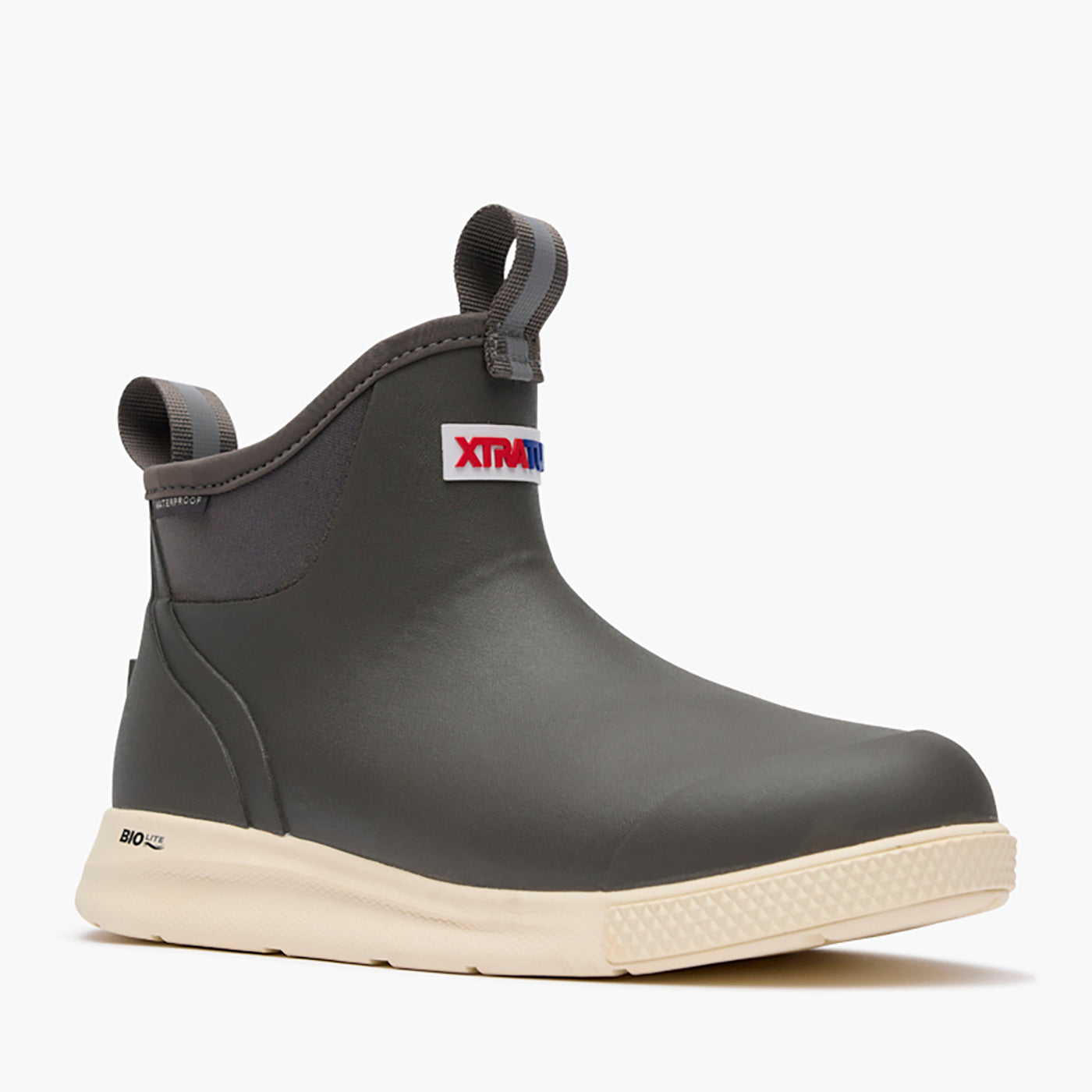
Choose Sport to keep rain and splashes out. Choose DriftTech instead when you need drainage. Men’s and women’s ranges.
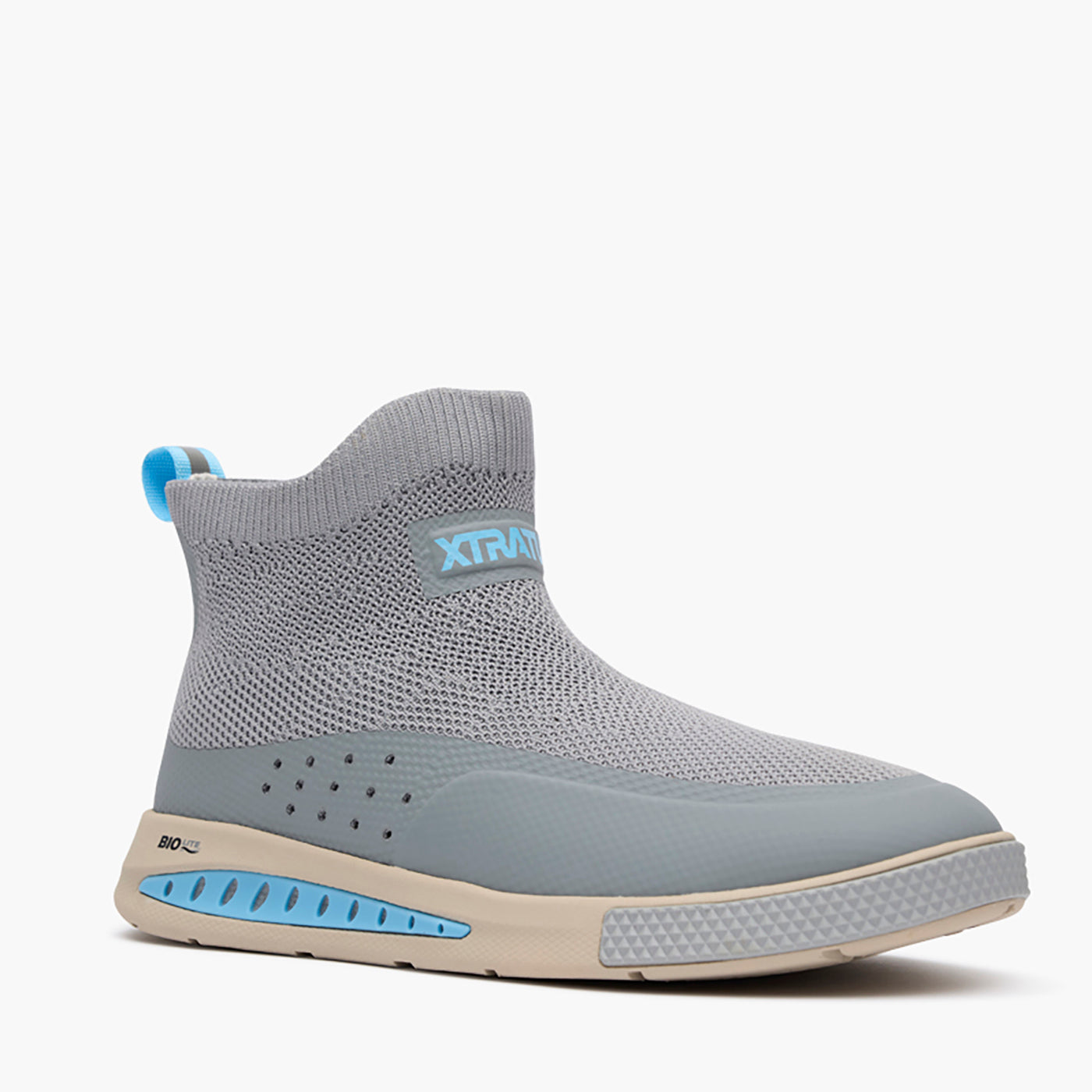
For water that needs to escape through mesh and sole. DriftTech drains; it will not keep rain out like Sport.
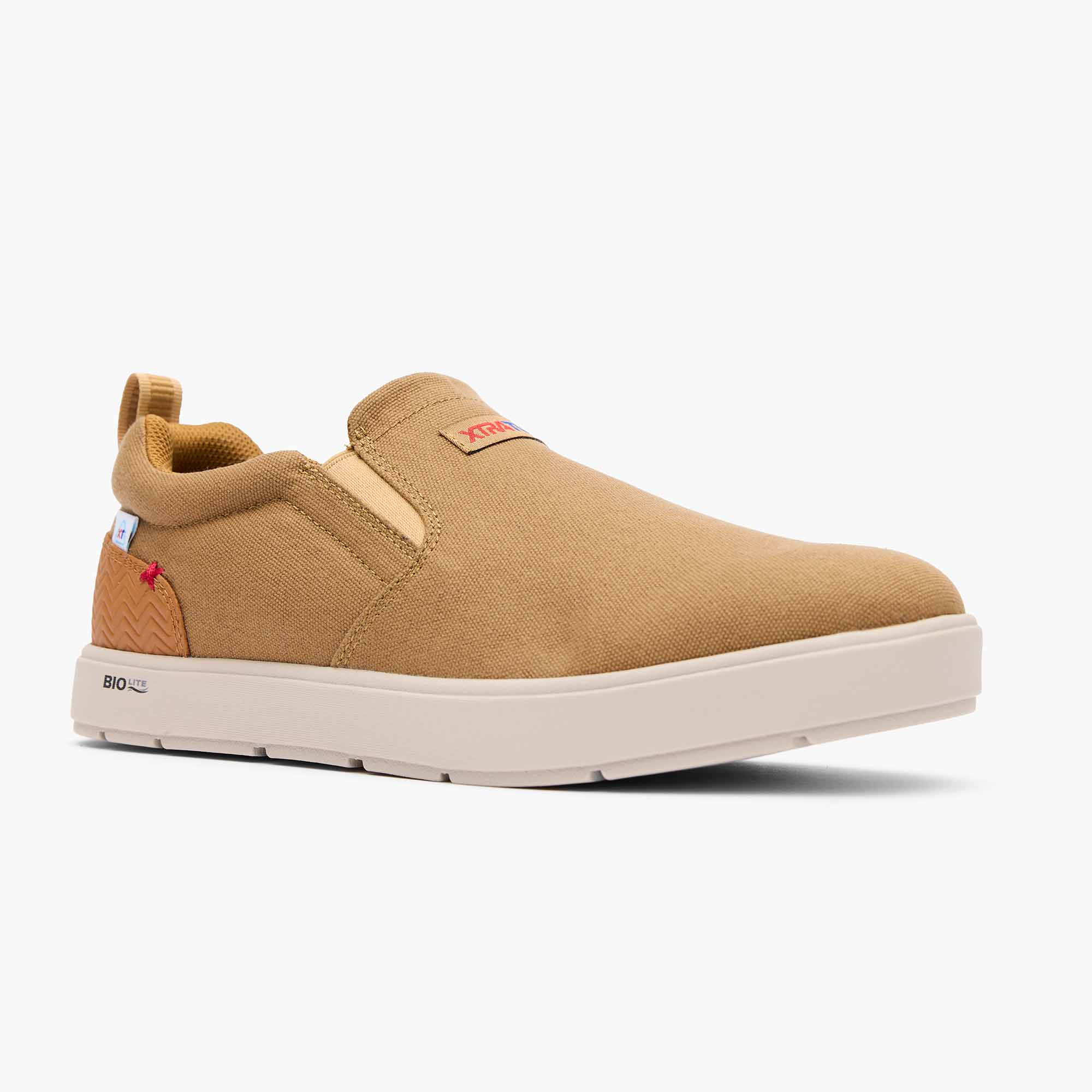
A low textile deck shoe for occasional splashes. Its water-repelling coating does not make it waterproof. Men’s and women’s ranges.
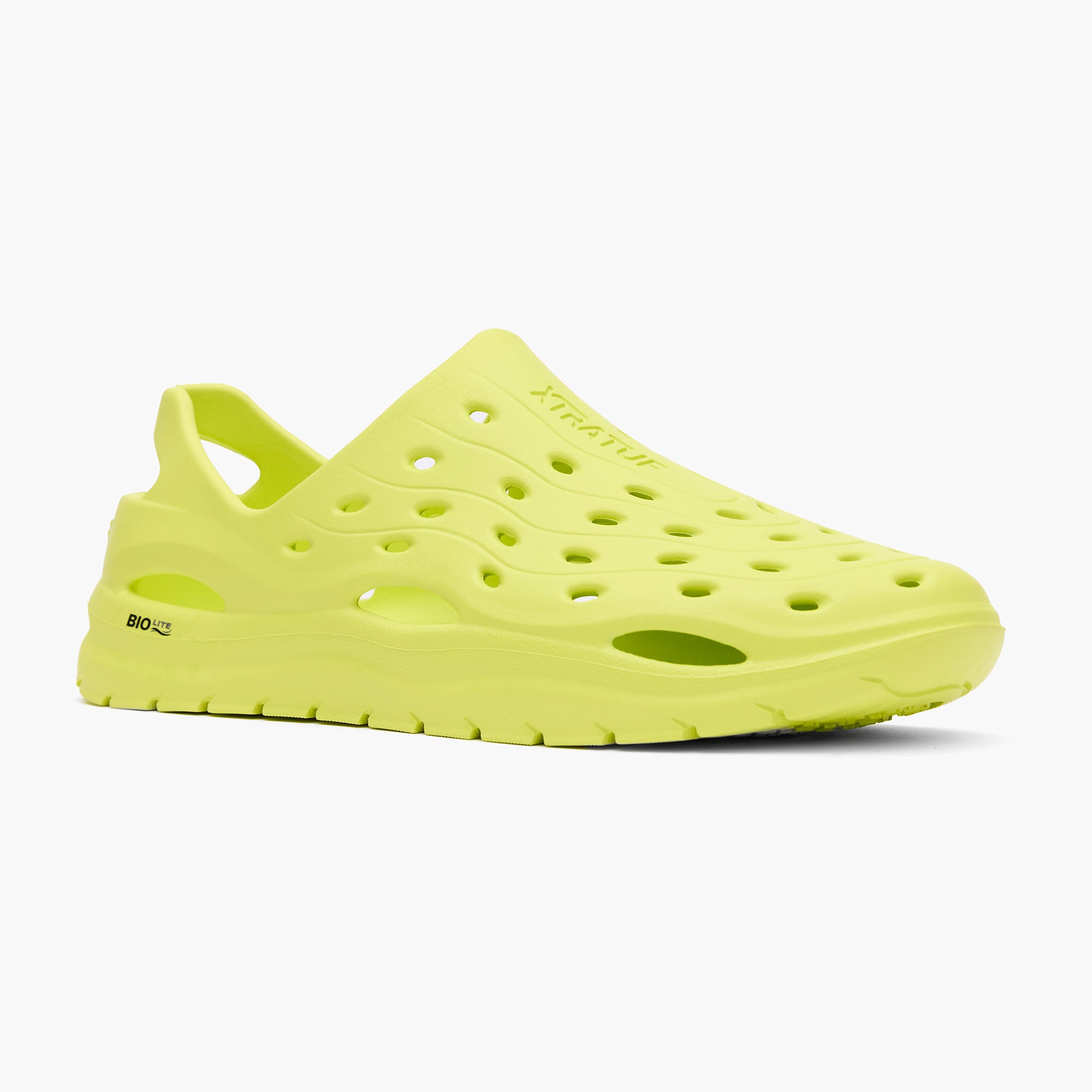
A low slip-on that drains. Adult, Little Kids and Big Kids versions. For adult unisex sizing, XTRATUF gives men’s 9 = women’s 11.
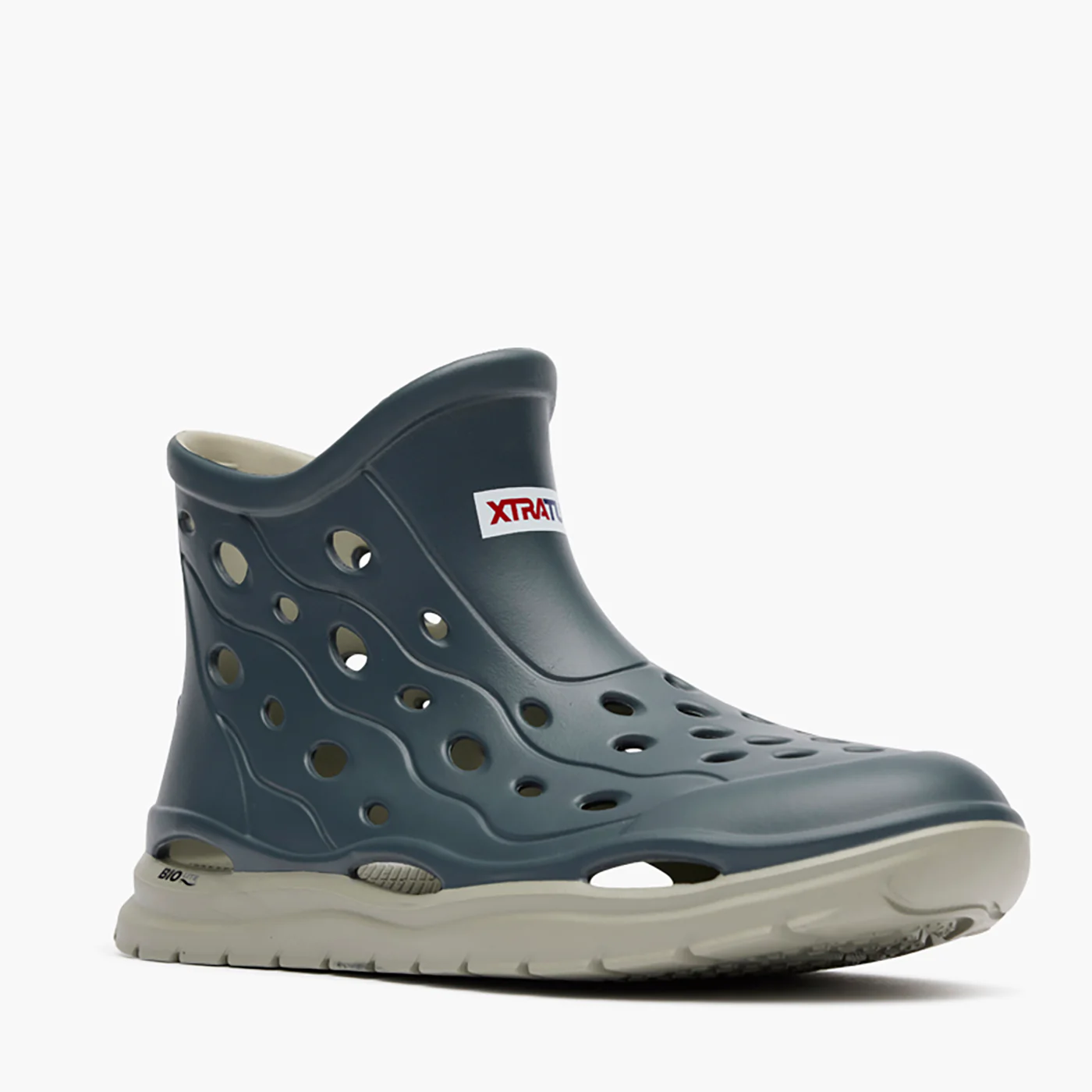
An ankle-high molded shoe that drains. Its holes let rain in, too.
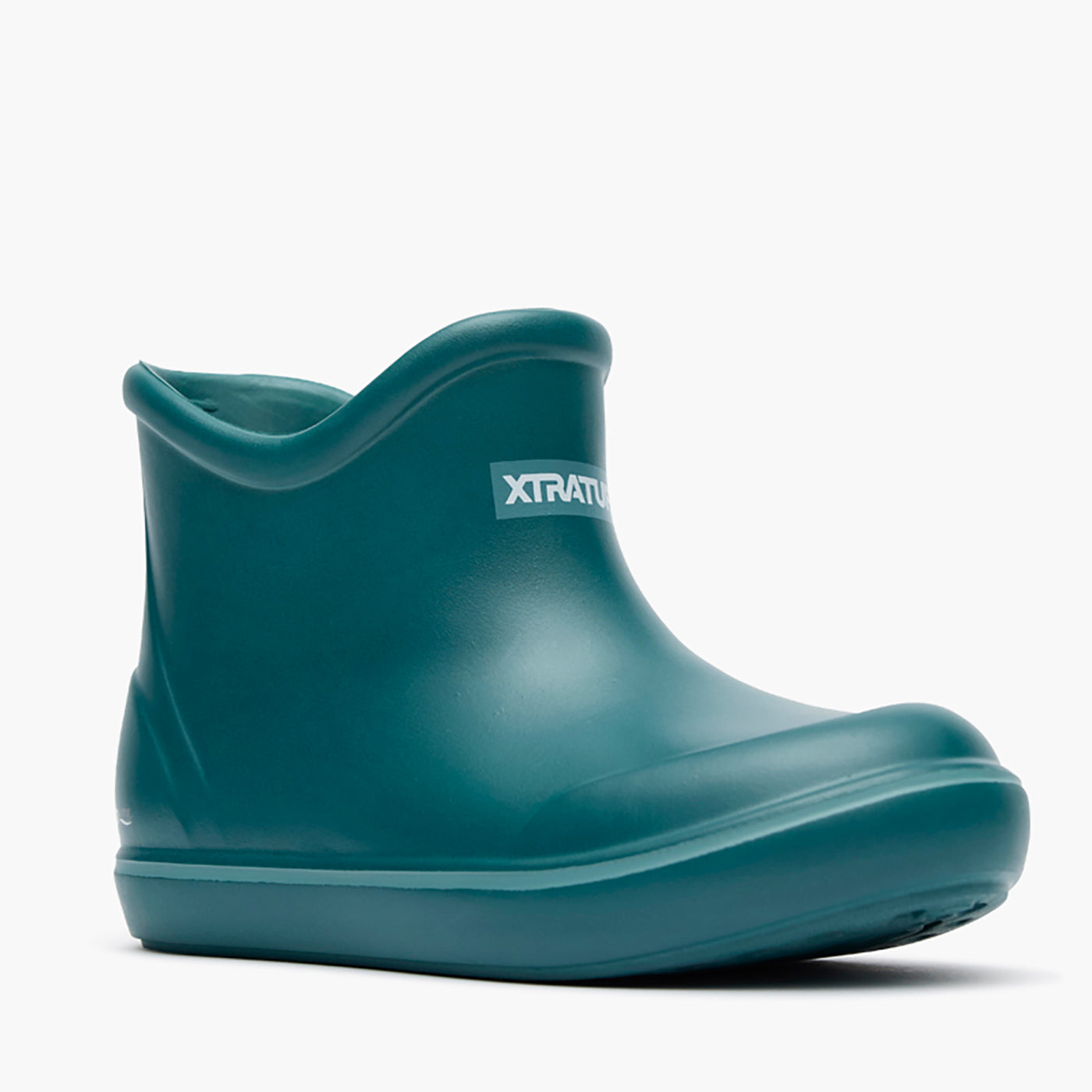
For kids who need waterproof coverage instead of drainage. Check child/youth sizing.
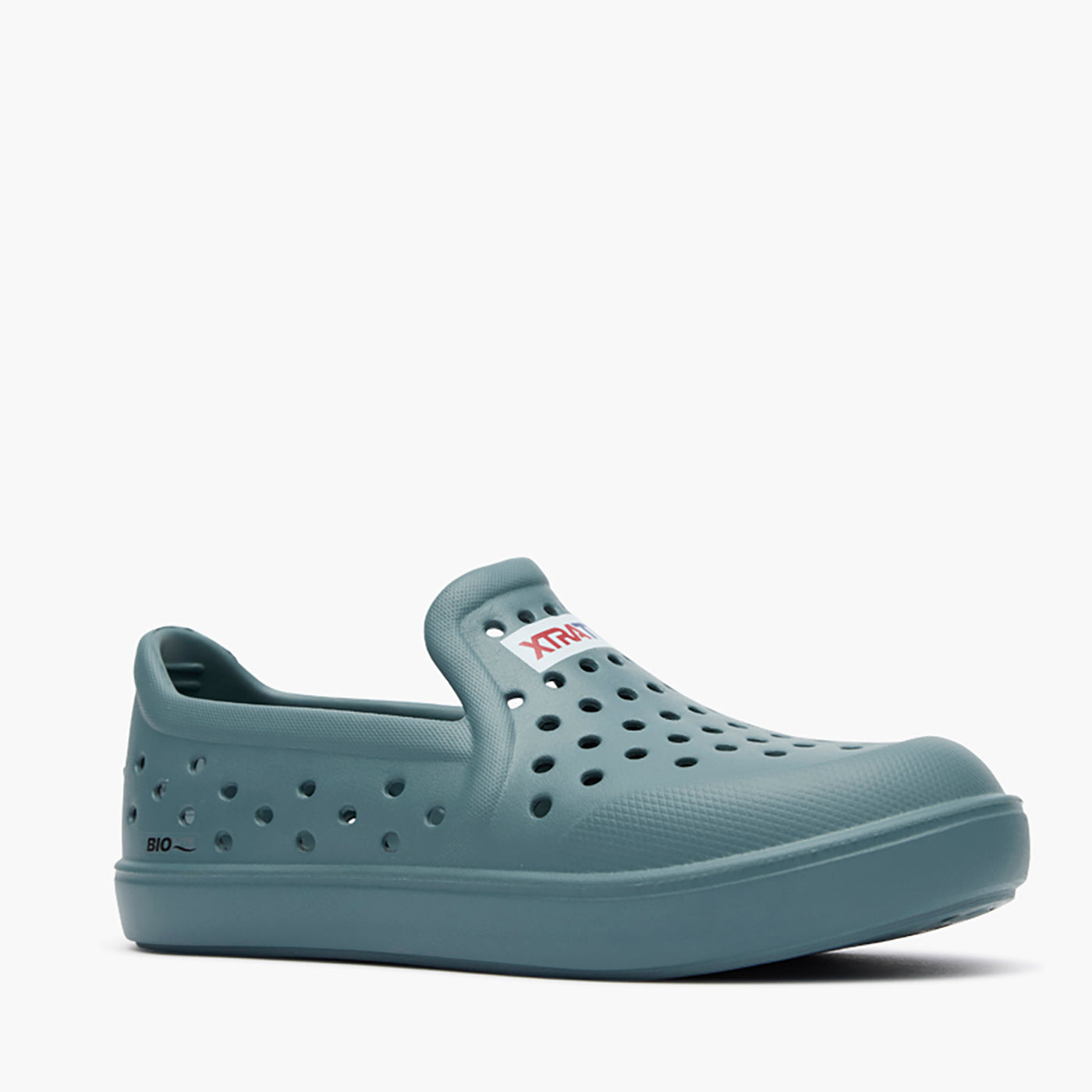
A kids’ water shoe with drainage holes, rather than a waterproof boot.
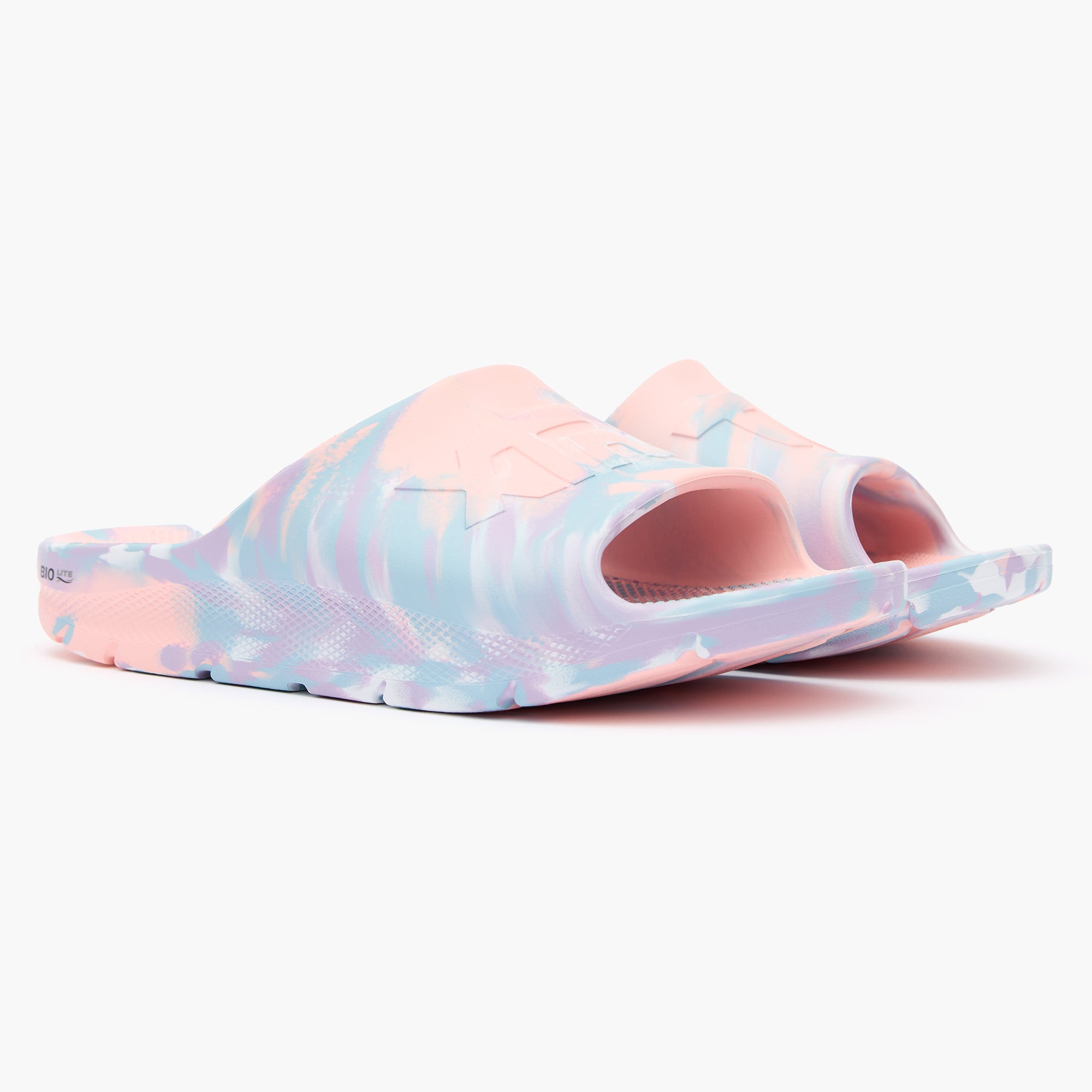
An open-toe, open-heel slide for after the boots come off.
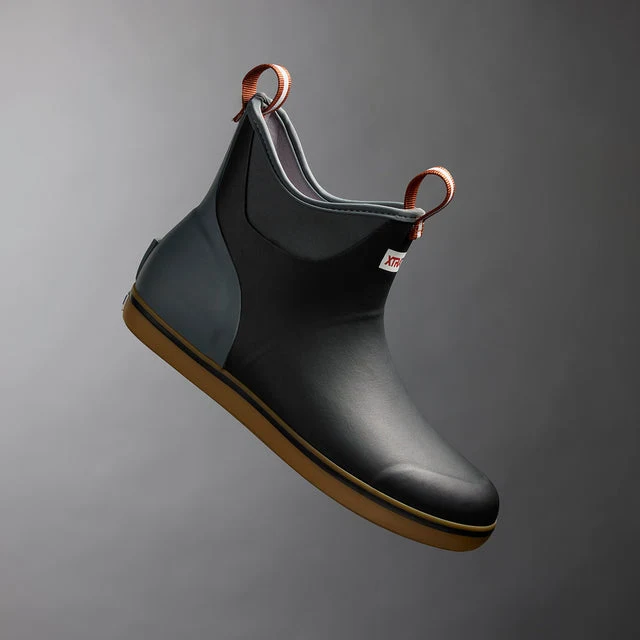
A smooth-sided rubber rain boot. Selected styles have a BioLite footbed above a separate rubber outsole.
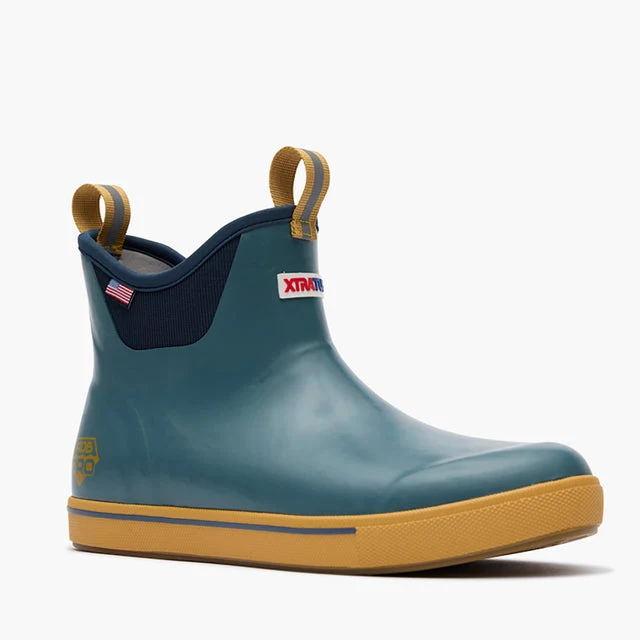
For layered construction: three dipped rubber layers plus extra rubber over the toe. The BioLite footbed sits above the rubber outsole.
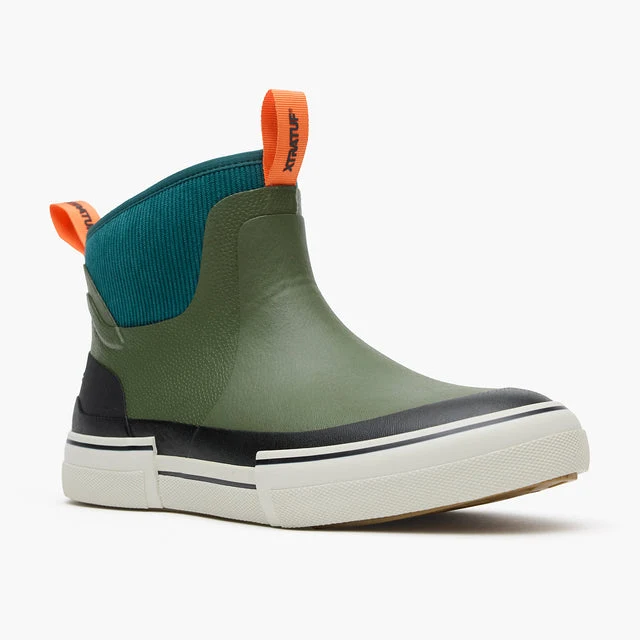
A rubber ankle boot with recycled-yarn pull loops and chevron tread.
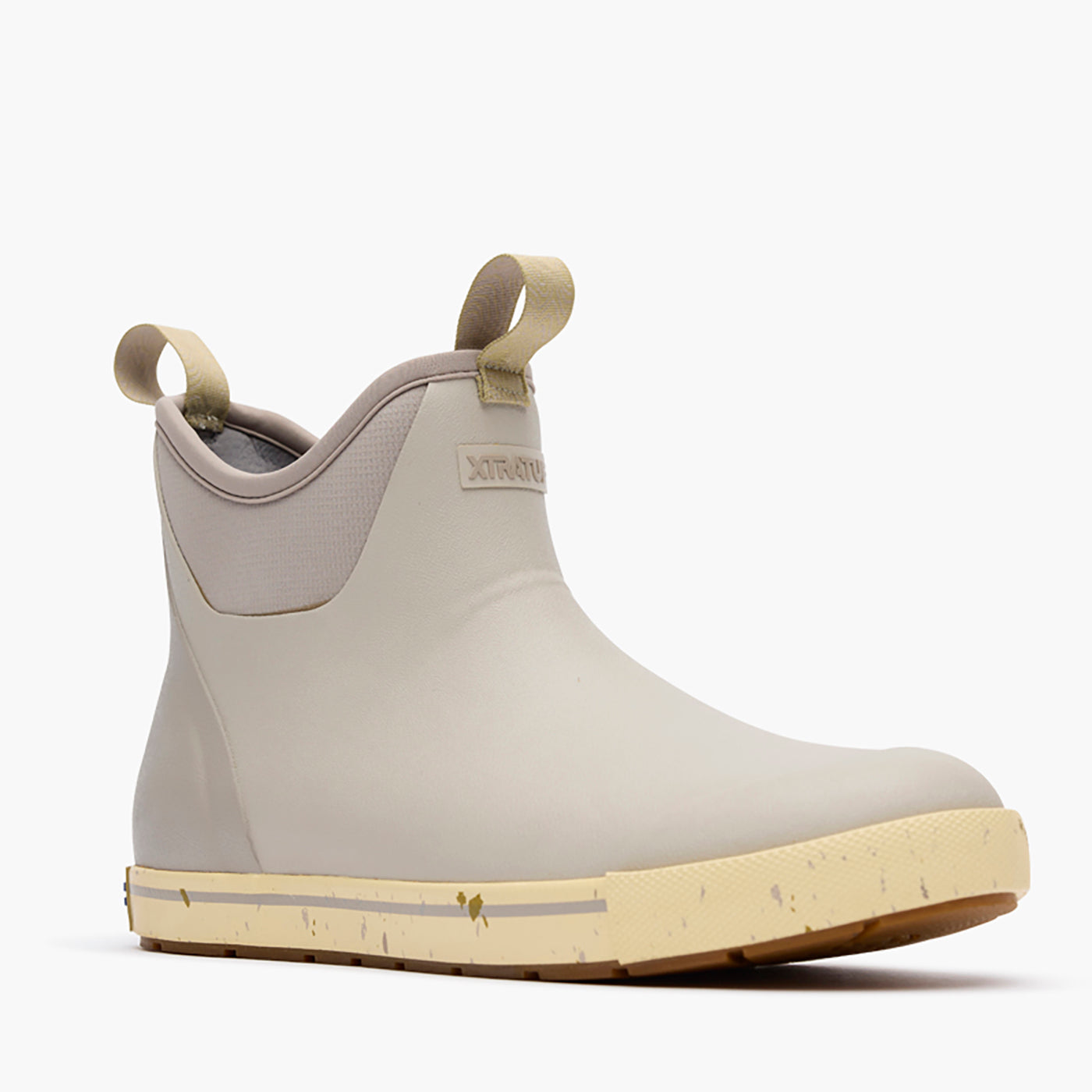
The woven ripstop ankle panel and distinct rubber tread pattern set Camp apart.
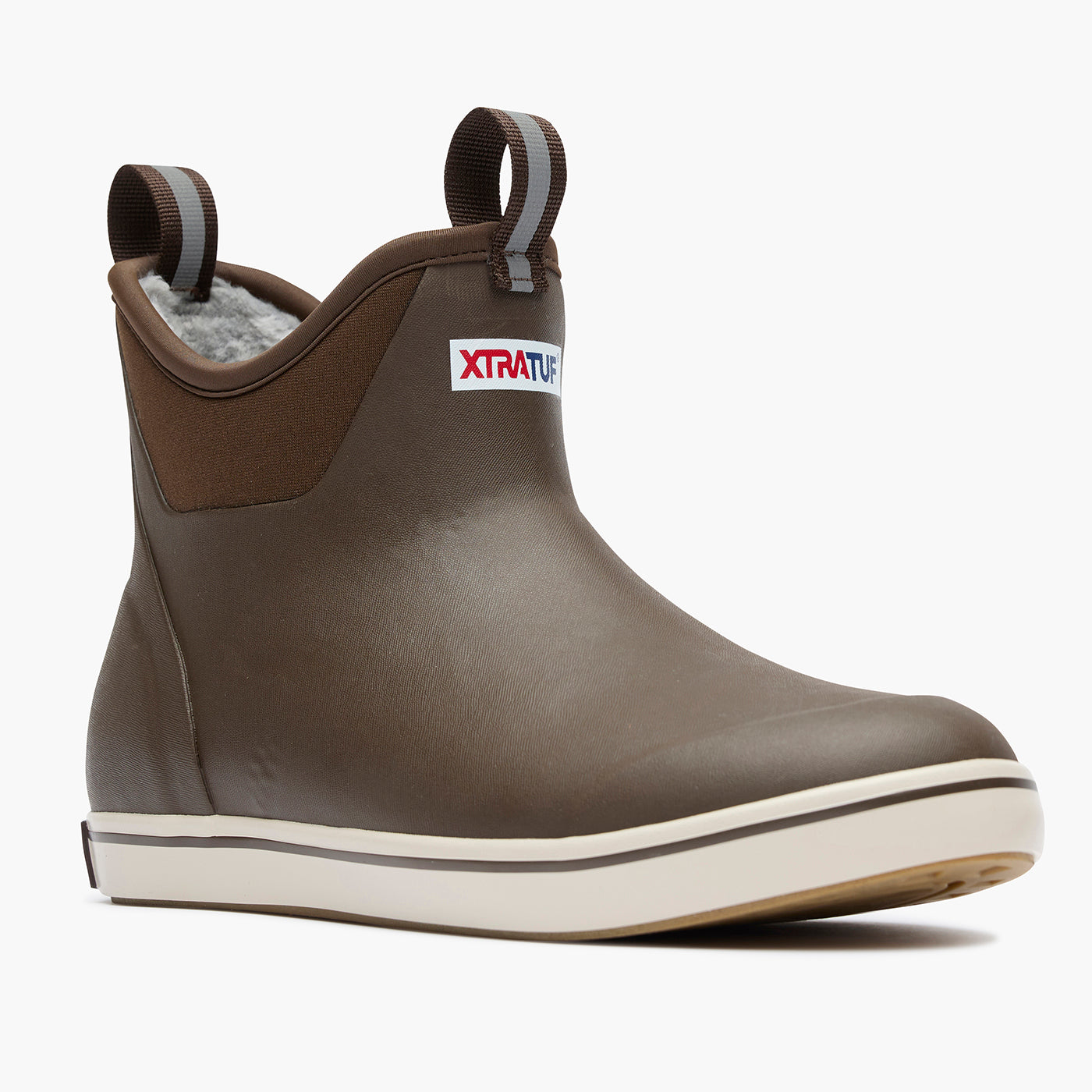
For faux shearling inside a rubber ankle boot. The lining provides the cold-weather difference. The BioLite footbed does not.
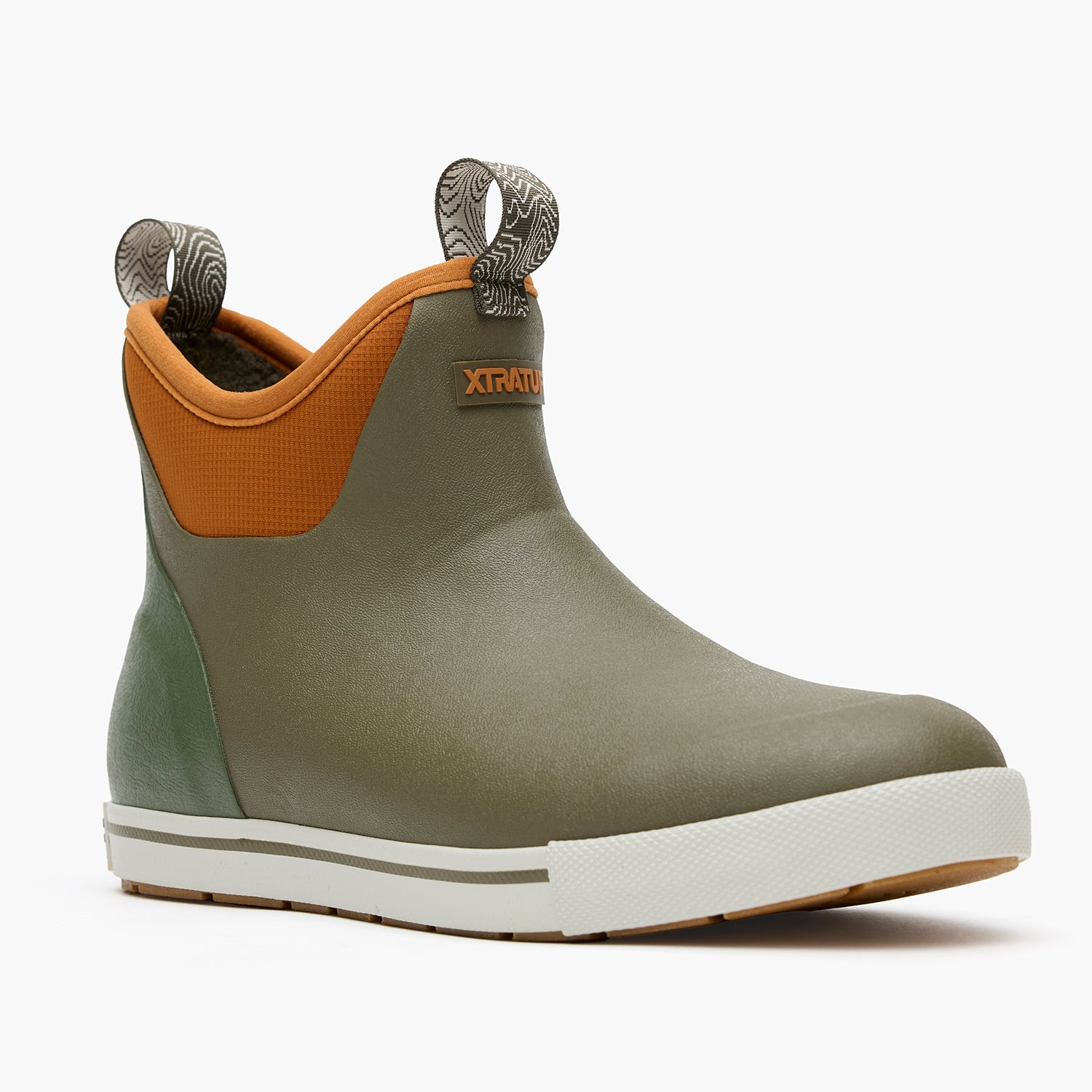
Camp’s woven ripstop panel plus faux shearling. The pictured style includes fleece-lined and standard insole sets.
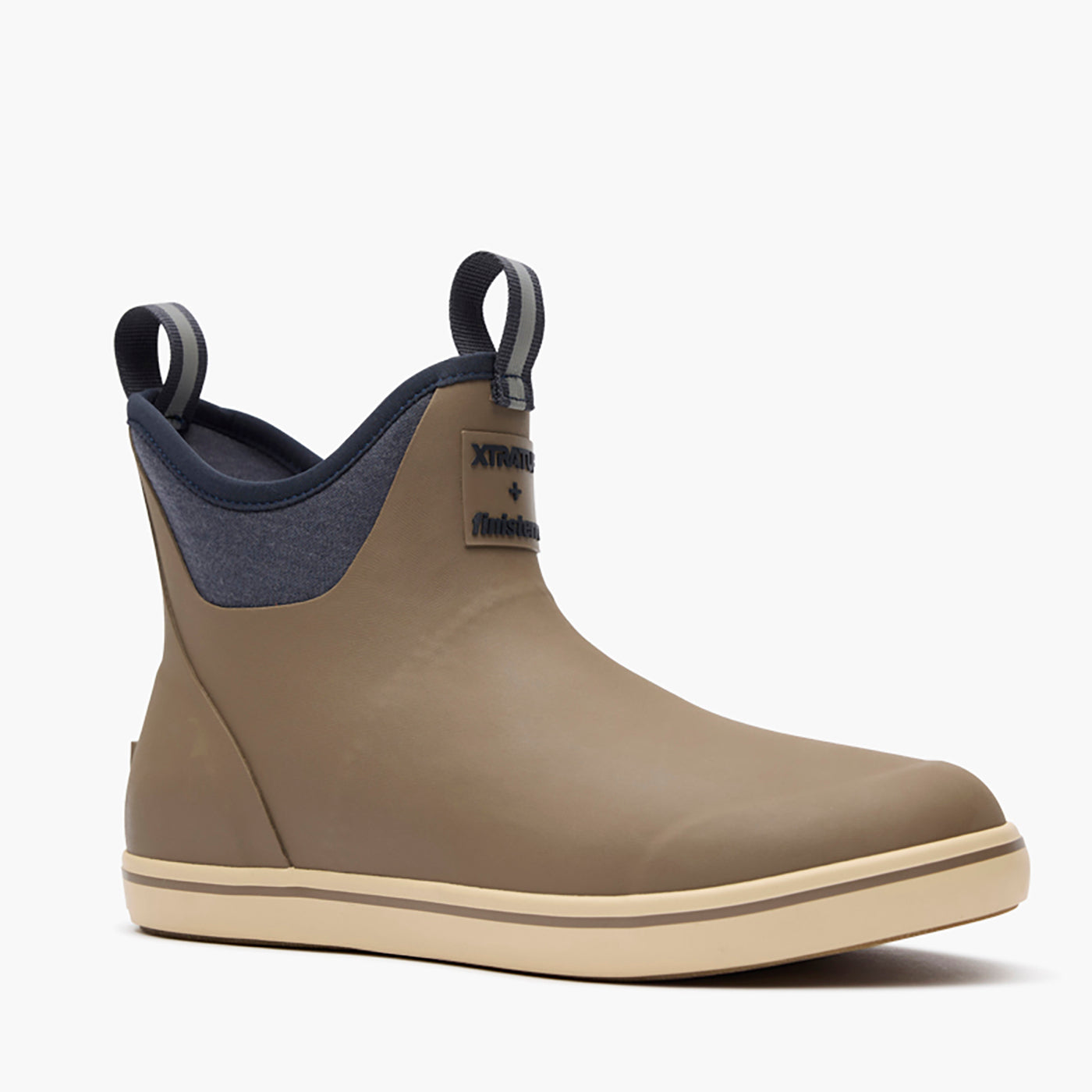
A Yulex natural-rubber inner boot and recycled-yarn pull loops distinguish this collaboration. XTRATUF recommends going up for half sizes.
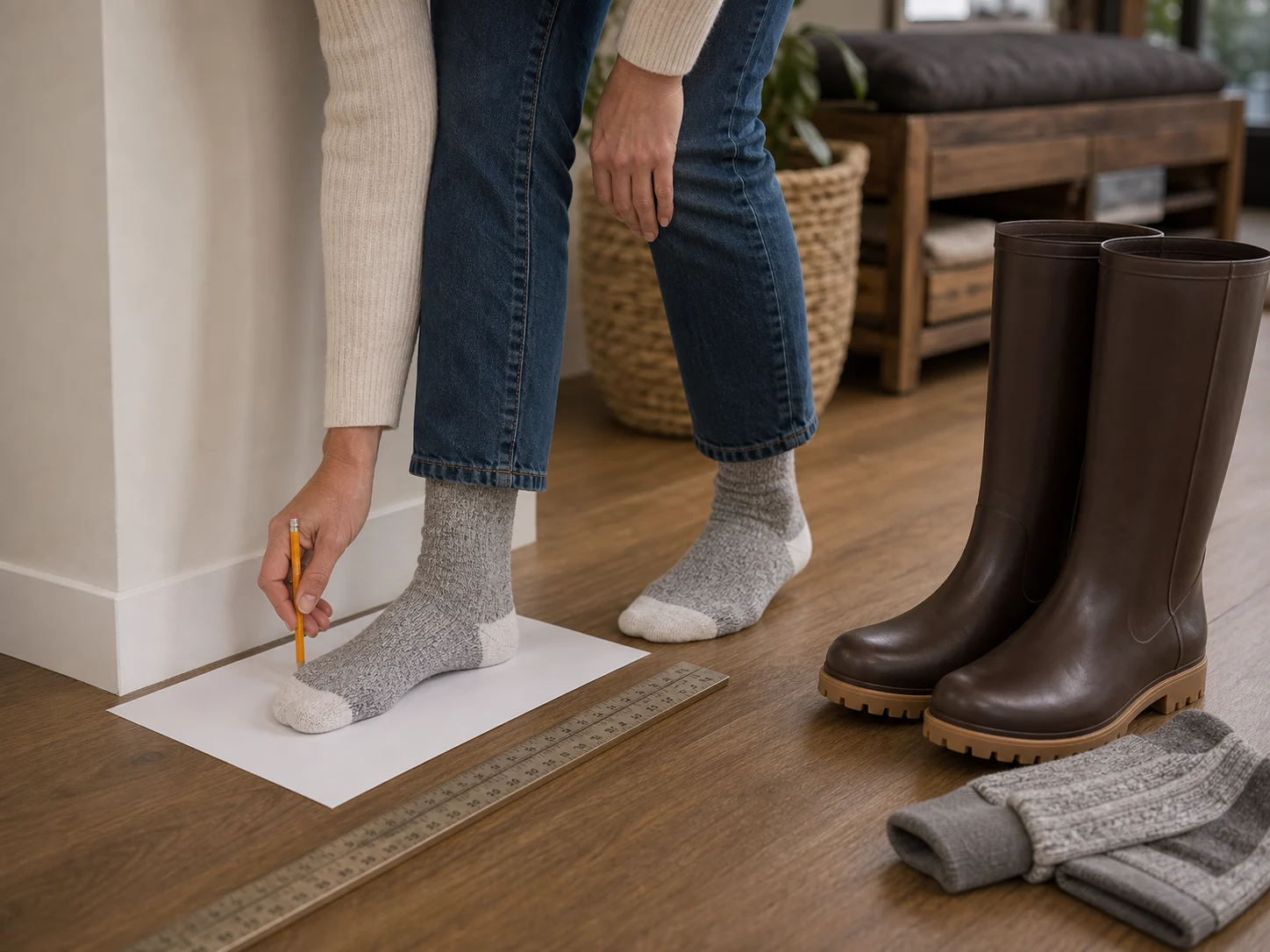
Before you order
Start with your foot measurement and the socks you plan to wear.
Measure at home, compare nearby sizes and check heel movement before wearing a new pair outdoors. The fit guide walks you through those checks.
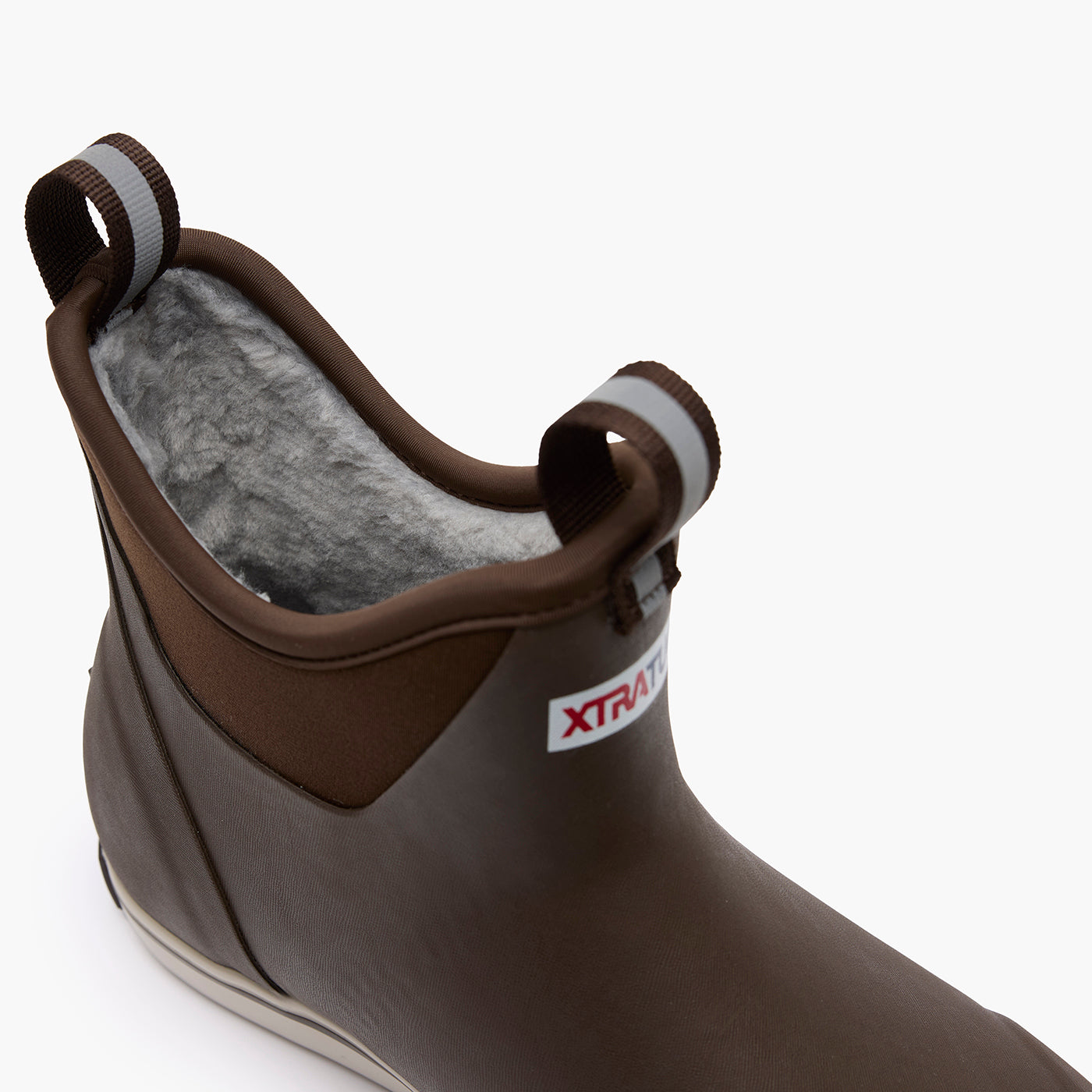
Faux shearling inside the Fleece Lined Ankle Deck Boot.
A BioLite footbed sits beneath your foot. Faux shearling lines the inside of a Fleece Lined boot. If warmth is why you’re shopping, look at that lining. The BioLite name alone won’t tell you how warm the boot is.
Camp Fleece adds that lining to Camp’s woven ankle panel. Use the Fleece-lined filter above to compare the two pictured styles.
Weight and comfort
BioLite is cushioning foam, but the whole shoe determines what you carry. These are XTRATUF’s model-specific weight claims.
XTRATUF claims up to 30% less weight than other six-inch boots in its category.
XTRATUF claims up to 30% less weight than other Sharkbyte styles. That comparison group differs from Sport’s.
These are different comparison groups, not a measured Sport-versus-Sharkbyte test. There is no universal 30% reduction for BioLite footwear. Choose waterproof coverage or drainage first.
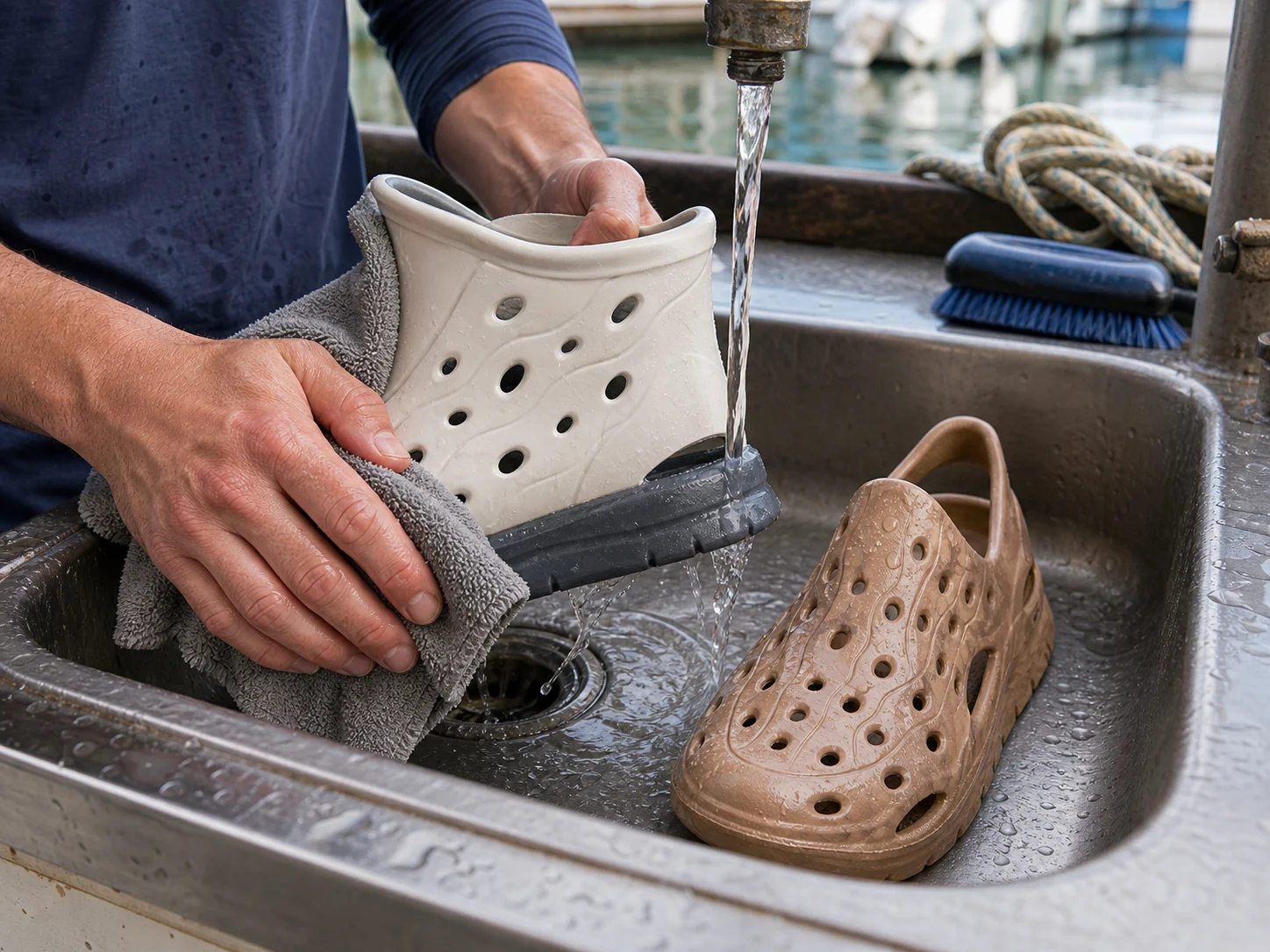
Hand-rinse molded footwear, then let it air-dry away from heat.
For Riptide, Hightide, TUFS boots, TUFS Cruiser and Après Fish, XTRATUF gives a simple routine: clean by hand with lukewarm water, then air-dry and store in moderate temperatures. Keep them out of the washing machine and dishwasher.
XTRATUF warns that high heat or cold can shrink or warp molded BioLite. Don’t leave it to dry in a hot car, near a heater or in a tumble dryer.
For boots with a BioLite outsole or footbed, follow the care guidance for the whole model as well. Its rubber, textile upper or lining may need different treatment.
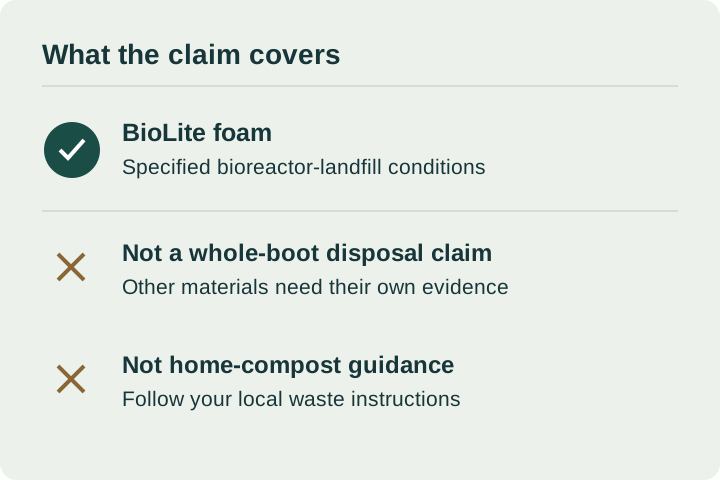
XTRATUF says BioLite received Intertek Green Leaf verification for biodegradation under bioreactor-landfill conditions. Read XTRATUF’s BioLite FAQ for the named test methods, ASTM D5511-18 and ISO 15985. A bioreactor landfill manages moisture to support decomposition; that is a specific setting.
Read this as a claim about BioLite under those conditions. It does not establish that BioLite belongs in home compost, that it will break down in the ocean, or that an entire boot is biodegradable. It also gives you no household disposal timetable. Follow your local waste guidance when the footwear is worn out.
XTRATUF says BioLite is not designed to biodegrade during ordinary storage. That claim is separate from the heat and cold warnings above: a shoe can warp without biodegrading.